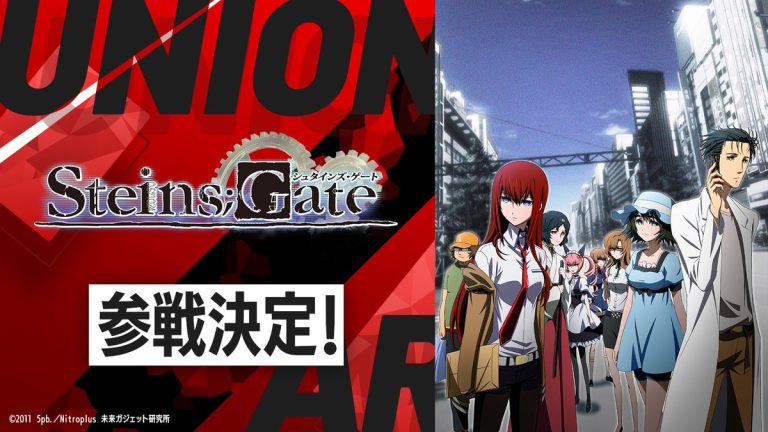
Steins;Gate 0 is an integral part of the Steins;Gate subseries and the wider SciADV franchise at large. Yet despite its importance, it is often incredibly misunderstood, with both diehard fans and scathing critics failing to grasp its structure and overall role in the series.
In this article, I’ll cover how Steins;Gate 0 functions in the context of SciADV, as well as how it got to a point that it became so fundamentally misunderstood by a significant portion of its Western audience. Feel free to either watch the embedded video or read the article below.
Just a disclaimer, though: This video/article contains spoilers for the entire Steins;Gate subseries, including all visual novel, animated, and side material content. But with that in mind, let’s get started.
There are three particular grave misunderstandings that a lot of people have concerning Steins;Gate 0. The first is with regard to how Steins;Gate 0’s routes connect to one another. The second is with regard to how the Steins;Gate 0 anime connects to Steins;Gate 0’s visual novel. And the third is with regard to how the overall chronology of the story works.
How Steins;Gate 0’s routes connect to one another
There are a number of common misconceptions within the fandom regarding how Steins;Gate 0’s routes connect to one another. For instance, a number of people are under the impression that the only two routes that matter are Promised Rinascimento as well as Vega and Altair, since they’re the only endings you need to go through in-game to unlock the true ending, Milky-way Crossing. In addition, there is a decently common belief that Milky-way Crossing is a direct continuation of Vega and Altair. Because these misunderstandings are fairly pervasive, I want to clarify where things stand with regard to the visual novel’s route structure.
In Steins;Gate 0, all routes are important to the narrative and deeply interconnected. The main principle by which the narrative of Steins;Gate 0 operates is a concept that I refer to as “world line recursion”—and this is a concept that doesn’t even originate from Steins;Gate 0 itself.
For that matter, Steins;Gate 0 is actually largely not an original story. Rather, it is based on three pieces of side material that existed before it: Arc-Light of the Point at Infinity, the Epigraph light novel trilogy, and the ending of Annularly Chained Ouroboros. And it is specifically from Ouroboros that world line recursion originates—a concept critical to understanding virtually all Beta attractor field material in the Steins;Gate subseries.
The end of Ouroboros features an extended version of the Operation Skuld video D-mail, in which the Okabe recording the message outlines that he himself was far from the only person who made that video D-mail possible. Rather, it was the work of countless different iterations of Okabe—or “dead zeroes,” as he words it—each of whom served as messengers to one another down a ridiculously long chain of world lines. One Okabe served as a messenger to another, who in turn served as a messenger to yet another, and so on and so forth. The Okabe recording that video D-mail just happened to be the final messenger, and he had accumulated the memories and lessons learned by all his predecessors. Ultimately, this part of Ouroboros became the foundation for the structure of Steins;Gate 0’s story.
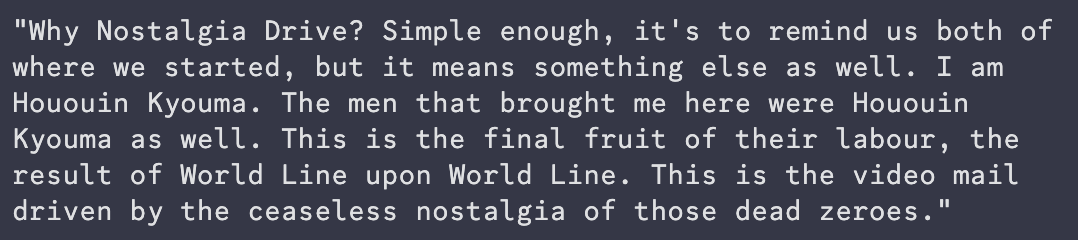
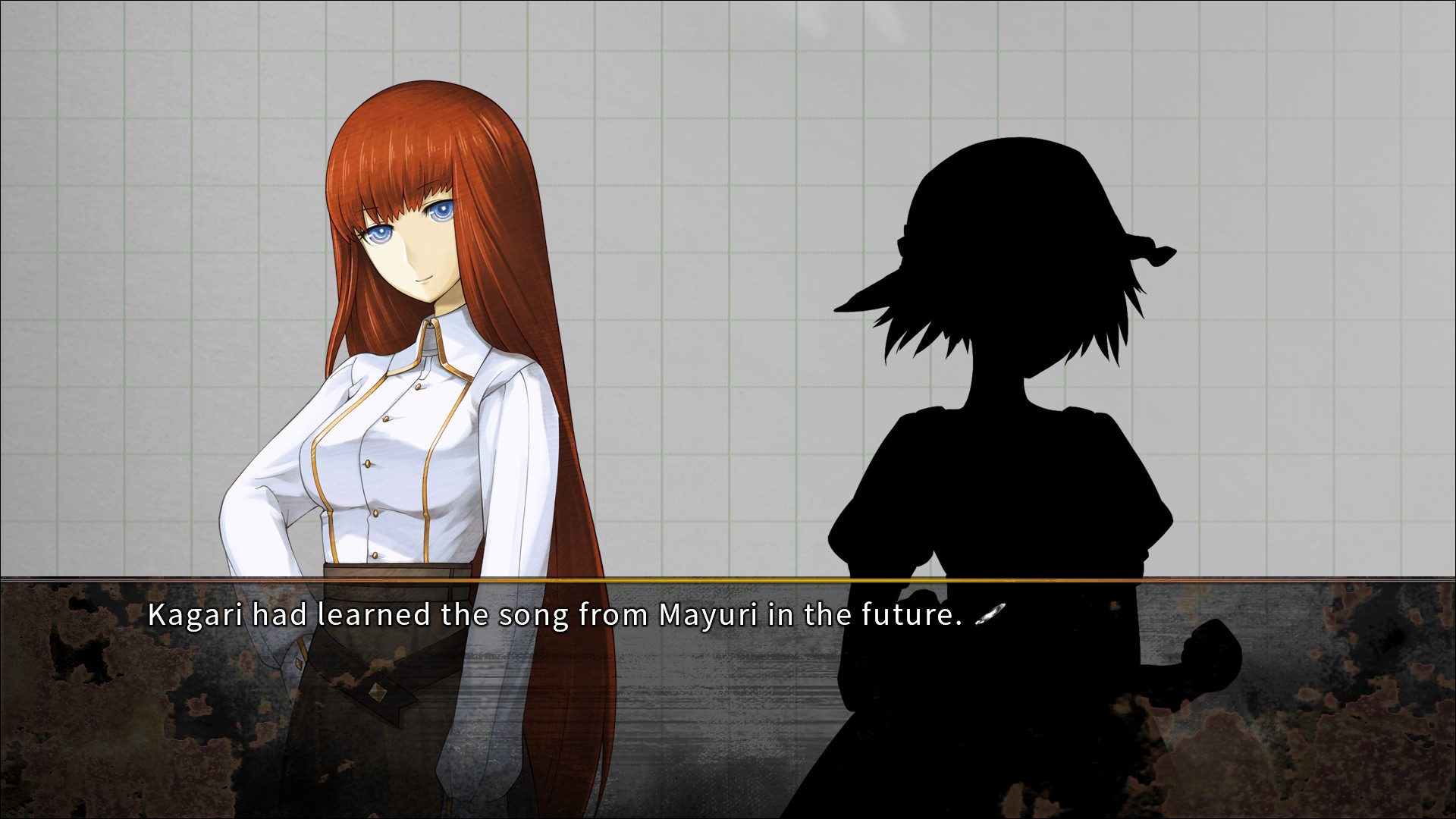
The routes we see in Steins;Gate 0 are all iterations that happen somewhere along this chain—that occur multiple times, even. Past what we see in-game, through some means, the world line shifts to a different one—be it through a D-RINE, time travel experimentation by one of the competing factions, Suzuha time traveling back from 2036, or something else entirely. Aside from Milky-way Crossing being the last iteration in the sequence, we don’t know the exact order in which they occur. But somewhere along the way, these iterations do take place, each with their own lesson or implication foundational to the conception of Operation Skuld—for instance, the notion of how to “deceive the world,” as is outlined in Promised Rinascimento and Recursive Mother Goose. Speaking of which, the song in Recursive Mother Goose, on top of being meant to represent deceiving oneself and deceiving the world, is also meant to represent how the story of Steins;Gate 0 works in the first place. It’s all like a broken telephone game from world line to world line, from messenger to messenger. That is the whole point of the route: that there are lessons and messages that transcend world lines.
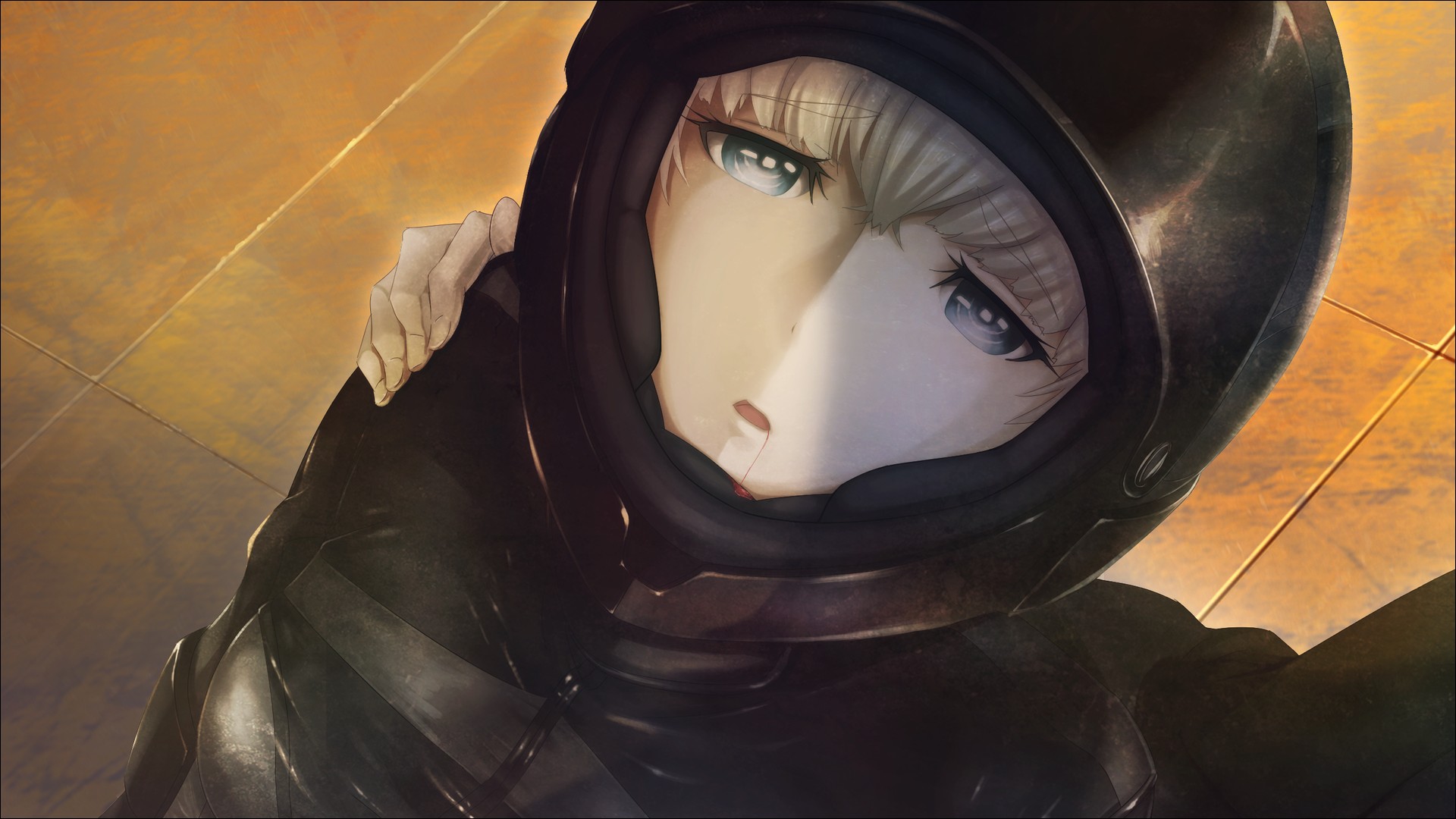

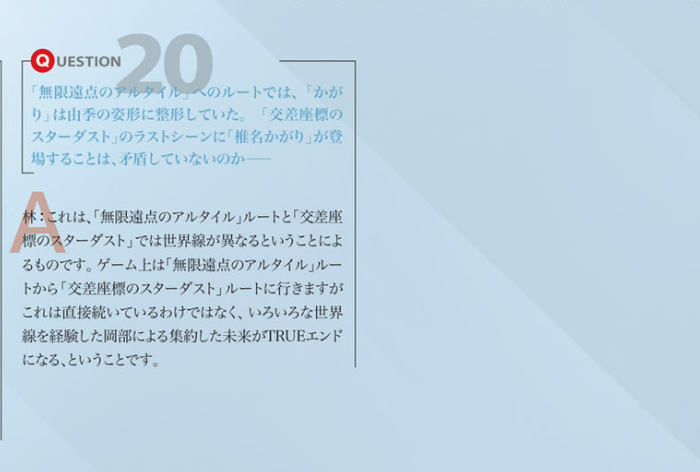
On note of the connections between the routes, as mentioned earlier, a lot of people are under the misconception that Milky-way Crossing is a direct continuation of the Vega and Altair iteration, when it is in fact not. Rather, there are countless iterations that take place in between these two endings, each serving as a messenger to another—as is confirmed by SciADV series lead writer Naotaka Hayashi in the Steins;Gate 0 Amadeus Script guidebook. This is why Kagari dies in Vega and Altair brainwashed with Yuki’s appearance, but is alive in Milky-way Crossing, not brainwashed and with her original appearance. Milky-way Crossing is the culmination of all prior iterations—it isn’t simply the epilogue to Vega and Altair.
How Steins;Gate 0’s anime connects to the visual novel
And that, in essence, is how the Steins;Gate 0 visual novel works structurally—like a broken telephone game. But what about the anime? How does the linear storyline of the Steins;Gate 0 anime work when the whole basis for the visual novel is world line recursion?
And that is where we see the second main set of misconceptions common in the Steins;Gate fandom. Every now and then, I see a number of comments and criticisms centered around the Steins;Gate 0 anime not being “a faithful adaptation.” Even back in the day, you would see YouTubers like Arkada or Glass Reflection describing the Steins;Gate 0 anime as “a brilliance muddled by adaptation” due to it supposedly turning a nonlinear narrative into a linear story. But all of these people have fundamentally missed the forest for the trees, because Steins;Gate 0’s anime is not meant to be a conventional adaptation at all—and I believe it is foolish to think of it as one. As mentioned earlier, it’s the Steins;Gate 0 visual novel that’s an adaptation of existing material. The anime, meanwhile, is functionally a sequel or final route to the Steins;Gate 0 visual novel, filling in the remaining gaps in the narrative and concluding the overall story. It is technically still an adaptation, yes—of both the Steins;Gate 0 visual novel and also the visual novel’s source material, oftentimes adapting the latter even more closely than even the 0 VN itself. But the anime is so much more than just that because of the way in which Steins;Gate 0’s narrative works.
The Steins;Gate 0 anime connects to the Steins;Gate 0 visual novel the same way the game’s routes connect with one another. 0’s anime is ultimately the story of the final messenger—the Okabe who actually recorded the video D-Mail from the future. In the Steins;Gate 0 visual novel, we see five preceding iterations in five routes, as well as the very ending of the final one. But we don’t actually see the route leading up to the final iteration. We don’t see the story or the journey of that final Okabe—just the ending.
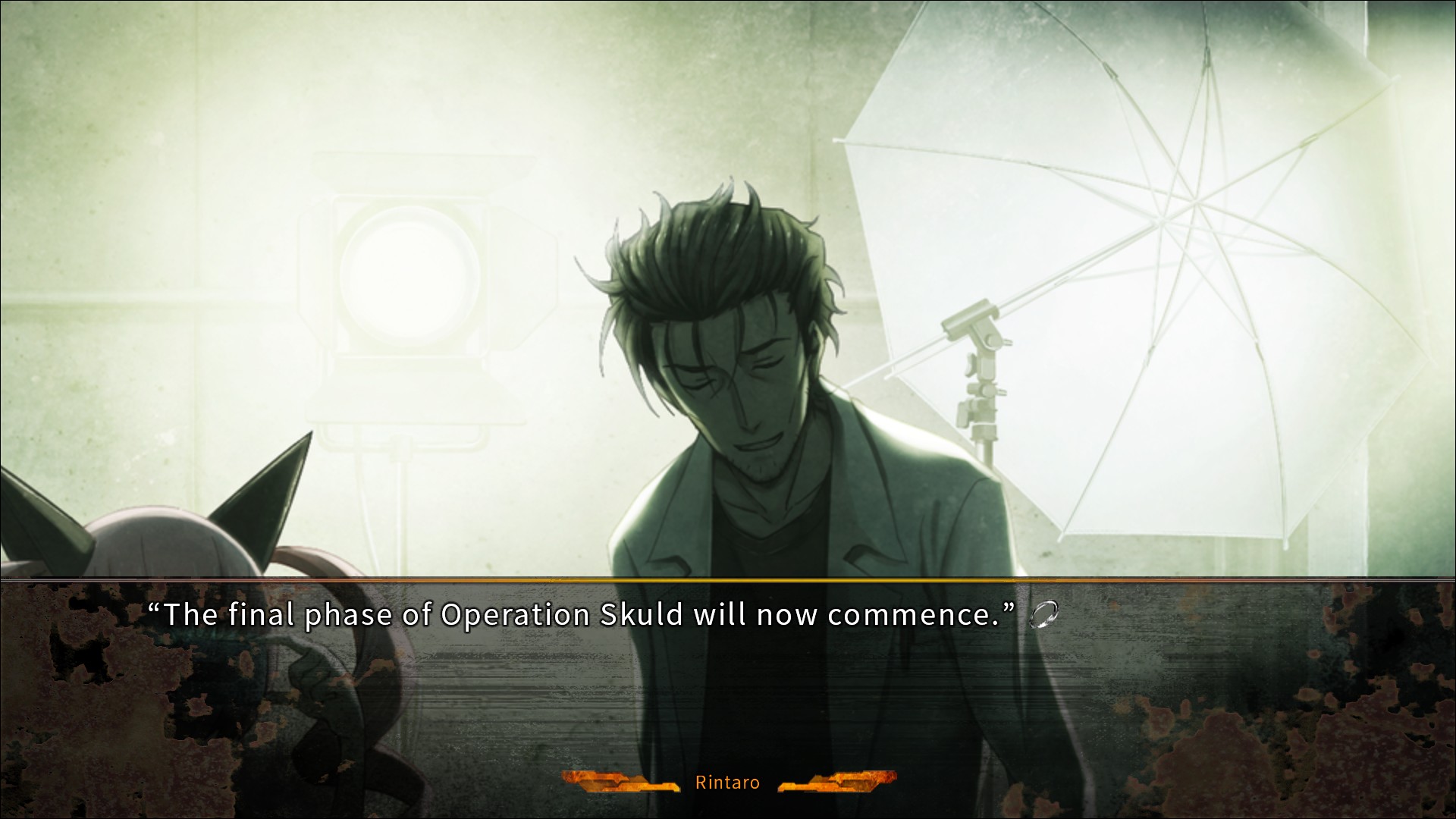
And that is exactly the gap that the Steins;Gate 0 anime fills. It is the final iteration of Steins;Gate 0’s storyline and the route for Milky-way Crossing that is missing in the VN—the journey of the Okabe who actually records that video message.
I can’t get into it here for spoiler reasons, but SciADV series content that launched after the 0 anime aired also more or less confirms this relationship between the 0 VN and 0 anime, with content from both versions of the story becoming relevant to future titles. For the SciADV players out there who may need a bit of a refresher, see the Steins;Gate subseries section of my Anonymous;Code implications video.
Now, every so often, I do see some people complain that they wanted a conventional adaptation. And some of you might be wondering why MAGES. and White Fox did not opt for one. To explain, during the development of the 0 anime, series staff actually did explore the possibility of doing a conventional adaptation. But with such an approach, they could not have sensically fit in five iterations, plus the ending of a sixth, in two anime cours. The most they could have done was cover Promised Rinascimento in one cour, then Vega and Altair in another, which was one of their preliminary plans.
Ultimately, however, those involved decided that doing an incomplete adaptation of an already incomplete story just wasn’t worthwhile. So they decided to avoid the traditional adaptation design and instead went with an anime complement—still an adaptation, but also a sequel. If you hadn’t read the 0 visual novel prior, you could still follow along and enjoy the 0 anime’s story without feeling too lost because it was locked into the point of view of the final iteration. And it’s also precisely because the anime was locked into that perspective that VN readers also got a lot of mysteries and unanswered questions addressed.
I much prefer this design because it made the 0 anime useful and important to the overarching series. Comparatively, the original Steins;Gate anime doesn’t leave you with a whole lot of value compared to the VN; by virtue of it being a conventional adaptation, it’s just the same story as the original game but truncated and done worse in quite a few ways with all its cuts and changes. If you intend on going through SciADV, while the Steins;Gate anime can be a cool, quick, and very enjoyable way to reexperience the story, there’s not much of a narrative reason to watch it. The 0 anime, on the other hand, is crucial to the narrative of the Steins;Gate subseries and, of course, to SciADV at large. Like the original Steins;Gate anime, it is not an adequate substitute for the visual novel. But it doesn’t try to be, and that’s what I appreciate about it.


You might be wondering what exactly a conventional adaptation for Steins;Gate 0 would look like. Look no further than the Steins;Gate 0 manga, whose first four volumes are dedicated to Promised Rinascimento, and the last two to Vega and Altair plus Milky-way Crossing—an approach analogous to what the early ideas for the Steins;Gate 0 anime were like. And if you’ve read the manga, you would know that it’s a case in point of why a conventional anime adaptation would have been a bad idea. It’s an incomplete adaptation of an incomplete story and is of little use to the series from a narrative standpoint.
The chronology
Anyhow, let’s discuss the third major set of misconceptions concerning Steins;Gate 0: when exactly it takes place. A lot of people, and particularly a lot of people who’ve only seen the anime, seem to be confused on the general sequence in which the events of the endings of both stories take place. And a big part of that stems from the propagation of the so-called Steins;Gate “chronological order,” which technically isn’t even chronological but misleads watchers into thinking it is. In this order, the watcher goes through the first twenty-two episodes of the original Steins;Gate anime, followed by Episode 23β, then the entirety of the Steins;Gate 0 anime, and then the final two episodes of the original show. And for a first-time watch, this order is truly nothing short of ridiculous.
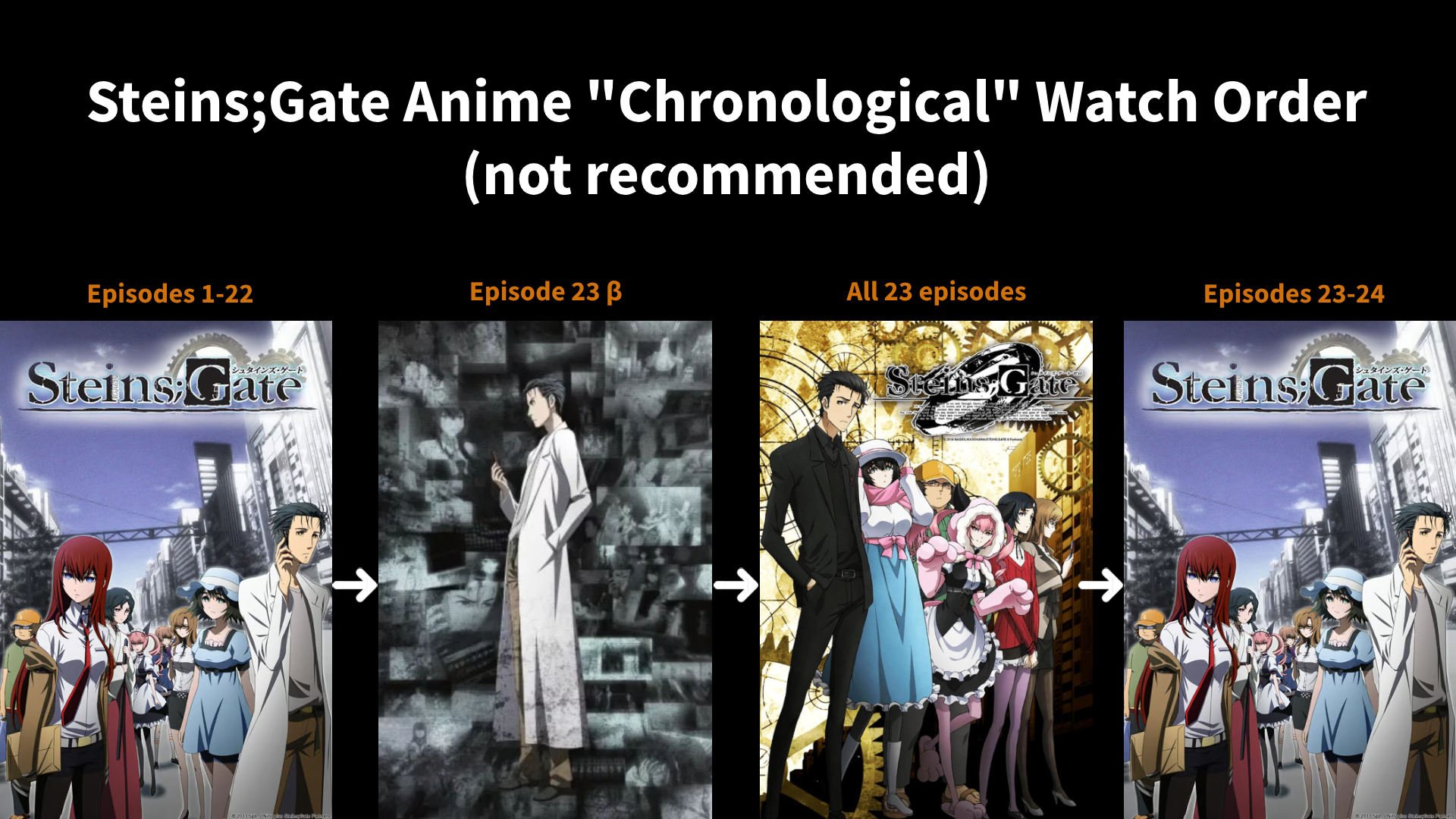
Could you imagine what it would be like to do the equivalent in visual novel form? You would play through almost the entire original game, just to ditch it halfway through the final chapter to play an entire thirty-hour-long side entry you won’t understand the relevance of as you’re playing it. Or worse, imagine going through all of Arc-Light and Epigraph before coming back around to finishing the true ending of the original game.
In all of these cases, it would be terrible to entirely drop the series midway through, never to finish the original story let alone its ever-so-important side material. And I have unfortunately seen this happen before with the anime, where the sense of confusion and tonal whiplash from the chronological order become so jarring that people end up never finishing either series. In the first place, were the people who inevitably watched Steins;Gate in release order during the seven years between the original anime and the 0 anime just completely wrong to do so? No, obviously not. With any series, when in doubt, go through it in release order. There may be a few exceptions to the rule, but I believe that 99% of the time, it’s what’s sensical.
In this case specifically, Steins;Gate 0 and all the side material it’s based on are incredibly reliant on having full knowledge of and context from the true ending of the original story. Really, I think it’s bad enough to just be missing the context of the Steins;Gate 0 visual novel, since there’s so many layers to the 0 anime that you just end up missing without it. After all, the whole point of the story is that it took the efforts of countless versions of Okabe—of countless iterations—for Operation Skuld to be possible. Because the anime locks the viewer into the final iteration, you completely miss that if you’re an anime-only.
But at the very least, you can follow along and not feel super lost if you take that approach. To jump ahead without even the ending of the original story, though—that is so much worse. Even after the viewer goes back and finishes off the original story, there’s too much from what they just saw in Steins;Gate 0 that they won’t have understood the relevance or importance of. So just generally, though it is technically possible to enjoy the series in the so-called chronological order, as quite a few have, I’d heavily advise against it for a first-time watch.
But in general, the biggest detriment of the chronological order—as I alluded to earlier—is people not understanding when these events take place. When people describe Steins;Gate 0, they often use all three of these terms: prequel, sequel, and interquel. And from a certain point of view, all three of these terms can be considered correct. It is an interquel because Operation Arc-Light ties in with the execution of Operation Skuld in Chapter 11 of the original game. It is a sequel because it takes place in 2011, whereas the original takes place in 2010. But perhaps most relevantly, it is a prequel because the entirety of Steins;Gate 0 happens before the original Steins;Gate, as is made evident by Okabe having already received the Operation Skuld video D-Mail in the prologue of the original story. And I think this understanding is crucial to have. People tend not to outright describe Steins;Gate 0 as a prequel simply for spoiler reasons and because, naturally, you don’t want someone to accidentally go through Steins;Gate 0 before Steins;Gate. But really, I think “prequel” is the most accurate term to use when describing Steins;Gate 0. And the “chronological order,” which puts this prequel after episode 23 of the original, gives viewers a fundamentally flawed understanding of when everything takes place. It’s not wrong to refer to it as an interquel, but Steins;Gate 0 is nonetheless a prequel that requires its audience to have finished the original story beforehand.

Why these misunderstandings are so pervasive
But ultimately, why are all these misunderstandings about Steins;Gate 0 so pervasive? There are a couple of reasons.
First, Steins;Gate 0 is fundamentally very messy and disjointed in its design. The messiness via world line recursion is part of why I like the idea of Steins;Gate 0 so much; it feels so much more unique than the original Steins;Gate, which was designed and structured more like a typical time travel work. But at the same time, 0’s design sets it up for confusion. If you don’t have prior knowledge of the source material for the Steins;Gate 0 visual novel, this concept of world line recursion might go entirely over your head. It’s a story that requires you to go through multiple mediums for full understanding, after all.
But in the first place, not everyone is interested in every medium. Some are only interested in anime; some are only interested in visual novels. So inevitably, a pretty sizable chunk of the audience will get left missing context. But even from those who go through both, there’s a decent number of people who end up not understanding the concept of world line recursion at all.
And that’s not their fault. The game is presented in a way that is so misleading, and so many critical aspects to the story of Steins;Gate 0 are not advertised by MAGES. and not made the most explicit in-game for those lacking prior context. MAGES. doesn’t advertise that it’s an adaptation of existing side material. They don’t advertise that the anime is a sequel to the visual novel. And they sure as hell don’t go over world line recursion in enough detail in-game. It’s no wonder that people end up thinking that the Promised Rinascimento and Vega and Altair routes are all that matter. It’s really not the fans’ fault for not grasping Steins;Gate 0’s structure, but rather that of MAGES. and the series staff. They set 0 up for confusion.
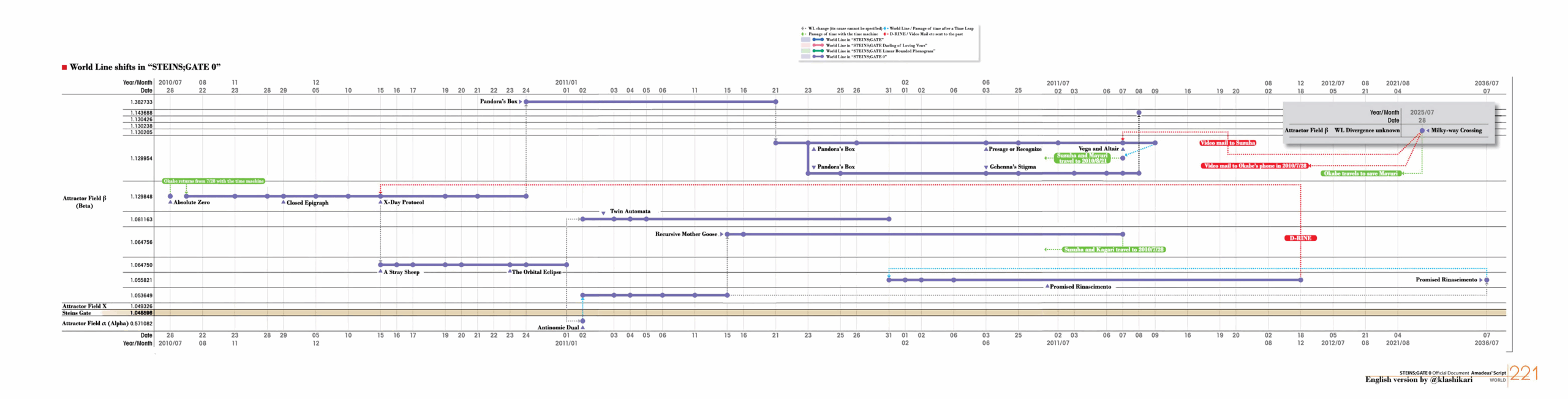
Even those cognizant of world line recursion end up debating over the D-RINE that gets received to branch onto the Milky-way Crossing route. A diagram in the Amadeus Script guidebook suggests that the D-RINE from Promised Rinascimento gets sent to the Okabe of X-Day Protocol. And yet when we think about it from a mechanical standpoint, it’s a little hard to make sense of the Promised Rinascimento D-RINE arriving at a point that that specific iteration of Okabe would not have experienced, and in a world almost identical to that of any normal iteration of Vega and Altair anyhow. It would seem like a mechanical inconsistency. When you send a D-Mail or a D-RINE, it’s supposed to arrive at a point where the past prior to reception is identical to that of the sender’s. Obviously, once the world reconstructs after a D-Mail or D-RINE is sent, then past, present, and future change. But it would still have to arrive at a point where the past was identical to the senders’ world. And the Okabe of the Promised Rinascimento branch did not experience X-Day Protocol, where he received the D-RINE in the Vega and Altair branch. Of course, some might bring up that there is a difference between the history of the world line of Promised Rinascimento and the history of the Okabe who experienced it. After all, there’s a lot of intermediate world lines in between that of the phone call branching point at the beginning of the game and the D-RINE at the end of the Rinascimento route. So some hypothesize that maybe, in the past of the Promised Rinascimento world line, Okabe experienced the equivalent of X-Day Protocol, thus explaining the discrepancy. But then why would that route be identical to what Vega and Altair would be without having received that D-RINE? It’s rather puzzling.

This theory is also more or less debunked in the Q&A section of the Amadeus Script guidebook, which also significantly complicates the situation surrounding the D-RINE. There, the series writers actually vaguely address this point when asked about how the D-RINE seemingly arrives on a completely different world line from where it’s sent. They admit that the Okabe of Promised Rinascimento couldn’t possibly receive the D-RINE in the past of that world line because his phone was switched off. And their explanation is that they didn’t apply any logic toward which world line received the D-RINE, and that it worked the way that the Kurisu death D-Mail and the Operation Skuld video D-Mail worked.
That in and of itself is quite vague. You could interpret this as them just letting there be an inconsistency in the story in order to get people to just play Promised Rinascimento before Vega and Altair. Or perhaps you could interpret this as the D-RINE operating by a world line targeting system, very similar to how the Nostalgia Drive is said to work in Annularly Chained Ouroboros. For context, the Nostalgia Drive is sent to a set of different world lines, which is why you see it in-game in Okabe’s phone history even in all the Alpha world lines. But it is, of course, only truly unencrypted on one particular world line after reaching a certain set of conditions. If the D-RINE does operate by a world line targeting system, would that particular iteration of Okabe have been able to figure it out that soon, though? It ends up being rather puzzling.
Another common explanation I see fans theorize about is that this D-RINE in X-Day Protocol is not actually the one sent in the Promised Rinascimento, but rather that of a different unseen iteration, presumably from a world line identical to that of Vega and Altair, even though its contents are identical. Is this actually the case, though? Given the content of the Amadeus Script guidebook, I don’t think this was their intention. But who knows? Either way, Steins;Gate 0 is fundamentally a confusing and disjointed mess by design. So it is no surprise that it’s so misunderstood, because even those most knowledgeable about the game have a hard time unraveling it.

A second reason why Steins;Gate 0 is so misunderstood is simply a lack of translations for its source material. The light novel versions of the Epigraph trilogy, as well as Annularly Chained Ouroboros, remain untranslated. And despite Steins;Gate’s overwhelming popularity, it seems there is little official interest in translating these titles at all despite their incredible importance to both the Steins;Gate subseries and SciADV at large. Unsurprisingly, then, few end up understanding the origins behind the idea of Steins;Gate 0 and the idea of world line recursion.
On that note, it’s really only been in the last several years that much of SciADV has even gotten translated at all. In the old days, English-speaking fans had hardly any translated content to go off of other than the anime adaptations, and that led to some devastating levels of misinformation on both Steins;Gate and SciADV at large. Since most of the anime adaptations in the series cut their respective entries’ ties to the wider series, viewers were misled into believing that SciADV was just a collection of separate, standalone stories that just happened to take place in the same universe—rather than parts of the larger overarching storyline that they actually are. Similarly, because of the historical lack of source and side material translations, so many people would claim that the Steins;Gate movie is not canon, even though nowadays, we know pretty definitively that it is canon; the people spreading that conclusion back in the day were simply missing context of the movie’s supplementary material and of other SciADV entries. And a lot of the individuals who were missing the context of Arc-Light, Epigraph, and Ouroboros were the ones who made a lot of the popular but misinformed posts and reviews for Steins;Gate 0.
This leads me into a third reason why Steins;Gate 0 is so misunderstood: the snowball effect. Very much like how 0 is like a telephone game, so too is the discourse surrounding it. One person spreads one misinformed viewpoint to someone else, who then spreads it to another, and so on and so forth. Those who watched the series in chronological order spread the chronological order—and inevitably, that reaches more ears. This is why with every post on the Steins;Gate subreddit asking about the series’s watch order, you always run into a few people in the comments section advocating for the chronological order. That is how they watched it, so that is what they will spread. And with the chronological order inevitably comes a fundamentally flawed and misinformed understanding of Steins;Gate 0 and the overall series chronology.
But worse than the misinformation spread by those in comments sections and online forum posts is those spread on YouTube. Almost all of the top Steins;Gate watch order videos out there propagate the chronological order, which, as I mentioned earlier, isn’t chronological. The biggest and most popular of them all is truly the bane of my existence: It is 85 seconds long, AI-voiced, and in its runtime, it advocates for chronological order and falsely denotes that the Steins;Gate movie is non-canon and skippable. The worst part of it all is that in the description, the uploader mentions that the intent is to help people understand “the sequence of the episodes or seasons in the best possible way,” even though this is not the right sequence of events at all and gives viewers an incredibly flawed understanding of how the story works.
It’s so much misinformation to spread to 141,000 people in such a short amount of time. It’s truly devastating how something with so little thought put into it can have such widespread impacts on an audience’s understanding of a work. When so many videos spread misinformation of this sort, it’s no wonder that so many people end up misunderstanding Steins;Gate 0 entirely. Even historically and outside of the bounds of watch order discourse, a lot of the most popular videos on Steins;Gate 0 have little tidbits of misinformation within them.
And that is one of the biggest reasons I decided to start up my own channel—a huge sense of frustration with the existing coverage of this series. In terms of SciADV at large, very few YouTubers had covered it at all, and while there were a decent number of YouTubers who had covered Steins;Gate itself, almost all of them only had experience with Steins;Gate (and often, only the anime). Thus, they were missing too many layers to the story in their analyses.
When it came to Steins;Gate 0 specifically, there were especially so many videos that frustrated me to no end because, regardless of whether they were positive or negative, there were so many critical story details that the creators either got wrong or just neglected to mention. Not a single one of the big Steins;Gate 0 videos out there mentions that the visual novel itself is an adaptation of existing material like Arc-Light and Epigraph, and not a single one of them mentions that the anime is a sequel to the visual novel.
For one of the more positive videos, as I mentioned earlier, Glass Reflection made a video on Steins;Gate 0’s anime referring to it as “a brilliance muddled by adaptation”—when it was not supposed to be a conventional adaptation, but rather, a sequel. And while there was no ill intent there, of course, this video still perpetuated an incorrect understanding of what the 0 anime was supposed to be.
Then, in terms of the negatives, there’s quite a few videos out there that have blamed Steins;Gate 0 for things it, frankly speaking, was not responsible for at all. And in doing so, these videos have completely failed to convey the origins of Steins;Gate 0, have failed to convey Steins;Gate 0’s overall role in the series, and have failed to convey how the 0 anime and visual novel are related to one another.

This can be seen, for instance, in the four-part video essay series by Trixie, formerly known as Digi, as well as in the Steins;Gate 0 videos by Weeb Jail. Both creators blame and criticize Steins;Gate 0 for things that were established by side material long predating Steins;Gate 0, some even predating the original Steins;Gate anime. In Weeb Jail’s currently available iteration of his many negative Steins;Gate 0 videos, he has painted it as something written by people who did not understand Steins;Gate—even though that is, of course, abhorrently untrue, given most of the writing staff are and were veteran writers for the series prior to Steins;Gate 0. This, of course, includes Masashi Takimoto, who wrote the Epigraph trilogy, as well as SciADV series lead writer Naotaka Hayashi, who both wrote a significant portion of 0’s story and supervised the entirety of it.
But when people watch these videos on YouTube—especially those who are not the most well-versed with this series—they end up internalizing and perpetuating those YouTubers’ misunderstandings. To be clear, I mean no hate to any of the aforementioned people, because we’re all only human. But the snowball effect is truly at its worst on YouTube due to the sheer reach that content creators have. And that kinda scares me.
Anyhow, to summarize, Steins;Gate 0 is an adaptation of existing side material. The Steins;Gate 0 anime functionally serves as the final route for or sequel to the Steins;Gate 0 visual novel, rather than a traditional conventional adaptation of it. And Steins;Gate 0 itself is also best described as a prequel because the entirety of it takes place before the start of Steins;Gate. Misunderstandings of these points along with others are fundamentally because 1) Steins;Gate 0’s design set it up for confusion, 2) Most series side material just hasn’t been translated, and 3) The snowball effect from misinformed fans and YouTubers internalizing and proliferating misinformation.
With that in mind, thank you for reading, and I’ll see you all around.
Special thanks to Fasty and Maxi.
For more Steins;Gate 0 coverage, visit our dedicated category.
If you like this site, please consider supporting us on: