Iwakura Aria Review: A Wounded Angel

A special thanks to PQube Ltd, the Western publisher, for providing a review copy of the game and a generous review period. Please note that this provision has not influenced the opinions expressed herein in any way.

Platform: Steam

Preface that Somewhat Relates to the Game

Hello! This is going to be a long review, since I like being exhaustive. Expect many tangents.

So, TL;DR: I have many qualms with most facets of Iwakura Aria’s English release, but I do not discourage people from buying it. The cost of $40 (digitally) to $50 (physically) USD is admittedly a high barrier for entry compared to a lot of other visual novels, but it does have a demo on Switch and Steam. Go try that if you aren’t sure you want to sit through my lengthy ramblings or if you’re still on the fence after even that. I’m also a guest writer here, so this might not be the usual write-up you’re expecting. Well, there won’t be any of what I’d define as spoilers, at least. You WILL have your expectations influenced, but I won’t really go out of my way to describe the real twists and turns of the story, since it’s not even that long of a game in the first place.

Hopeless Junction: Nadia Nova's magnum opus.
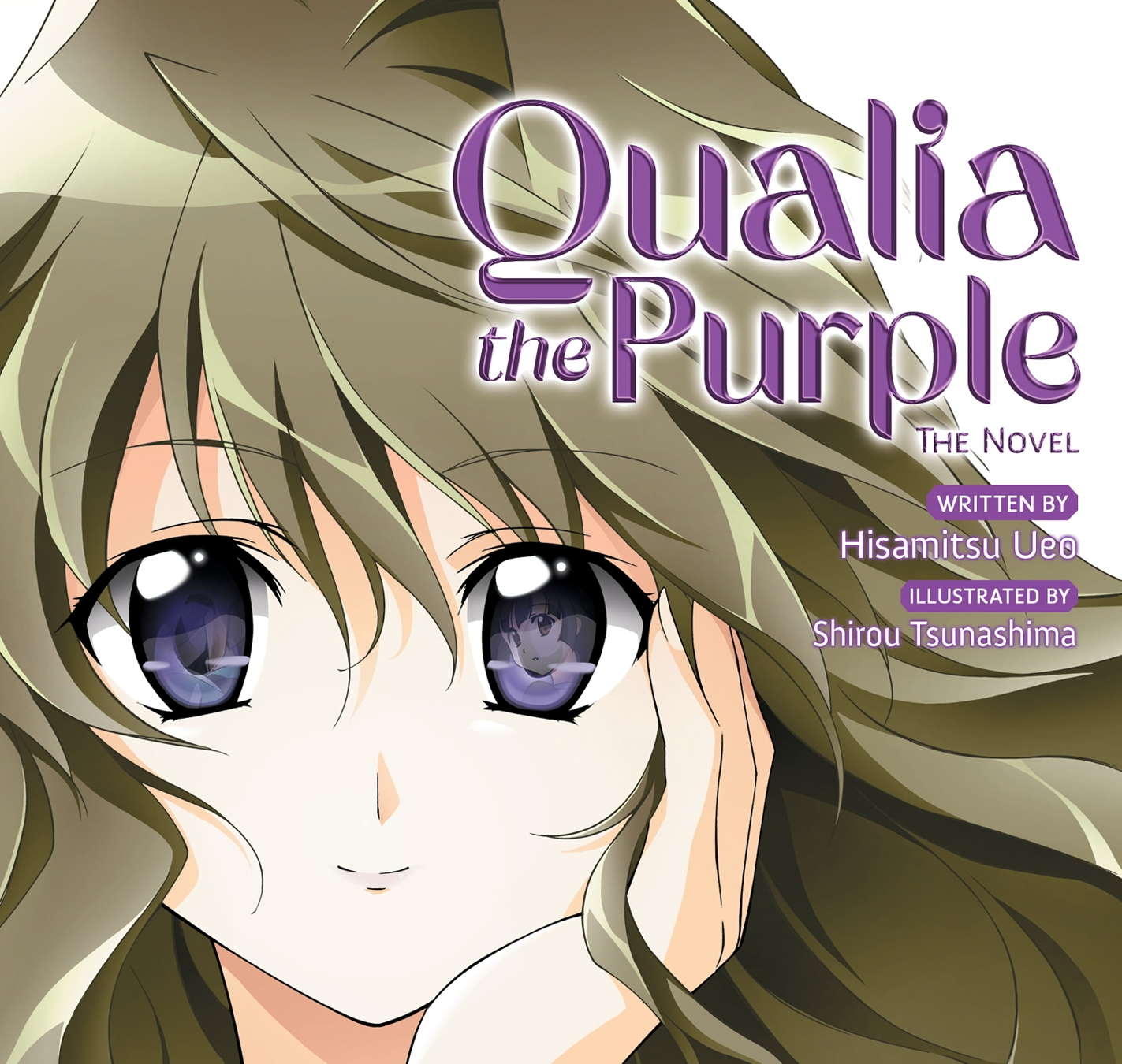
Qualia the Purple: It predates Steins;Gate while also just being better than Steins;Gate.

Also, yes, Iwakura Aria is a yuri game, for those of you who might’ve clicked this review with that exact question in mind. I was actually very excited for this aspect! I love indie queer visual novels, such as those by Nadia Nova (which I would not recommend searching for unless you’re 18+ (Hopeless Junction is a favorite of mine)), and in general, I enjoy engaging with lesbian fiction. All of you, go read Qualia the Purple this instant (the light novel version, not the manga adaptation). In every way, this game should’ve been for me. It sort of is and sort of isn’t, but I’ll elaborate on that in the section about the narrative. If you don’t care about the context for why I was interested in this game in the first place, you can just skip to that part anyway.

To give some context to my anticipation for Iwakura Aria, it should be noted that MAGES. doesn’t exactly have a stellar history when it comes to queer representation in their media. I was equally anxious and curious about this game once it was announced early last year. “Good queer rep incoming, by MAGES. of all companies?” I thought. While I can’t say that I think it’s written well, I can at least argue that it feels genuine and heartfelt in what it wants to convey, which honestly means a lot. To be upfront: I played Iwakura Aria in Japanese when it first came out last year. I also played it a second time with the copy provided to me for this review.

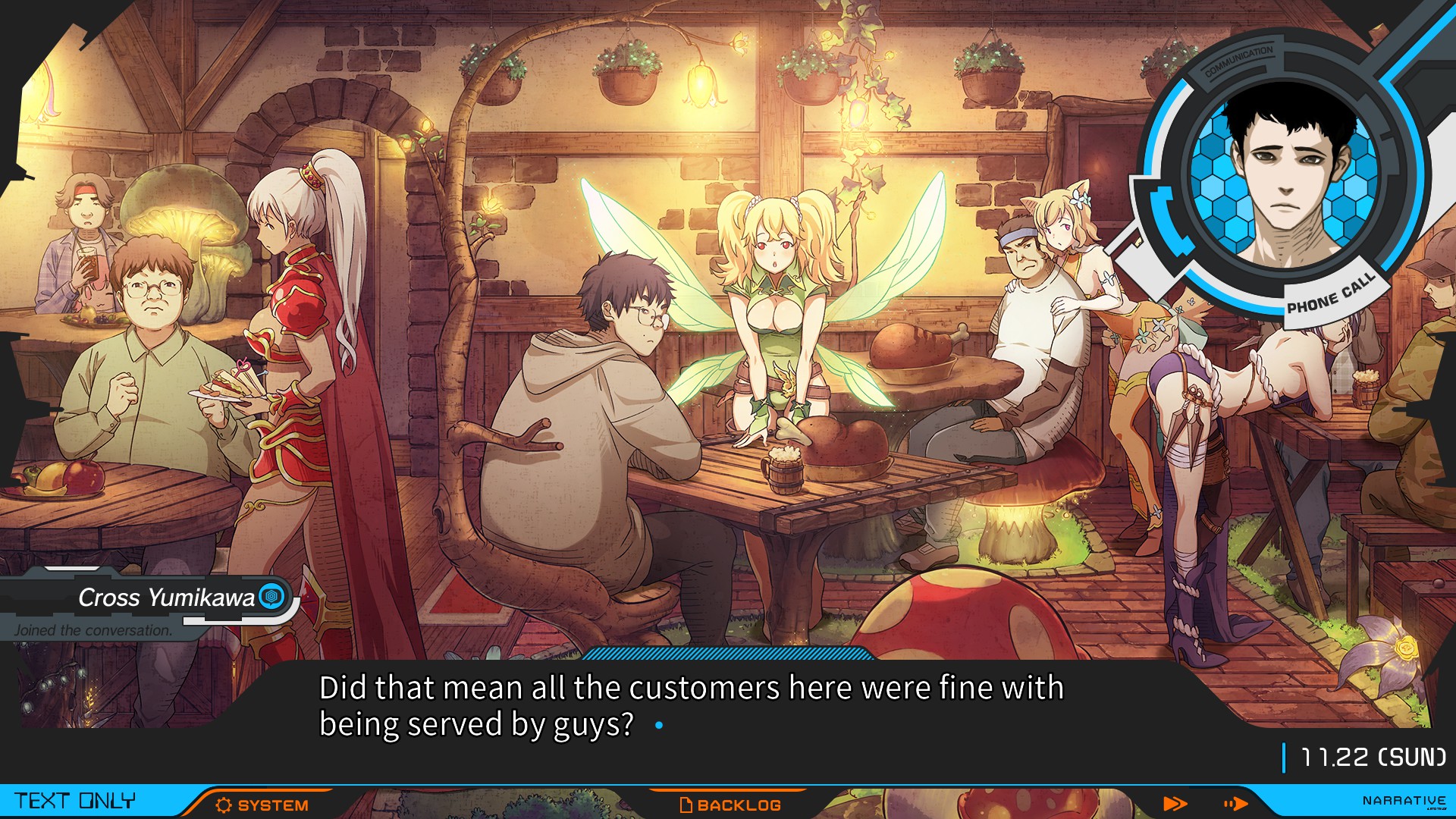
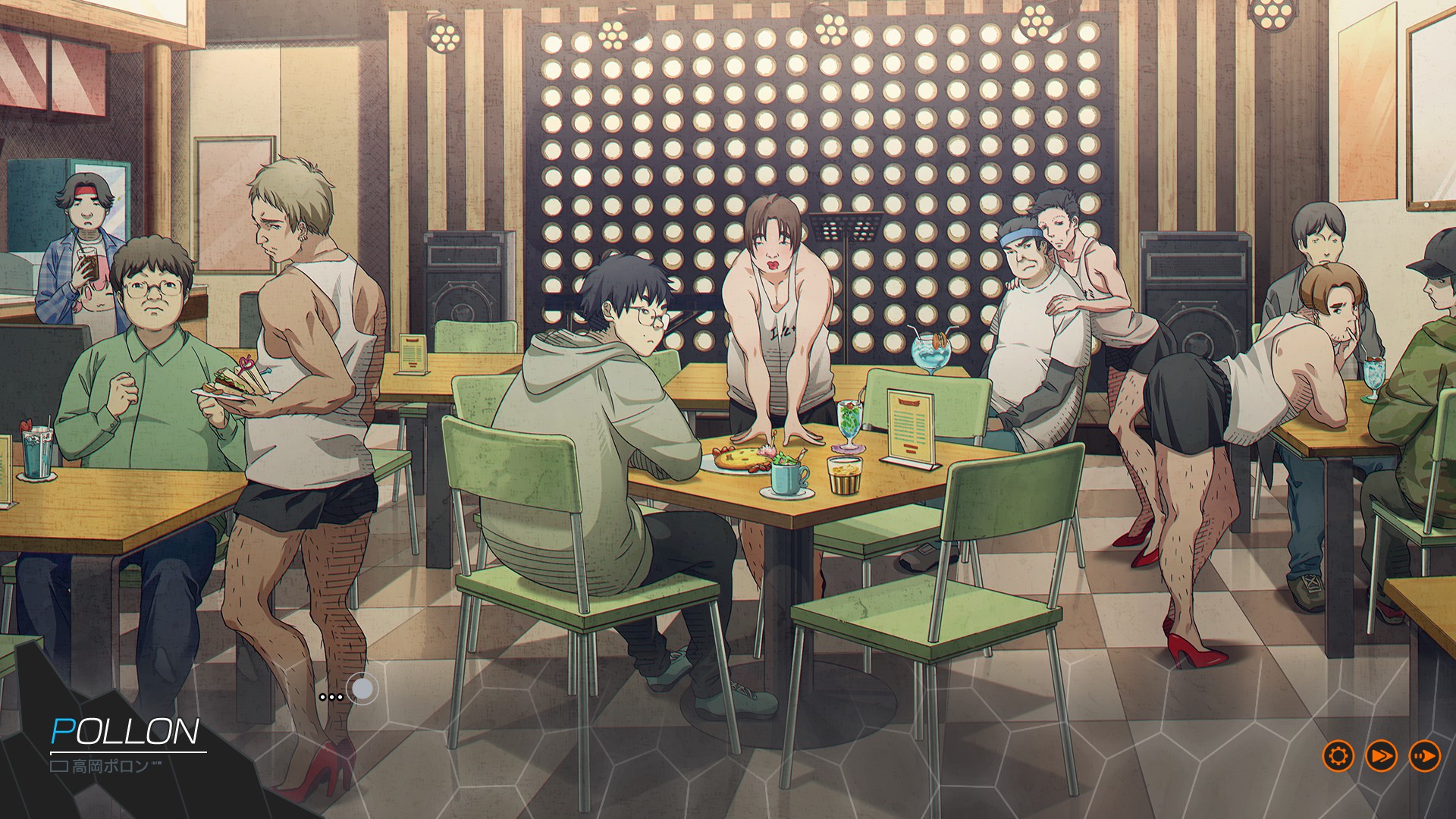
I’m going to start a tangent real quick that has nothing at all to do with Iwakura Aria itself. Take the recent release of Anonymous;Code (2022) as a prime example regarding the obviously queerphobic material this company has put out. It takes place in 2037, in a society where everyone’s got augmented reality just hooked into their brains and people can present themselves how they please regardless of their physical appearance. Sounds like a really cool story mechanism for how someone could reconcile perception of their body with their identity, right? “Lol. Lmao, even,” I think to myself as I’m writing this.

Occultic;Nine: We all love random homophobia that never comes up ever again.

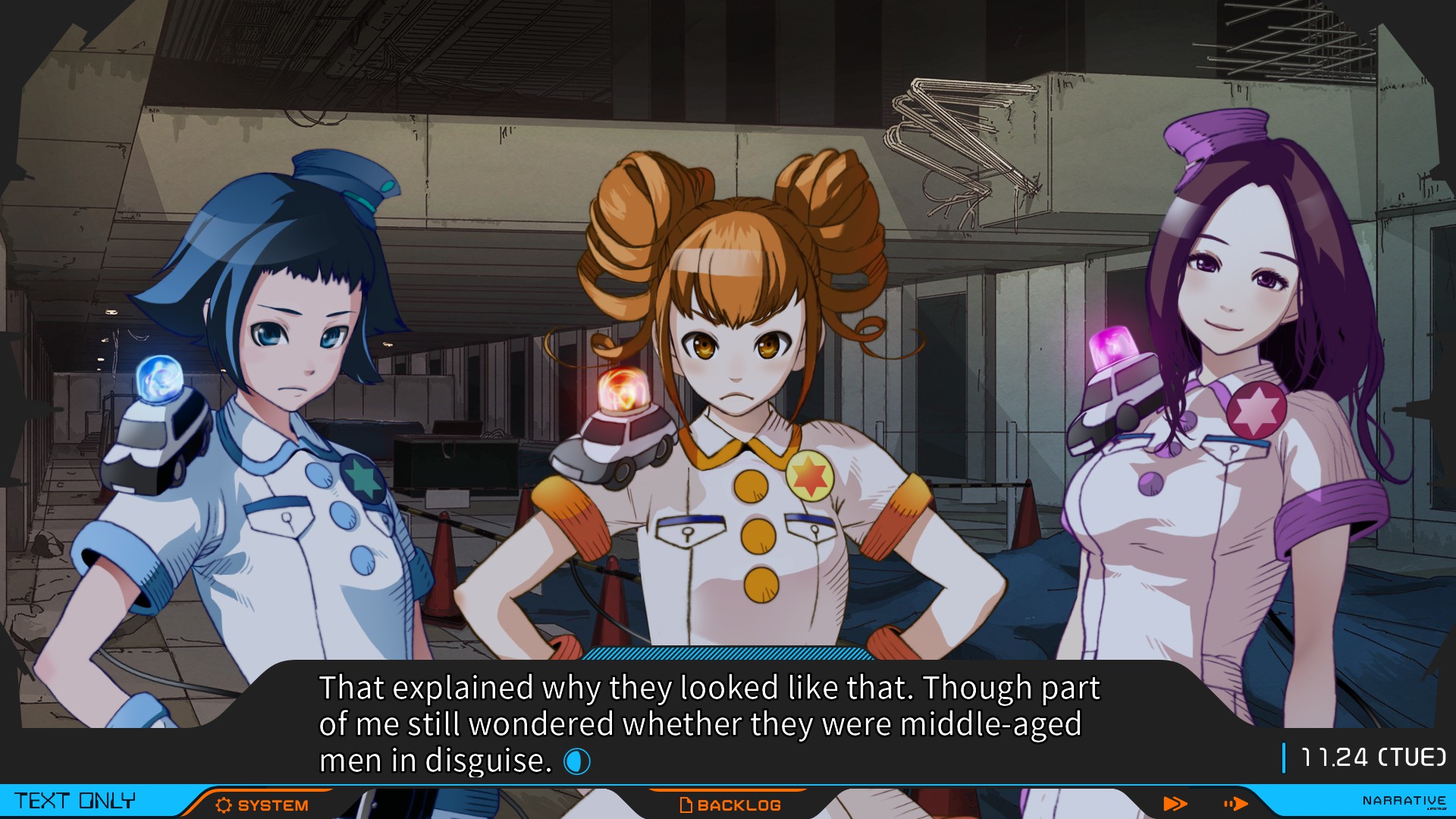
Almost right off the bat, Anonymous;Code weaponizes this setting against queer people by regularly turning them into the butt of a joke for the first couple chapters, where the gag is that people who present as cute women are all in fact hairy, ugly, middle-aged dudes with dad bods who are just faking their femininity, a point that seemingly doesn’t leave the protagonist’s mind for a while near the start of the story.

I watched the creator of the Science Adventure series (Chiyomaru Shikura) livestream this section himself and just laugh like a lunatic at it. Thankfully, he’s got no involvement in Iwakura Aria, and I shudder to think of what it would’ve been like if he was. (No, I’m not going to forgive him for making the main protagonist of Occultic;Nine outright claim that lesbians are creepy and should only date men. Weirdo.) Again, this really has no relation to anything about the game I’m actually reviewing, but I just wanted to give some background for why I at least felt a bit skeptical about this company in particular entering the queer fiction space much more explicitly than before.

Admittedly, I’d never read anything by Iwakura Aria’s writer, Gogo Nemuru, prior to this game. I was familiar with the name, since I’d at least heard of B-PROJECT: Ryuusei*Fantasia, another visual novel they wrote. I might play it sometime just to get a feel for this writer, since I have read some interviews by them after playing Iwakura Aria that make it extremely evident that it was, to some extent, intended as a thematic evolution of Ryuusei*Fantasia. Now, with all that out of the way…

The Second Preface

Gotcha, didn’t I? Sorry. This section should be called “Steam Testing” or something, but calling it the second preface is way funnier after those last 700 words. I played the Steam release of the game, so everything I ever say applies to that. I have no idea how the Switch version of this new release handles, so please don’t ask. I assume it’s fine, though.

And yet I only ever play visual novels.

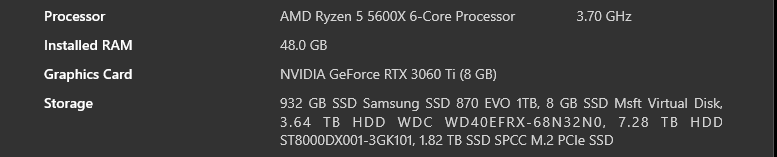
I spent about equal playtime on my LCD Steam Deck and Windows 10 desktop PC playing this game. I’ll note my specs for posterity: I’m running a Ryzen 5 5600X, RTX 3060 Ti, and 48 GB DDR4. The game is only a single gigabyte big, so read speed shouldn’t be that important, but if you really want to know, I have it on an ST8000DX001. Oh, for my PC display, I also use a 27-inch 1080p 75hz display (please don’t bully me for having multiple HP 27f’s). I don’t have a higher-res display for testing, but to my understanding, Iwakura Aria’s engine is typically averse to any resolutions higher than 1080p. Also, it’s a pain in the butt to try and fullscreen this game on a secondary monitor. I had to change my primary display to even get that to work.

For my Steam Deck, I settled on Proton 9.0-4, which didn’t seem to have any issues regarding literally anything. I didn’t personally notice any difference between running it on my Deck and running it on my PC, which is nice. In-game videos are just as functional, if you’re wondering. I didn’t run any crazy actual benchmarks or anything, because why would I, but hopefully this information will benefit anyone who might be trying to troubleshoot anything.

To give a bit more technical background, Chaos;Head NoAH on Steam is a prior iteration of a 64-bit variant of this engine made in recent years, but it doesn’t cap the framerate despite tying it to animation speeds and in-game timing. I don’t have a display with a significantly higher refresh rate to ascertain whether or not they’ve addressed this with Iwakura Aria, but I wouldn’t hold my breath anyway considering they still haven’t fixed it for Chaos;Head NoAH as of writing this. Might be worth knowing in case you have a display way better than mine.

Steam Deck screenshot of Iwakura Aria.

The story text might be a skosh less legible on Deck due to font sizing, but I didn’t personally have any issues reading it. And yes, this game has Steam Cloud saves. I remember all the advertising PQube did when SINce Memories was undergoing Steam Deck testing, which was exciting—only for the game to not even have cloud saving, which just kinda ruined the portability aspect for me since I couldn’t switch between platforms with ease. But this game does have cloud saving! Yay!

What it doesn’t have is a controller guide, meaning if you pick it up on Deck or with a gamepad, you’ll be staring at keyboard and mouse hints for controls instead of anything that you’re actually pressing. You can of course reverse-engineer the control scheme by looking at how Steam Input translates the key presses into buttons, then memorizing the layout until it’s solid in your brain, but that’s not ideal. It’s a bit annoying, actually. Thankfully, most of the controls are intuitive with a gamepad already, so it shouldn’t be too much of an issue depending on your level of gamer brain.

You can check out any time you like, but you can never leave.

You can tell this was originally a console visual novel that’s been ported to PC, though, by how the mouse-keyboard scheme is borderline nonsense at times. Just try to guess how you’re supposed to exit the exploration gameplay with MKB compared to a gamepad. There’s also how the main menu doesn’t even have a button to let you exit the game, which is a bit silly. This isn’t a problem with something like a Steam Deck, but it’s a tad annoying on PC to have to use Alt+F4 or ESC.

Narrative

Since this is the first real section of the review and arguably the most important, I actually wrote this part last. Iwakura Aria is a special game, and I say this as someone who thinks it exists at an equal point between flawed and masterful. I could just open here with some basic plot synopsis blurb, which is maybe what some of you even want, but you’ll just have to wait for that. I want to take a while to talk about how I feel about the story.

Iwakura Aria is a special game because the titular character, Iwakura Aria, is special herself. I could use a lot of words to describe the ever-present through-line of this game: gay, lesbian, homosexual, yuri, girls’ love, queer, or sapphic. These might not all have the same connotations by any stretch of the imagination, but I wouldn’t exactly argue against their collective application to this story. I was a bit apprehensive at first regarding how the story would approach itself, given the advertising flaunting it as being about “the bonds between women,” which made it seem like they were tiptoeing around intimacy and simply avoiding the topic by using vague terminology.

Iwakura Aria just really lays on the self-loathing platitudes sometimes.

I do have to admit, though, that it certainly approaches this topic head-on. It commits as much as it can to its characters and themes in the short span that it has. I will say that the length of this game is perhaps in the ballpark of fifteen hours. It might be shorter if you’re a very fast reader, or it might be longer if you’re known to take your time. Fifteen hours is a lot of time for a plot to unfold, but I still can’t say it felt like enough to flesh out the characters and many of the ideas behind them.

For the total number of ideas that I liked in the story, a fair amount of them fell completely short for me in their execution. For instance, I really like Ichiko (the protagonist) in terms of her background. She’s spent her life in the foster system and has frankly had a horrible hand dealt to her in life ever since. The story begins in earnest with her being plucked from destitution and brought into the fold of the Iwakura residence by its sole proprietor, Amane. From there, she’s taken in as a live-in maid who grows closer to Amane’s daughter, Aria, a very frail girl who requires significant caretaking. In concept, I like this.

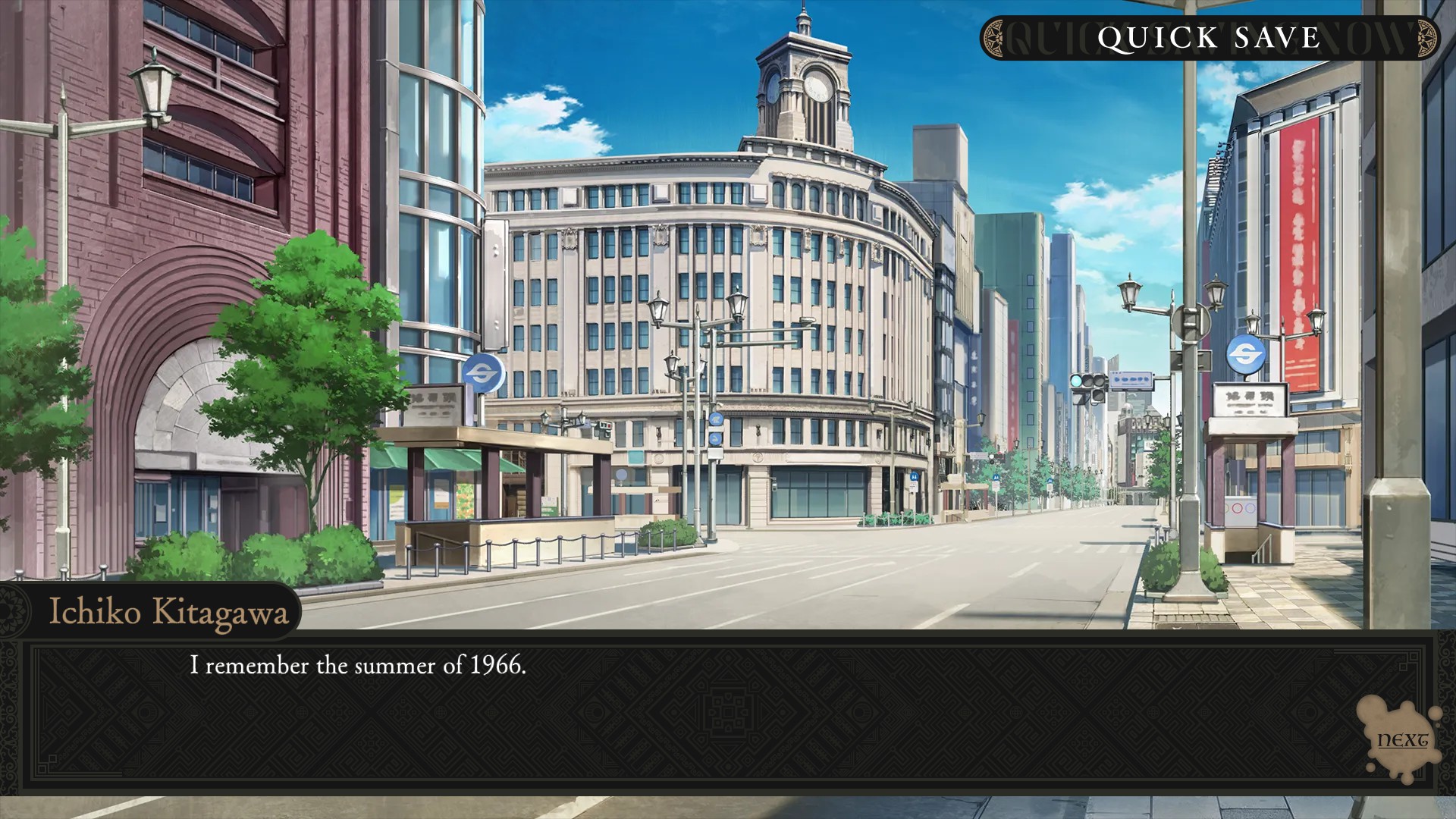
The very first scene in the game is a flash-forward to 1999 and lasts only a few lines, describing how Ichiko fondly remembers the summer of 1966 (when the game primarily takes place). This opening scene immediately establishes that the game is trying to form a causal link between 1966 and 1999, to show you two different Ichikos and how she arrived from Point A to Point B. In concept, I like this, too.

The narrative as a result is littered with optional side endings that explore how insignificant choices lead to drastically different outcomes for Ichiko. These endings have a massive impact on the path she takes in life, showing dramatically different versions of herself as of 1999. Again, in concept, I like this, since it ties quite well into the idea of Ichiko as a causal link.

Themes of intimacy and autonomy are also prevalent throughout. The relationships between Ichiko and Aria, as well as Ichiko and Sui (the residence’s chef), see development and elaboration, though the former has significantly more focus. The story wants to showcase how the isolation from the world—and even just people at large—has the core cast adapt to each other and understand one another’s boundaries, and to solidify this, its events almost entirely occur within or around the Iwakura residence. I like this concept as well.

There are tons more concepts in Iwakura Aria that I like, but I think taking these as an example will suffice for the sake of this review, especially since the ones I really like tend to be spoilers. So, I’ll go in order of why I like these concepts and how I think they don’t necessarily live up to my expectations.

Firstly, Ichiko. The narrative at many points tries to paint her as needlessly aggressive or just angry at everything, which I never personally felt when observing her behavior. It’s true that she harbors at least some resentment toward her upbringing, but it rarely shows itself in the way she carries herself during her days in the residence. Because she’s late into her teens, this is also a story about young love. I can concede that many of her infatuated descriptions of Aria might not be unrealistic, but they do come off as clunkily written in how basic and redundant they are, especially for the whole of the first chapter. It isn’t compellingly written intimacy to me, is what I mean.

One could argue that her basic view of the world is the primary source of her growth throughout the story, but I don’t think the events of the story justify this. I don’t think there’s any real chemistry between the three main female characters; they all just sort of interact because they have to, then the story forces intimacy onto them, though I’ll touch more on that last bit soon. In short, I’m not exactly convinced of the idea of Ichiko as a character.

To stand and consider all possibilities is to drown in a tunneling sea of infinite potentiality.

Next up is the idea of the story as a causal link between 1966 and 1999. I go into the more gameplay-oriented aspect of this later in the review, so I won’t dwell too much on that part of it here. Iwakura Aria very much wants to convince its reader that Ichiko has immense potential to go down many paths with different outcomes. Ichiko is more of a concept of human potentiality than she is a specific person, at least in my eyes. Or maybe each Ichiko is simply her own person, and the collective is the concept of potentiality.

This isn’t the first time I’ve read a visual novel that takes this approach with its protagonist; the all-ages title Rewrite comes to mind, or the 18+ game Yume Miru Kusuri. I think when handled right, this method of portraying a character’s potential futures is incredibly strong, and it plays directly into the strengths of the visual novel medium.

The problem for me, however, is that the length of Iwakura Aria significantly hinders the impact of it taking this approach. For many of its choices, the player can’t conceivably recognize that they branch into anything in the first place. One could argue this is emblematic of the uncertainty of life, but I will argue that it is not exactly compelling with the ways in which it is implemented. By that, I mean that these endings are basically over and done with almost as soon as they start. You’ll do something in 1966 that will nearly instantly trigger an ending that timeskips all the way to 1999, there’ll be some brief rumination by Ichiko, and then it’s over. This doesn’t exactly apply to every ending, but it certainly does for most.

The story shows me possible paths and outcomes with hardly any of the in-between and hardly any final elaboration, which kneecaps their depth and impact for me as a reader. I personally feel like this game should’ve been at least twice as long and maybe restructured in the process, too. In short, I’m not exactly convinced of Ichiko as a symbol for potentiality.

Haha, get it? Undercooked?

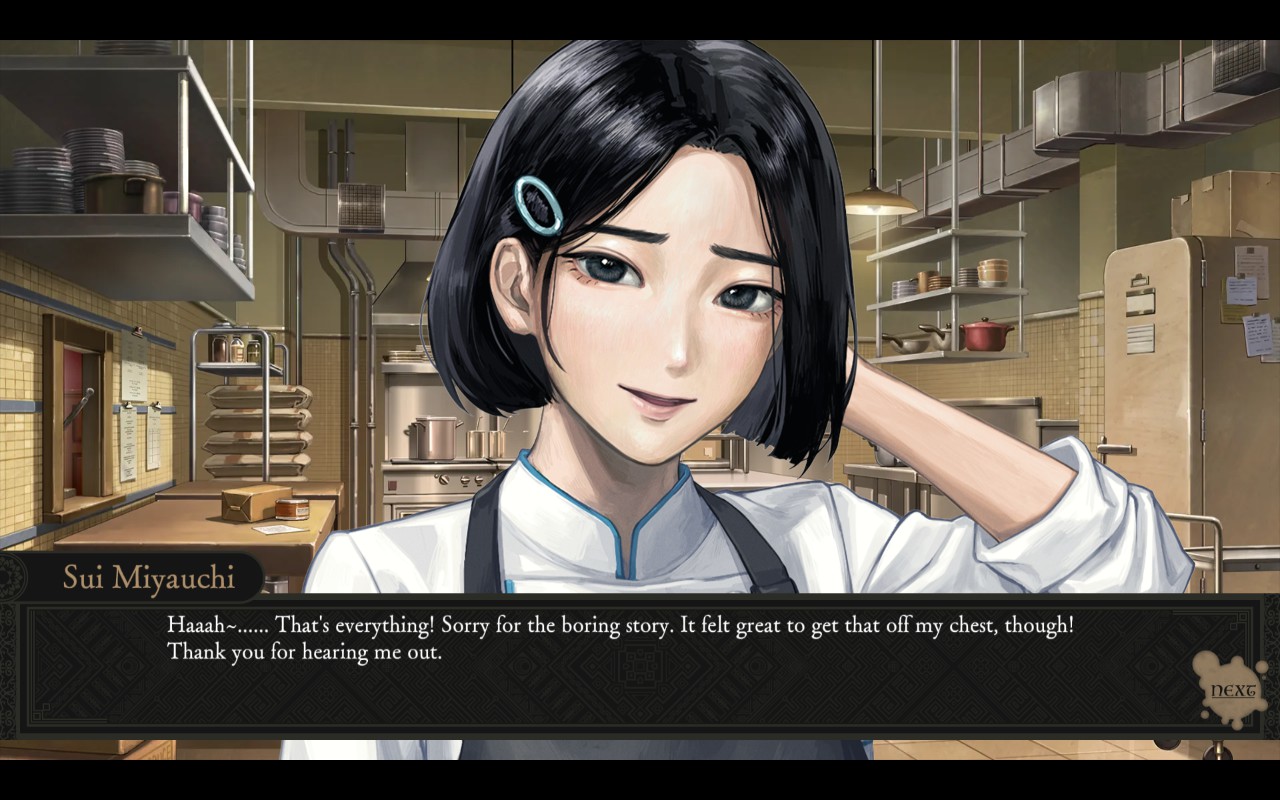
Then, due to the game’s length as well as its focus on Aria, I feel like Sui is unfortunately heavily shafted. Like I said, the game tries to set up somewhat of an isolated setting to give credence to the characters interacting the way that they do, and Sui even gets her own ending you can unlock, but it feels undercooked and unfinished. It attempts to establish some sort of close connection between Ichiko and Sui, who we almost never see interact regularly, yet they still act with some sort of intimate bond out of practically nowhere once the route kicks in.

It almost feels like a quota for the game to meet rather than it really trying to sell the idea of a lonely lesbian chef falling for an equally lonely housemaid in 1960s Japan, which is a bit sad, because it’s a cute idea. Again, fan of the concept, but the game just doesn’t convince me that it’s interested in really committing to it.

I’ll say I actually did quite enjoy the suspense aspect of the story. I think the cast definitely carries out their roles excellently in that regard, as Iwakura Aria doesn’t shy away from explicit descriptions of violence and brutality in ways that connect quite cleanly with the rest of the narrative. I found some segments of it a bit hard to read as a result, since just imagining some of the story’s scenarios was enough to make my stomach churn. There are accompanying image assets at many points for certain violent scenes, but the visually depicted violence is fairly subdued compared to what’s described in the text. Admittedly, I’m quite impressed when visual novels rely on strong writing more than they do graphic imagery when it comes to extreme material. This is arguably more intense of an example, but those who’ve read the uncut version of Chaos;Head NoAH’s “Crying Sky” chapter (officially available only on Xbox 360 and PlayStation Vita, versions sold solely in Japanese) will know exactly what I mean by that. The start of Yasuko’s view in Tsui no Sora remake is another example of this.

You’ll notice I’ve avoided talking about Aria to any real extent, and admittedly, that’s because it’s quite difficult to talk about the character that the game is literally named after while also avoiding spoilers. You’ll just have to trust me when I say that I really like the idea of her, and of course, that I am not exactly perfectly content with every part of her writing. Sorry for being vague.

There are also these small side stories you unlock as you play, but they’re not very long at all, and I don’t really have anything to say about them. They serve a purpose, but I wish they were actual side stories and not basically short monologues.

I’m sure there’s some sort of self-aware commentary I can make here about how I’ve just read a game with such a focus on intimacy, yet I keep focusing on the idea of the game that I have in my head instead of what’s actually there, infatuated with a concept that isn’t and never will be rather than being grateful for what is. Or something like that.

I still have no idea what she meant by this.

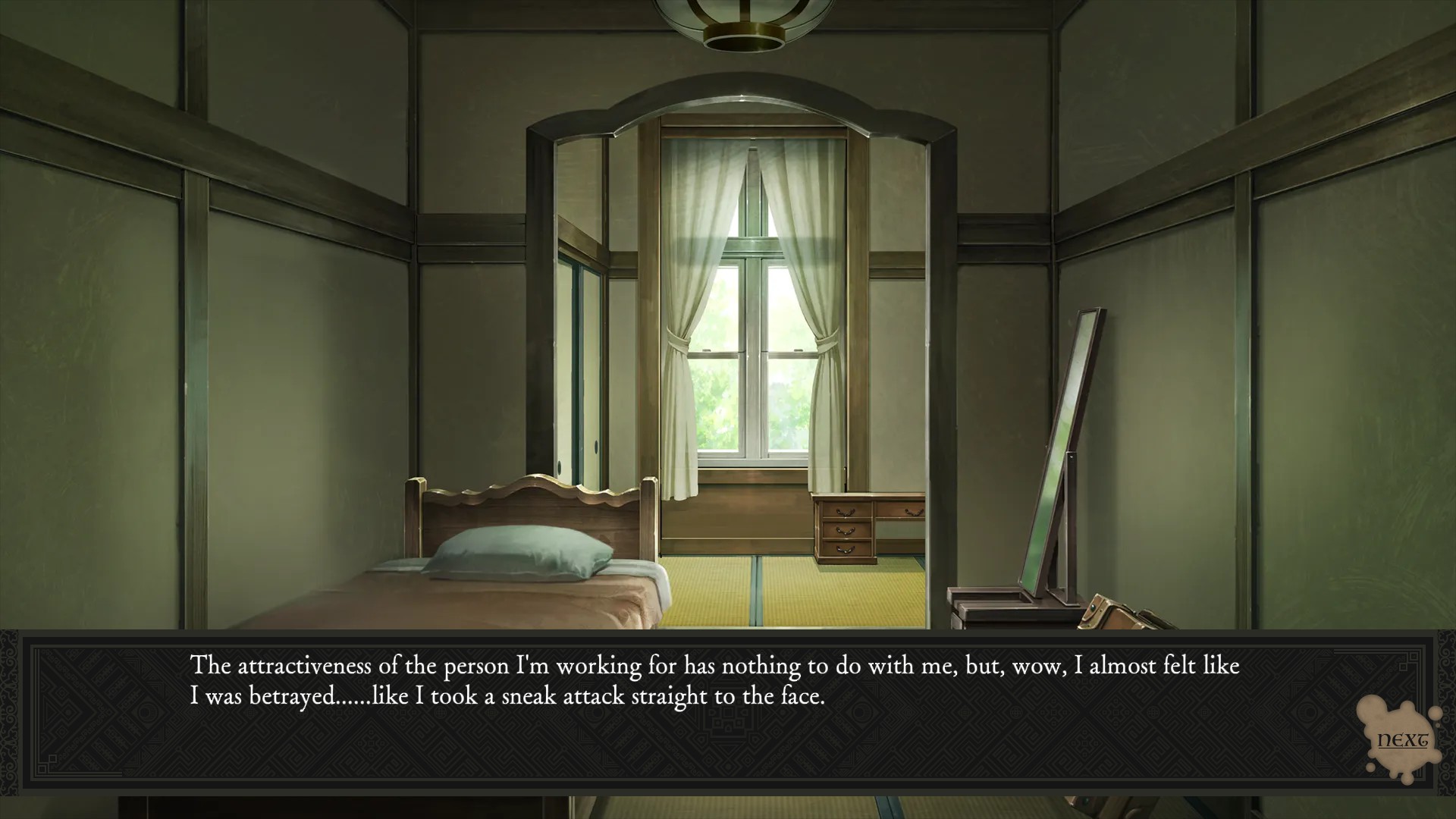
To sum up my thoughts on the narrative: it’s mainly cool in concept, and I wish it spent more time on these concepts. The attractiveness of the art for the game I’m playing has nothing to do with the writing quality, but, wow, I almost felt like I was betrayed……like I took a sneak attack straight to the eyes. Wait, did I even end up writing any sort of synopsis blurb? Eh, whatever.

Presentation & Gameplay

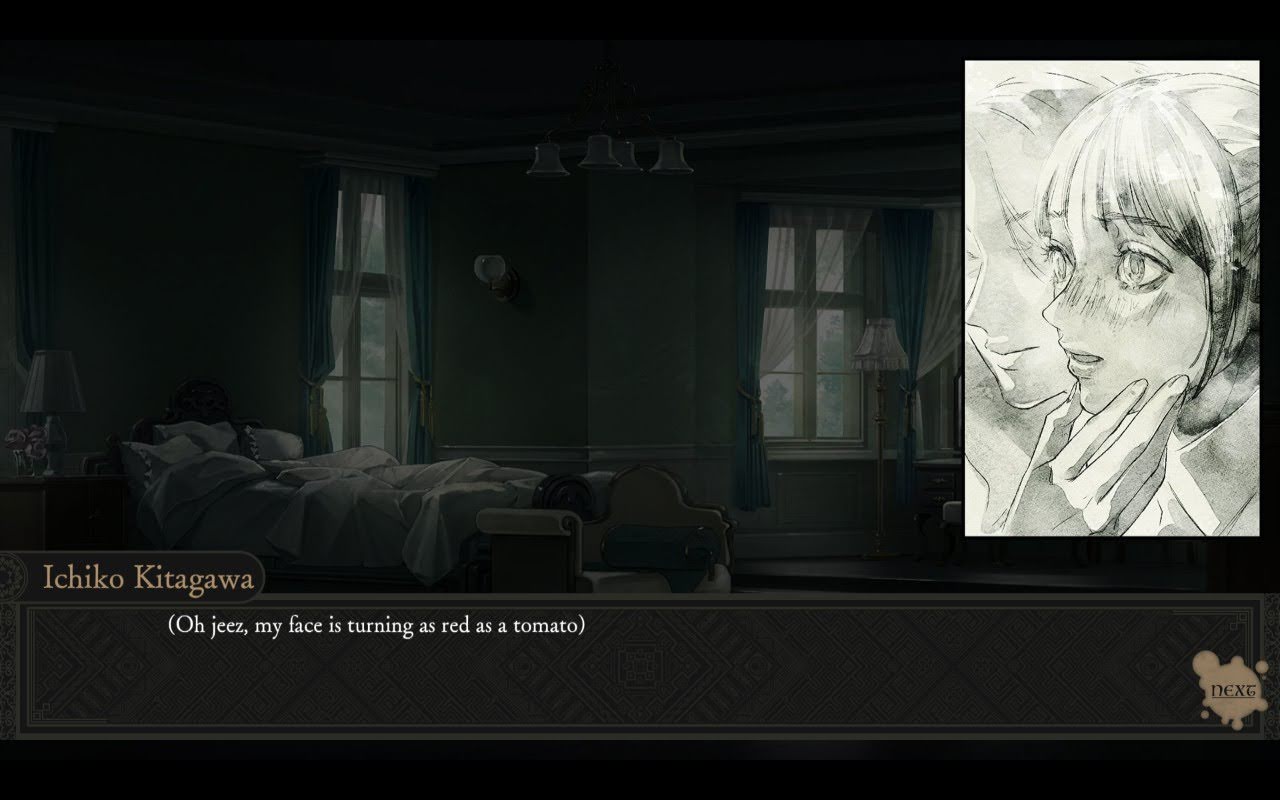
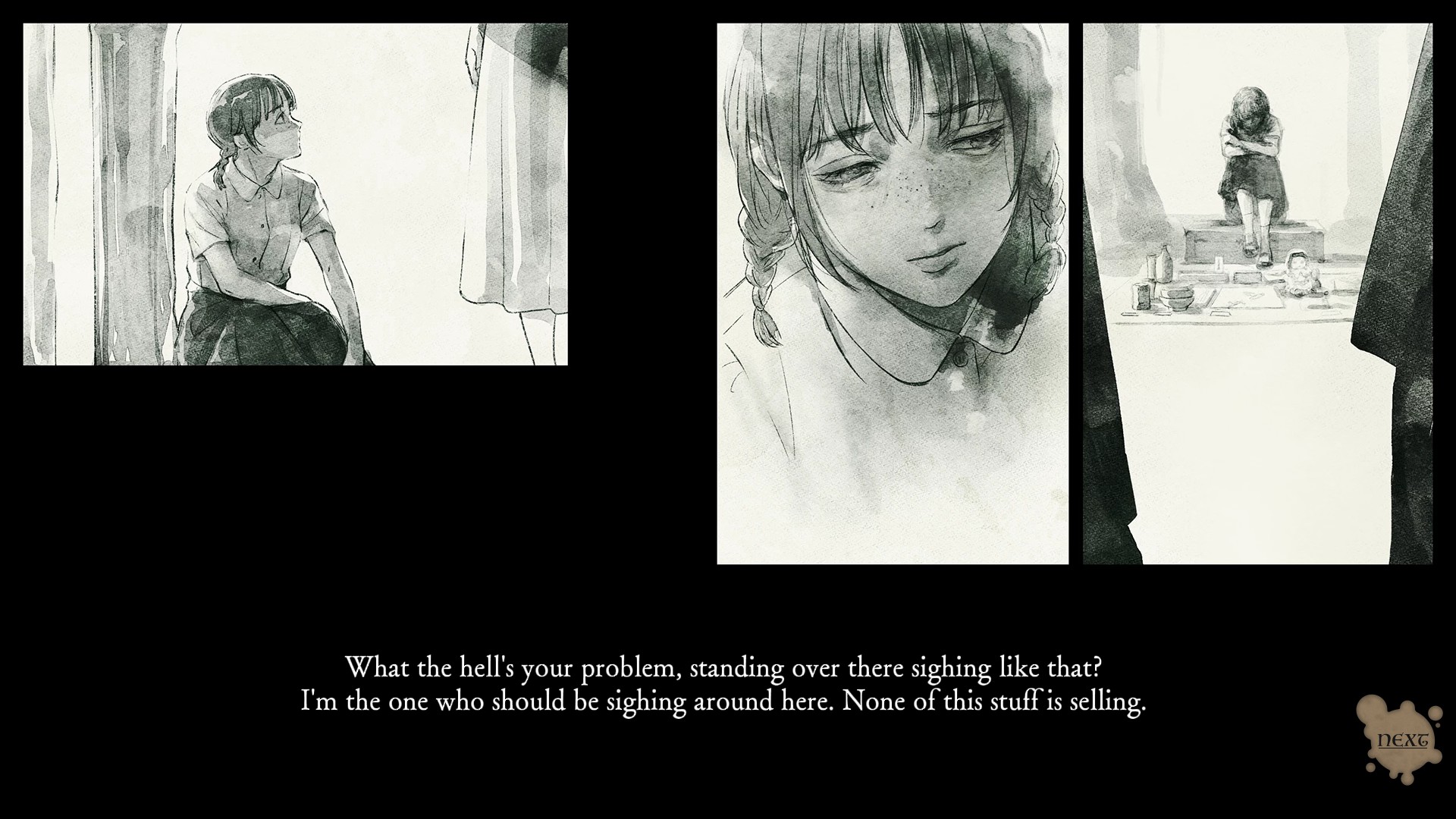
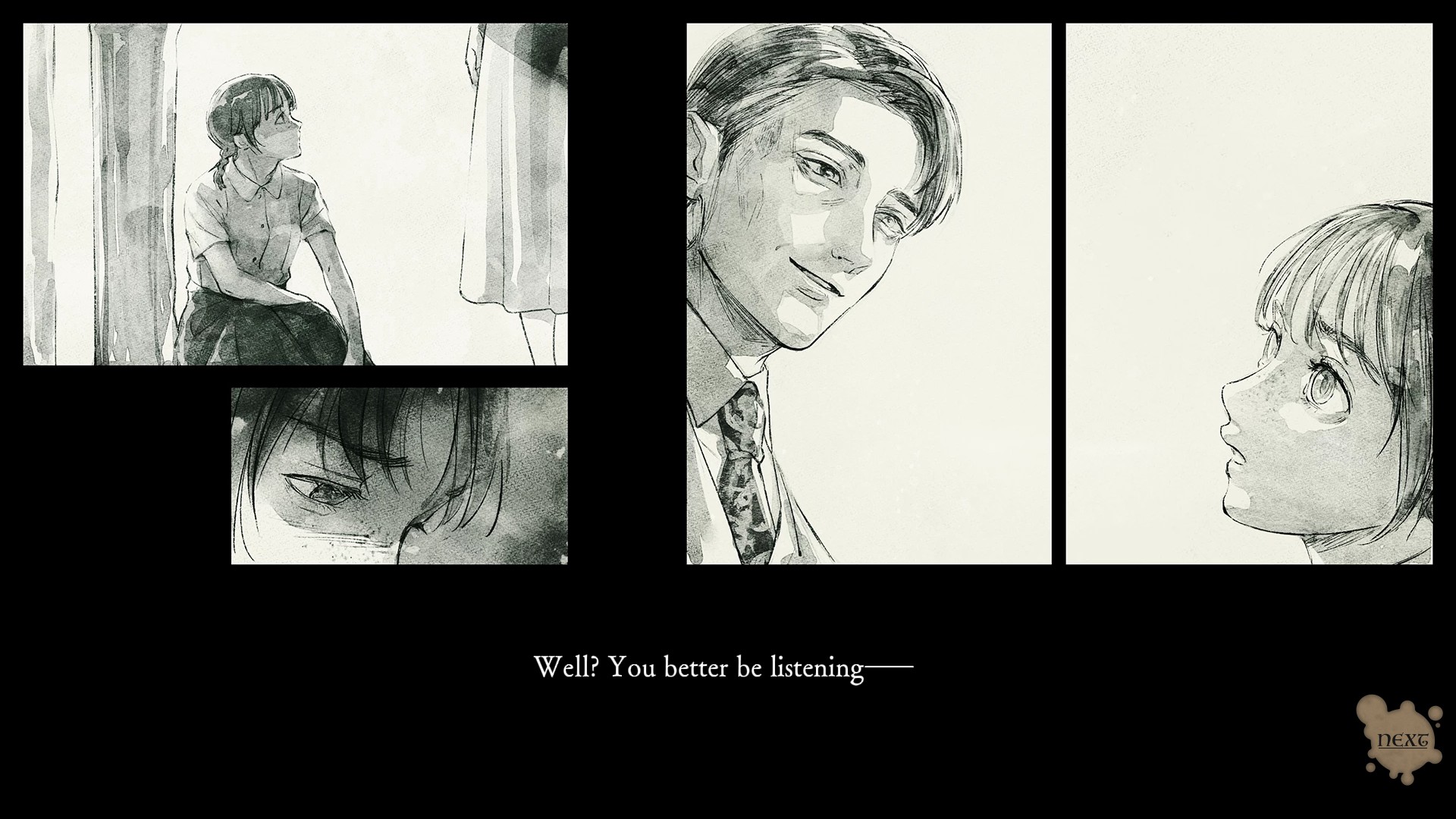
The cut-in segments are seriously so beautiful.

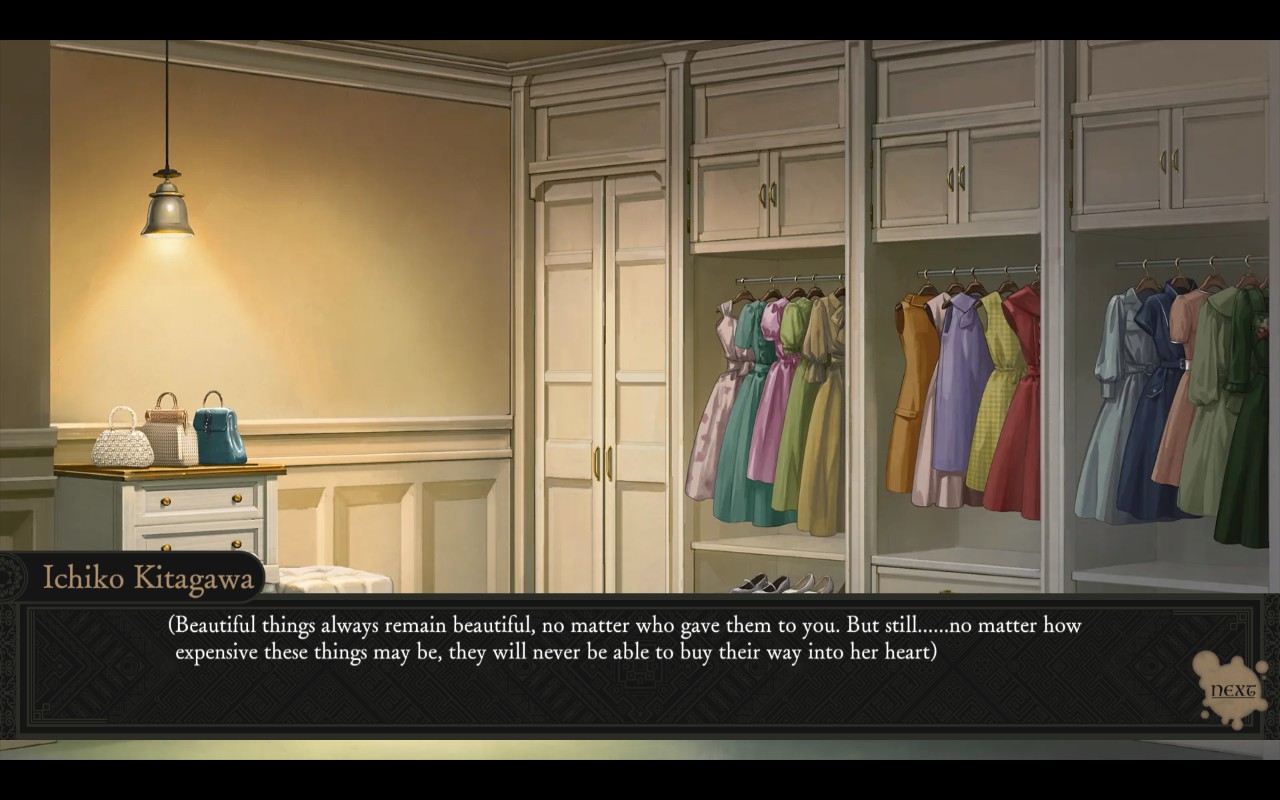
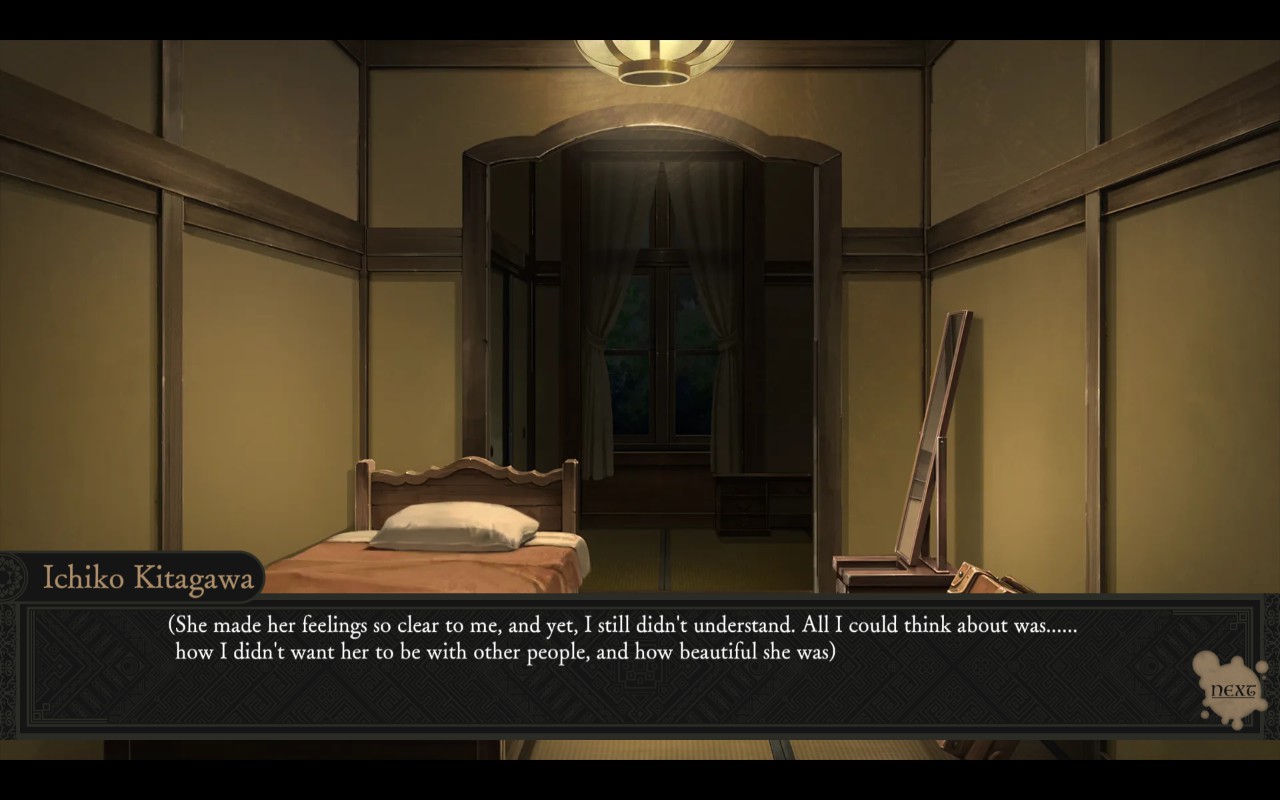
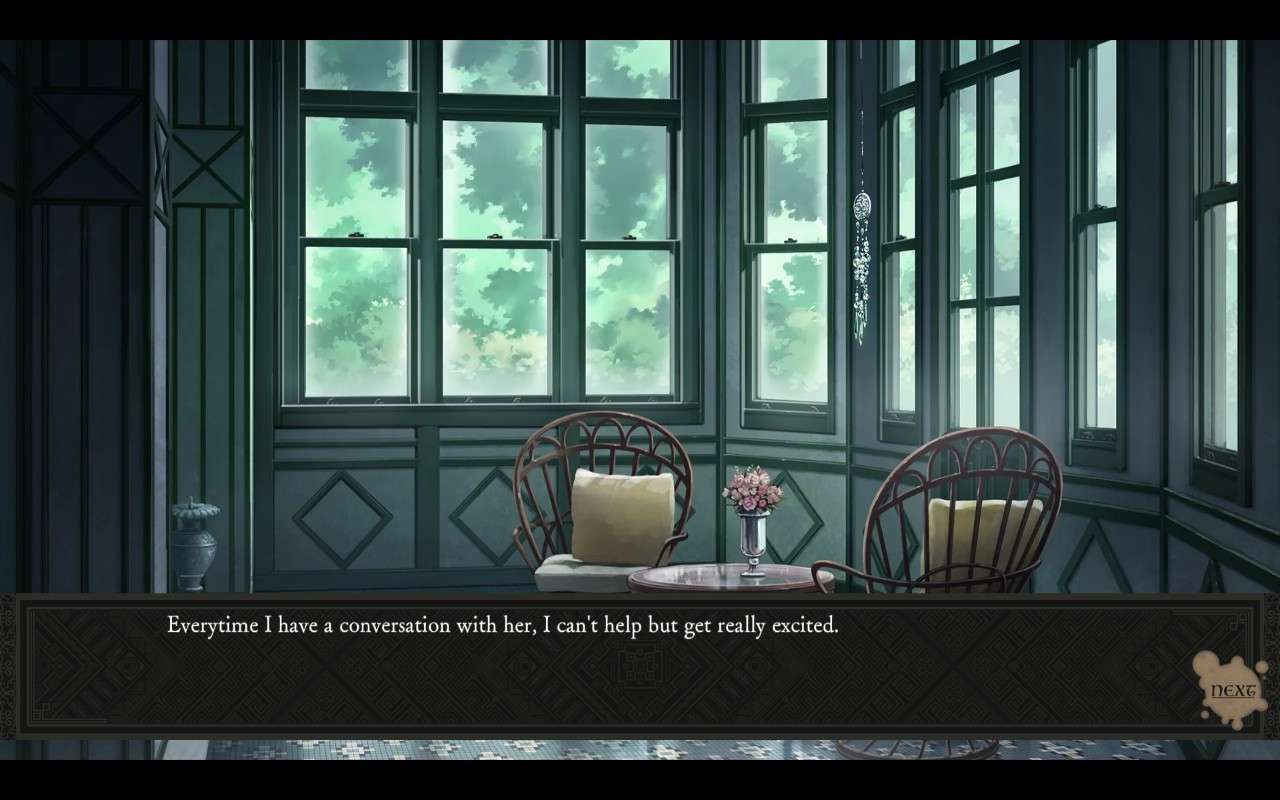
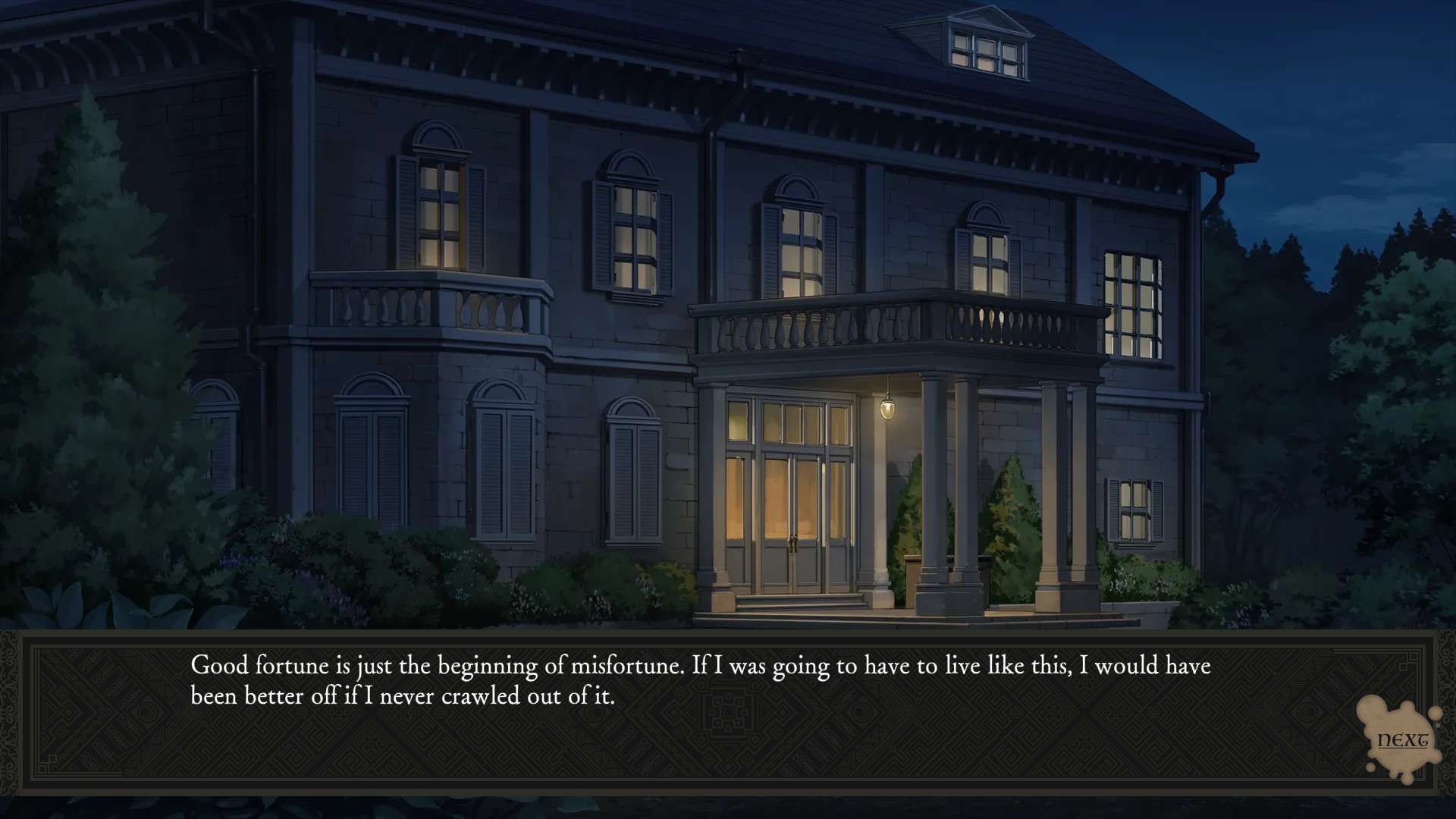
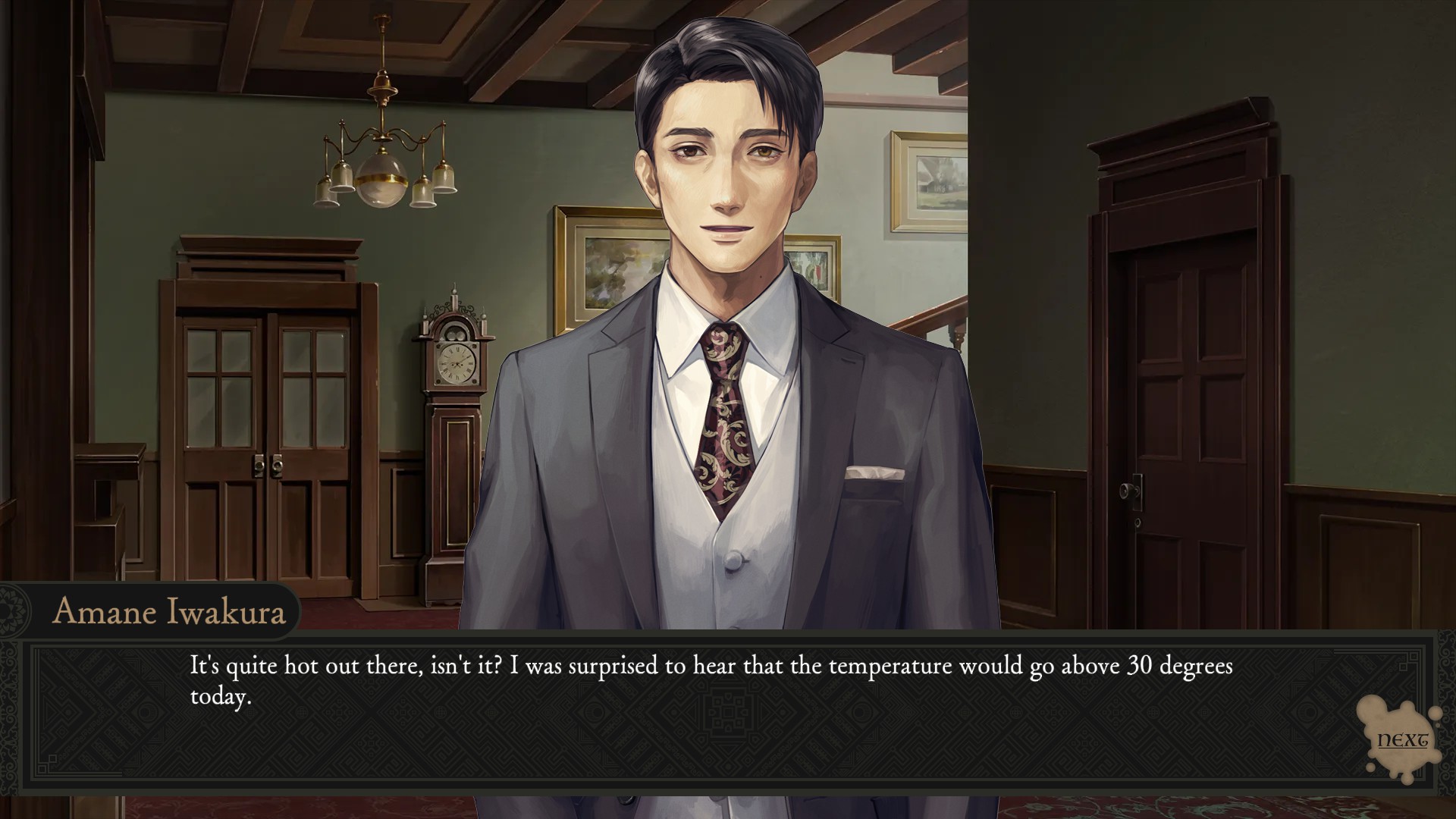
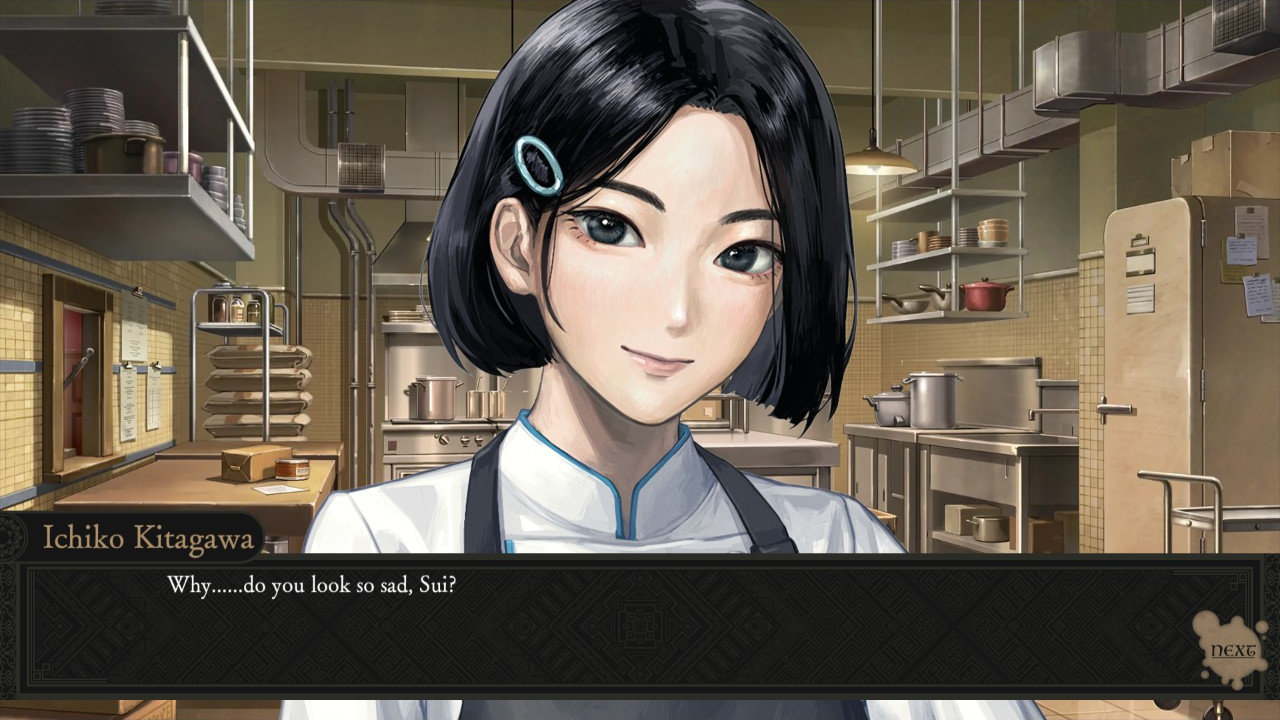
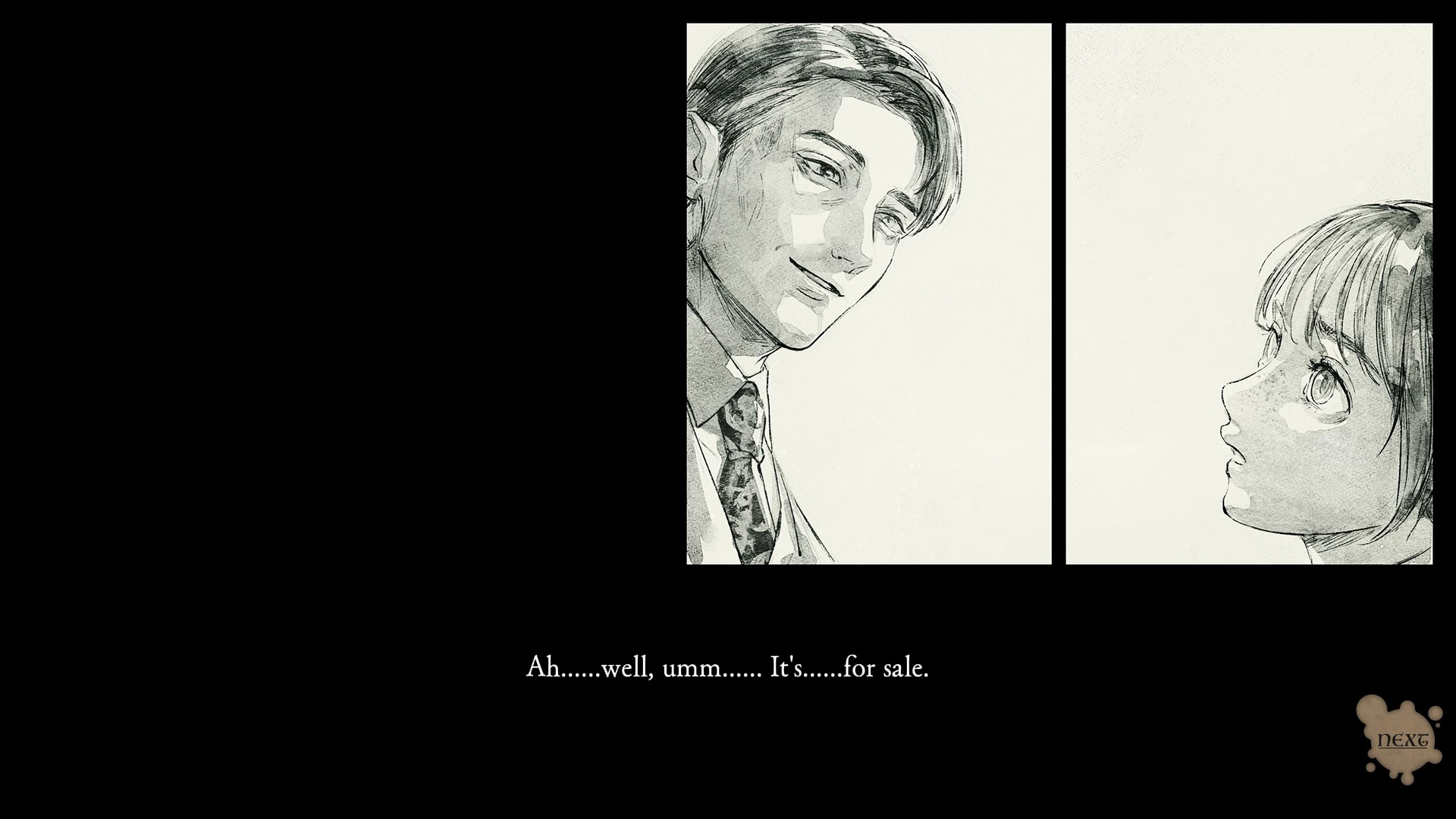
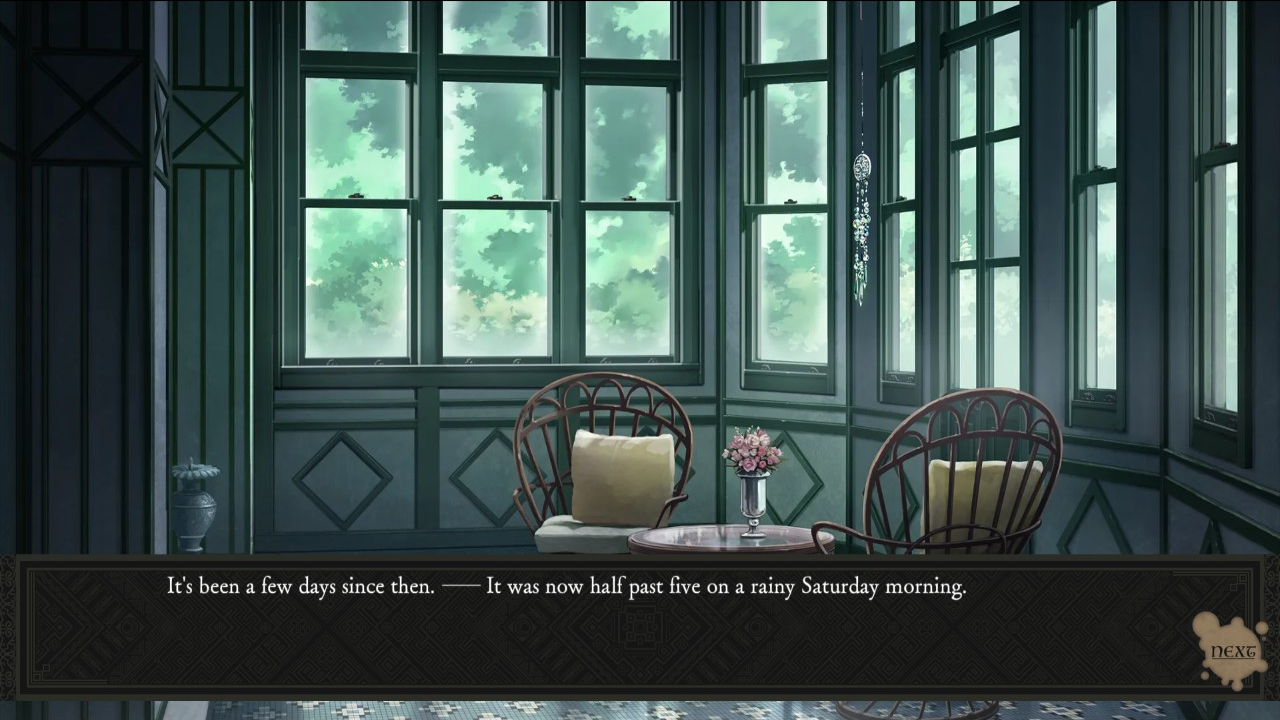
To start with presentation: the art style is admittedly quite evocative, with its elaborate backgrounds, detailed sprites, and well-directed cut-in panels. Granted, I think that it would’ve been nice if more speaking characters had sprites in the first place, but it’s also reasonable in a game of this scale to limit the sprites to the main characters, especially since the cut-in sections do have a tendency to portray other people as well.

You're pretty hot yourself, Amane.

That said, Iwakura Aria’s lack of budget is palpable throughout. I have no doubt that the production team worked within their means as best they could, but I do think the game’s presentation largely feels quite boring. Don’t get me wrong, I’ve read enough visual novels to know that a standing sprite and a background change every now and then is basically nothing out of the ordinary, but I’m honestly expecting more from a game made so recently and by a company as prolific as this one. The character designs themselves are very polished, but not much is done to present them in a unique manner.

MAGES. has always aimed to push the bounds, but this game effectively tries very little of the sort, if anything at all. Even the cut-in system, wherein the game renders manga-like panels of events on the screen to depict the story, is clearly something they adapted from Anonymous;Code, but in my opinion, it’s also implemented significantly worse. In terms of tech and presentation polish, Iwakura Aria is hardly distinguishable from anything that came twenty years before it.

I would say the manga-like presentation worked so well in Anonymous;Code due to the panels containing bubbles for the dialogue, leaving no confusion as to who is speaking while also negating the need for any narration. In that game, it’s clear what’s going on and where the dialogue is coming from. This isn’t exactly the case in Iwakura Aria, where the text is still confined to the textbox area where it displays both dialogue and narration. It’s worth pointing out that this game doesn’t use quotation marks to denote dialogue in either language, meaning everything is formatted identically; you need to rely on the textbox’s nametag to discern what is actual dialogue and what is simply narration.

Not being able to visually tell who is speaking sometimes despite the game largely otherwise telling you is simply strange.

The cut-in sections often do not preserve the textbox, however, despite still rendering the text there, meaning there is no discernible way to verify who is speaking unless you reference the game’s backlog. It’s very poor for accessibility, which is an unfortunate commonality among visual novels. To reference my best go-to example, Anonymous;Code, again: there are over 400 voice lines in that game without any corresponding text! In a visual novel! Accessibility is harshly ignored in a medium like this, and it’s sad to see. As for Iwakura Aria, not all cut-in scenes even remove the textbox, making it even more odd that other scenes go out of their way to remove it, presumably for a more cinematic experience.

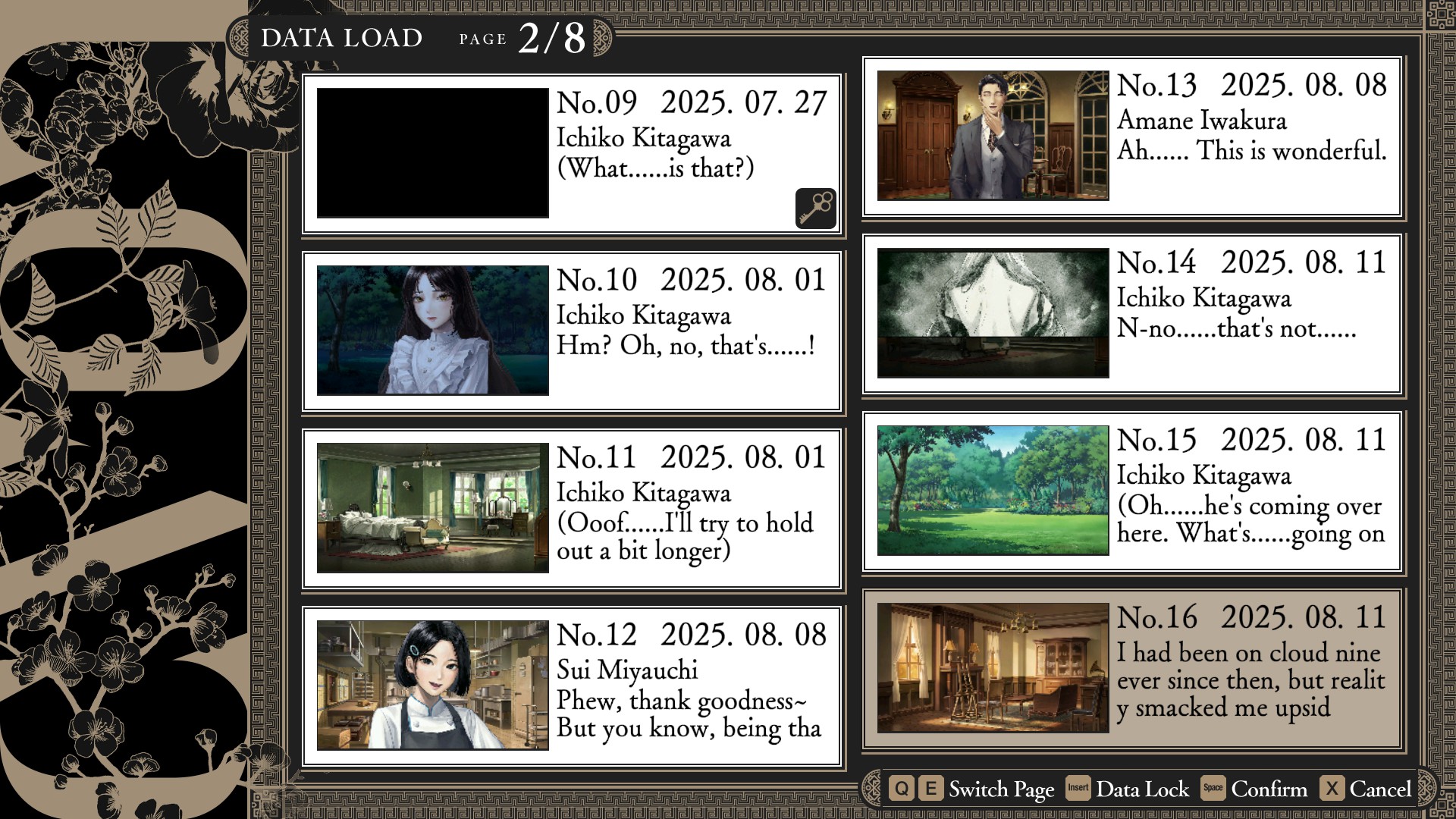
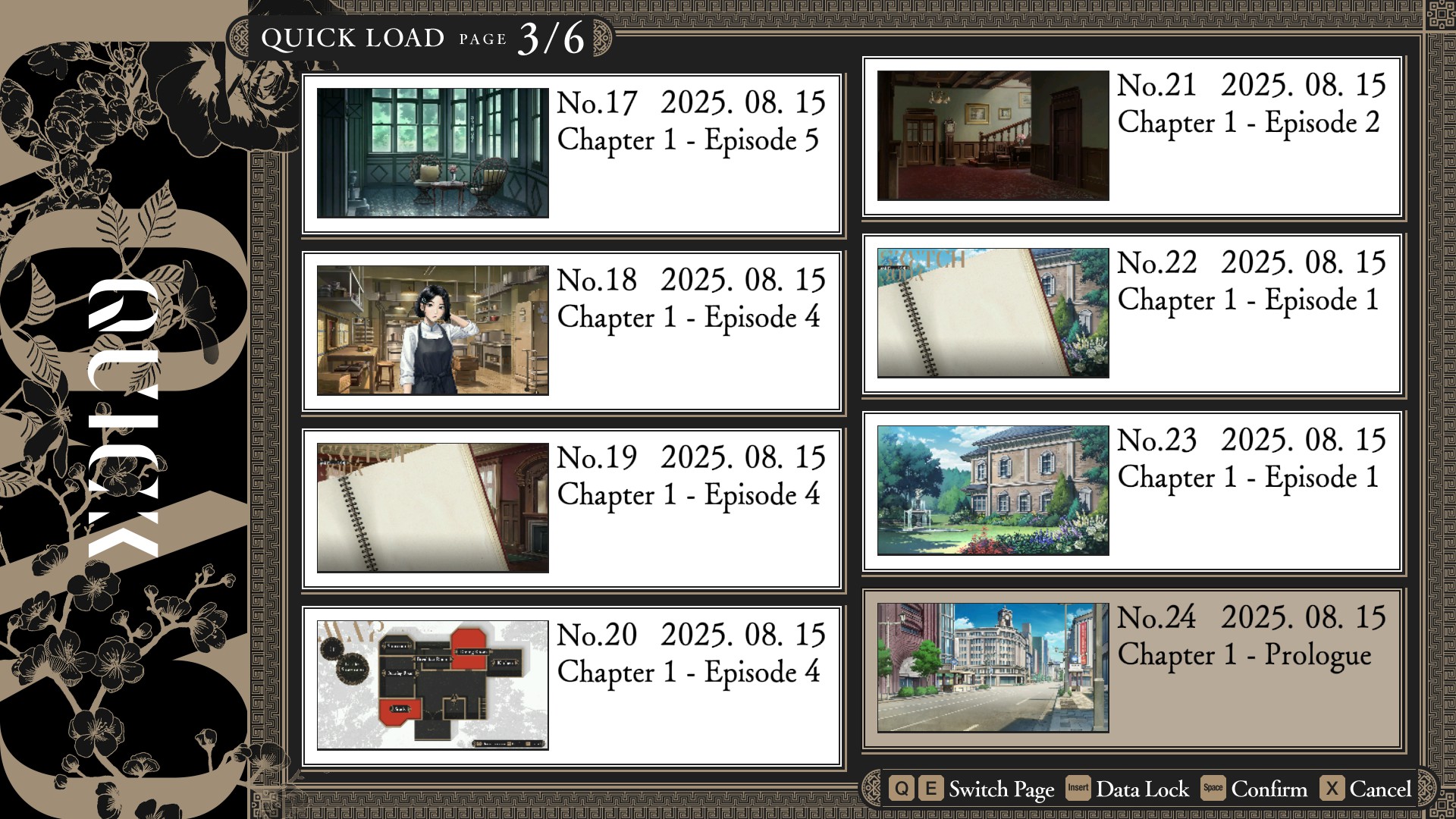
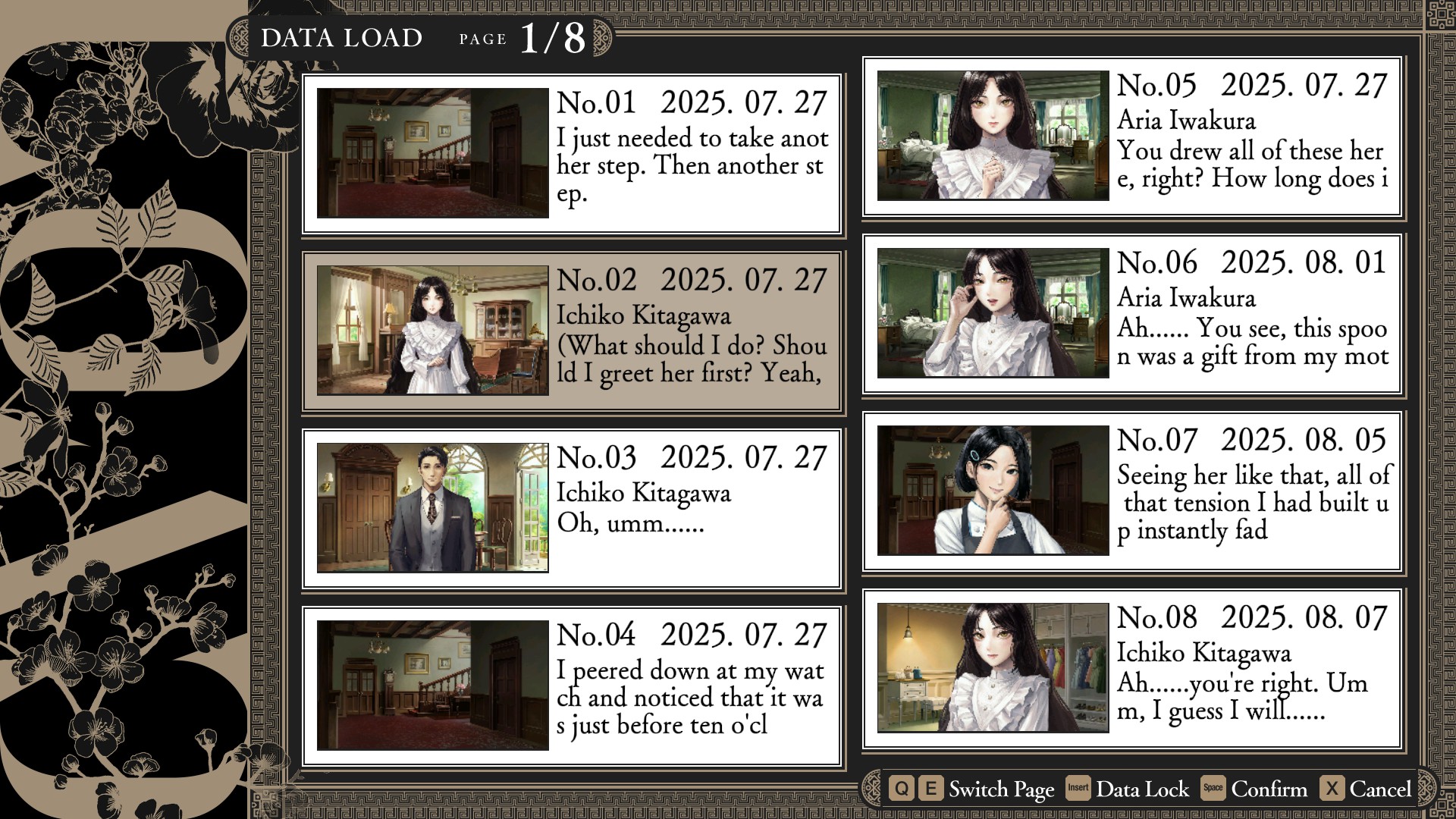
To that extent, the UI is frankly a mess in some respects, especially in the menus for saving or loading. Manual save files are practically impossible to navigate with how they’re presented, having no timestamp beyond the month and date of the file, not indicating whether you saved at a choice or not, and not even specifying what chapter they were created in. You’ll need meticulous organization skills, or at the very least, incredible memory if you ever feel so inclined to find a specific save file.

The autosaves thankfully specify which chapter and episode within the chapter they come from, but at the cost of stating which exact line the file was made at (though it can generally be assumed to be at the start of an episode or at a choice within that episode). That the save system even has trade-offs depending on autosaves or manual saves is frankly bizarre.

This is especially worrisome since the game is filled with choices, many of which don’t necessarily lead you into an ending but are just there to give you something to do. You might end up missing some or even most of the endings in the game just by playing it without a guide, unless you exhaustively go through every option again after finishing any given chapter (which might just be the move for a blind playthrough).

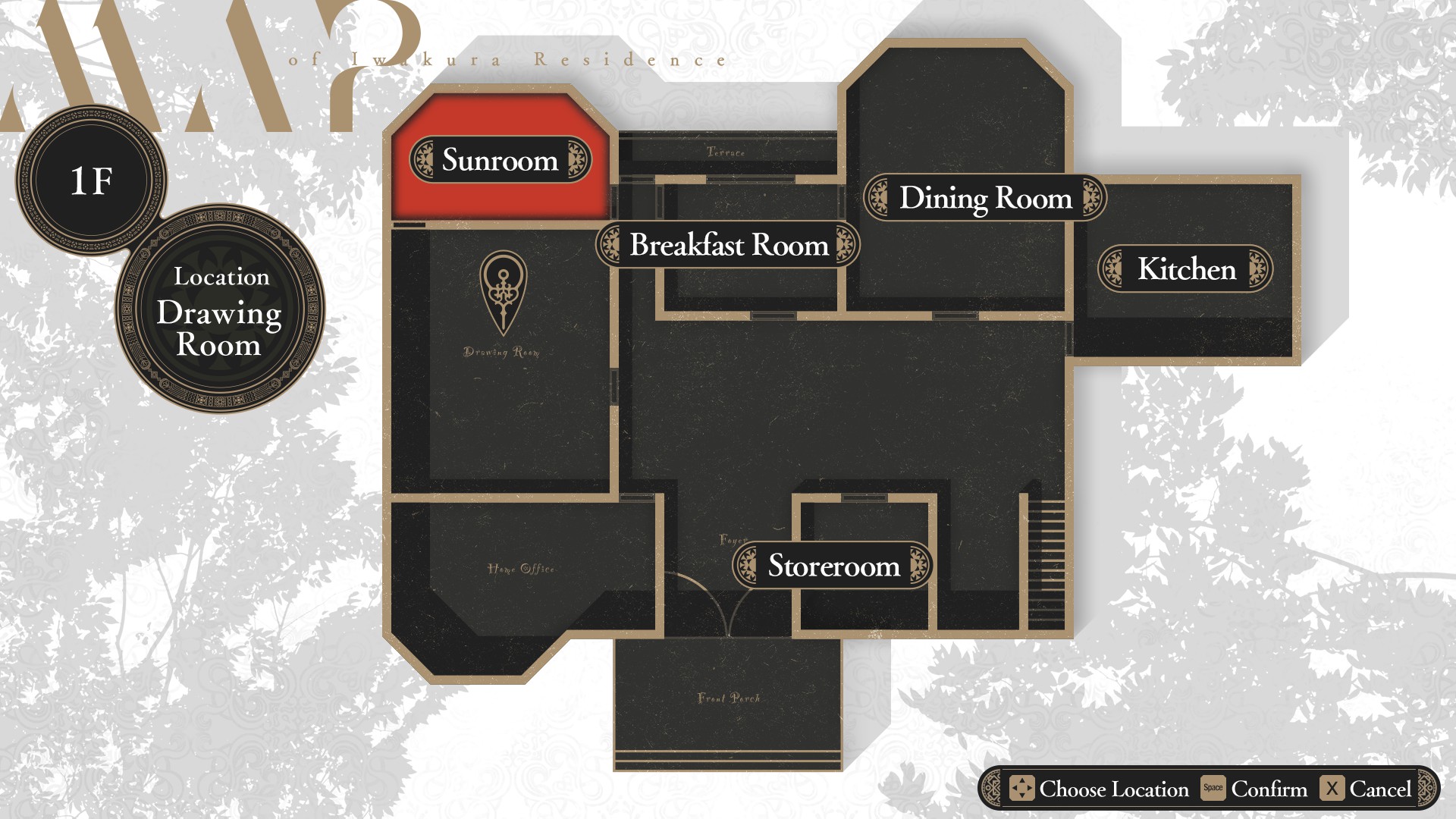
And no, you can't change between floors. Each round of exploration is confined to the floor you're already on.

Aside from reading the game and progressing like in any other visual novel, the other main mechanism of progression is the exploration, done by clicking on locations depicted on a map of the residence. Rooms you’re required to visit are shaded in red, whereas everything else is just optional. Truthfully, this mechanic doesn’t add much to the game other than to jolt you awake and make you do something other than click along, which might be fine for some people, but I don’t care for it. Practically all the optional room visits give maybe two or three lines of forgettable narration each before kicking you right back to the exploration, making me wonder what the point even was.

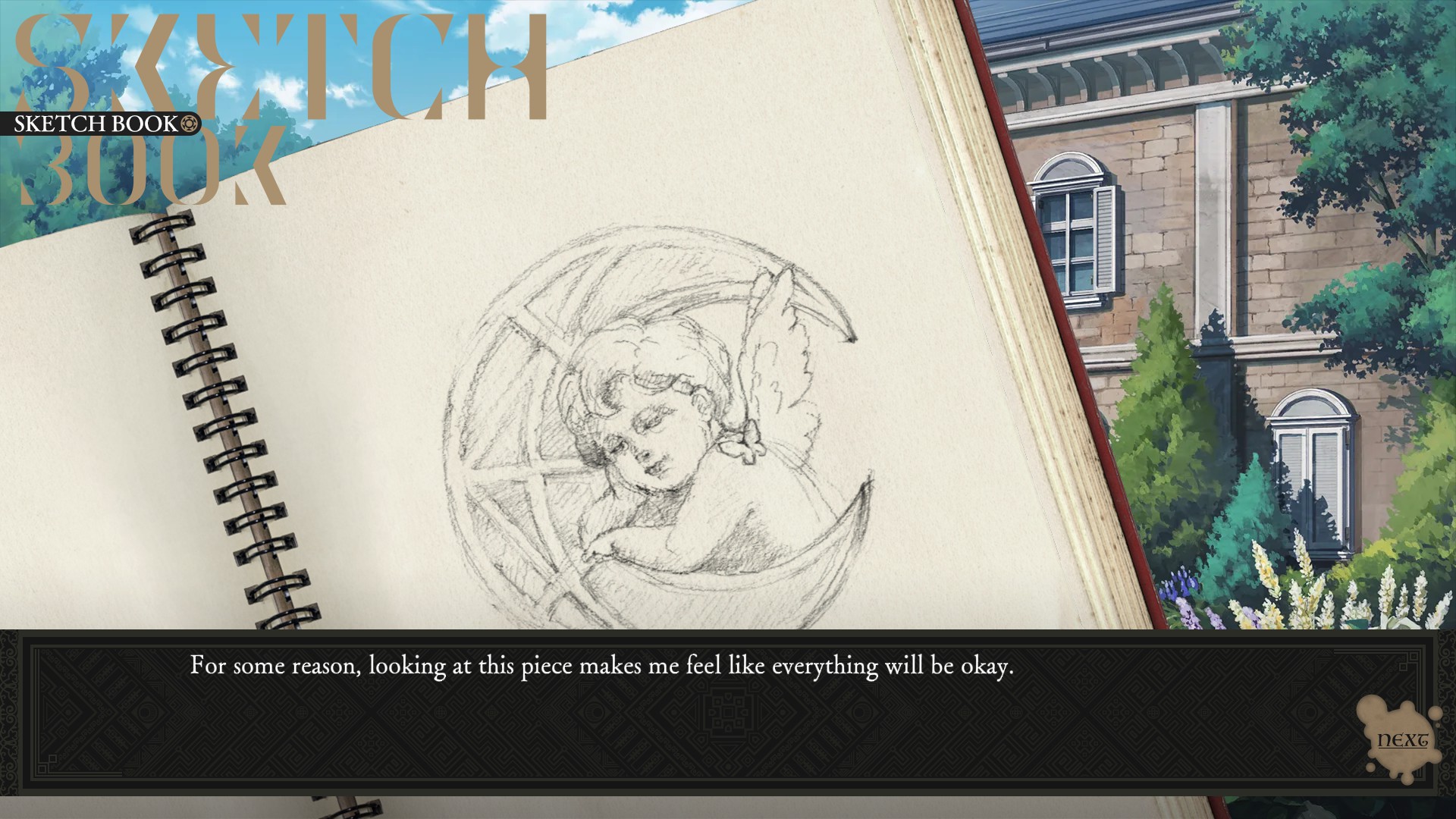
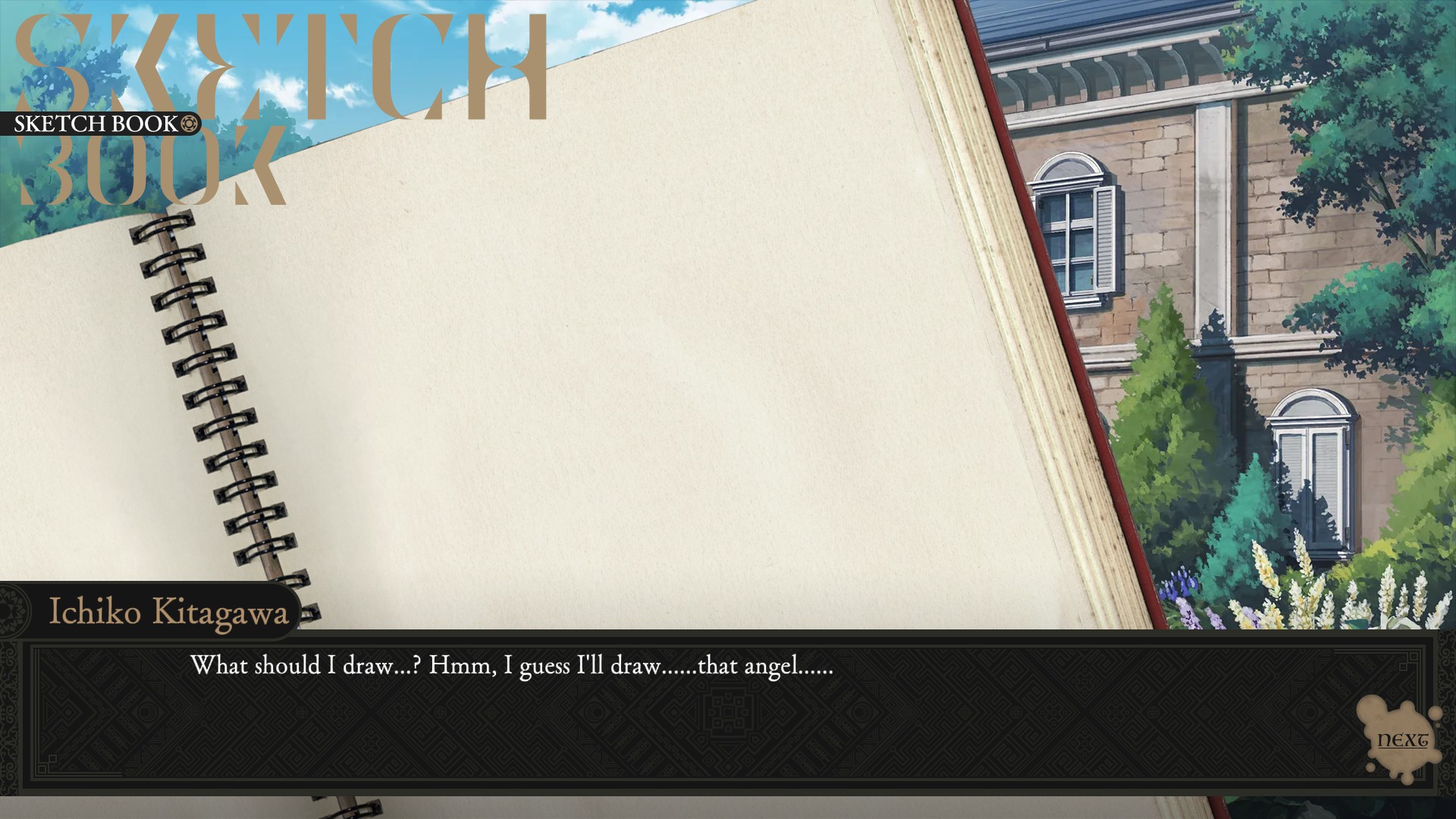
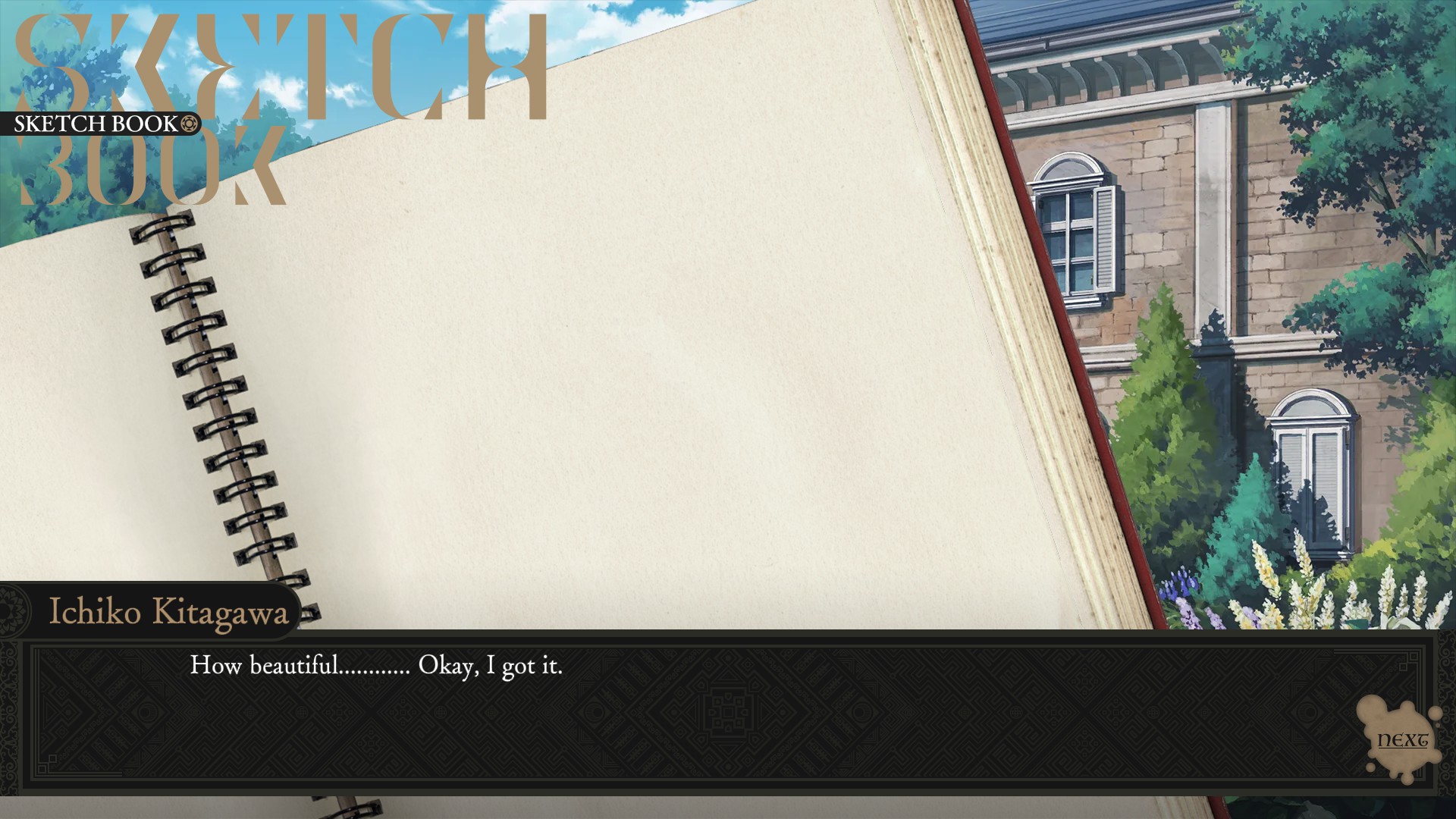
In hindsight, I don't dislike the sketchbook, but I think it could've been used for more.

Admittedly, because of Ichiko’s penchant for art, there is very occasionally an instance of an optional room visit where she sees something that she wants to sketch and thus draws it in her sketchbook. This sketchbook is something you can bring up and look through at basically any moment, which is sort of an interesting novelty, I guess. I think having the sketchbook as an informal gallery menu for her drawings is pretty cool, but then I realize the game’s cut-ins don’t have any sort of gallery or even scene replay function beyond just making your own save files at them so you can read them again, which is a bit inconvenient.

Maybe I’m thinking too deeply on this, but I would’ve preferred for the sketchbook to act as the map, where Ichiko proceeds to explore and draw out the residence herself. I think it would’ve made more sense to utilize her curiosity and artistic streak in tandem like this, rather than relying on an in-universe map of the residence that she actually doesn’t even have an awareness of until later on in the story, well after this gameplay mechanic is introduced.

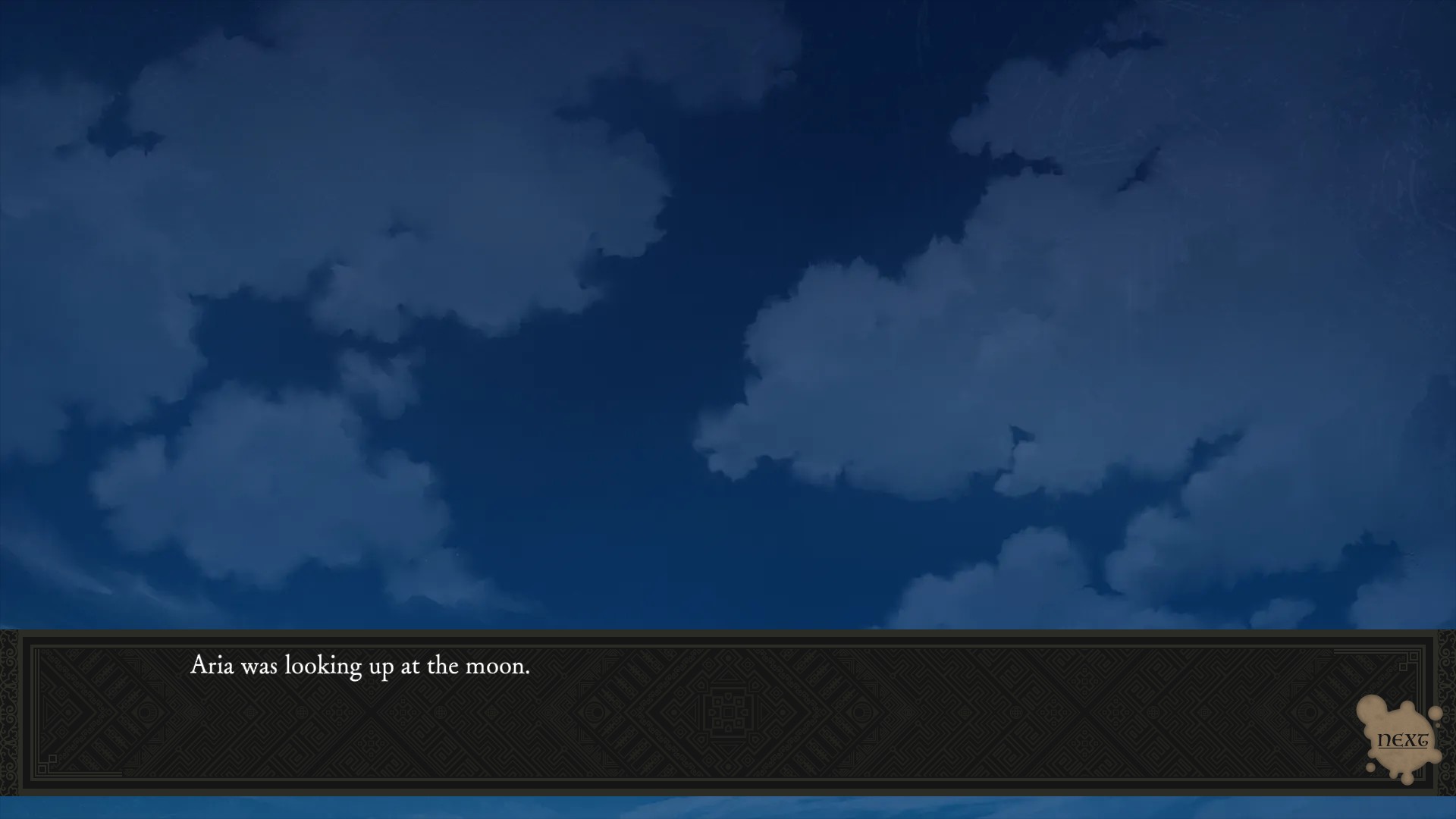
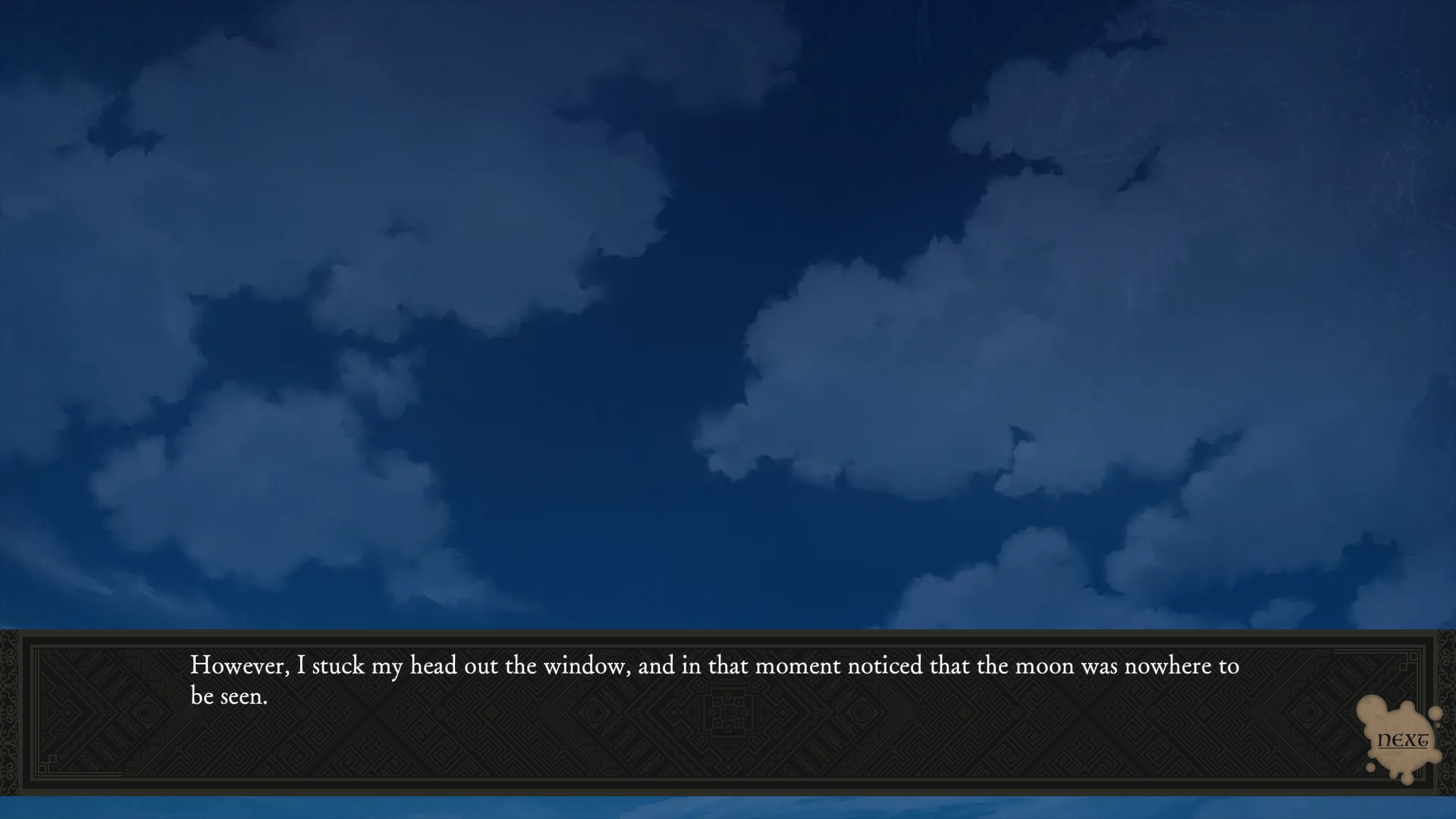
This bit here is more of a tangent again, since visuals not matching what the text is actually saying is really nothing new to visual novels whatsoever, but I just want to point out that it happens in a game as short as this one, too. As an example: in one scene, it describes a character looking up at the moon in the sky, but the moon isn’t there at all. In another scene, it uses this same image to show how the moon isn’t out tonight. It’s a bit strange. It’s nothing game-breaking, obviously, but it’s just one of myriad ways this game is barely held together at the seams.

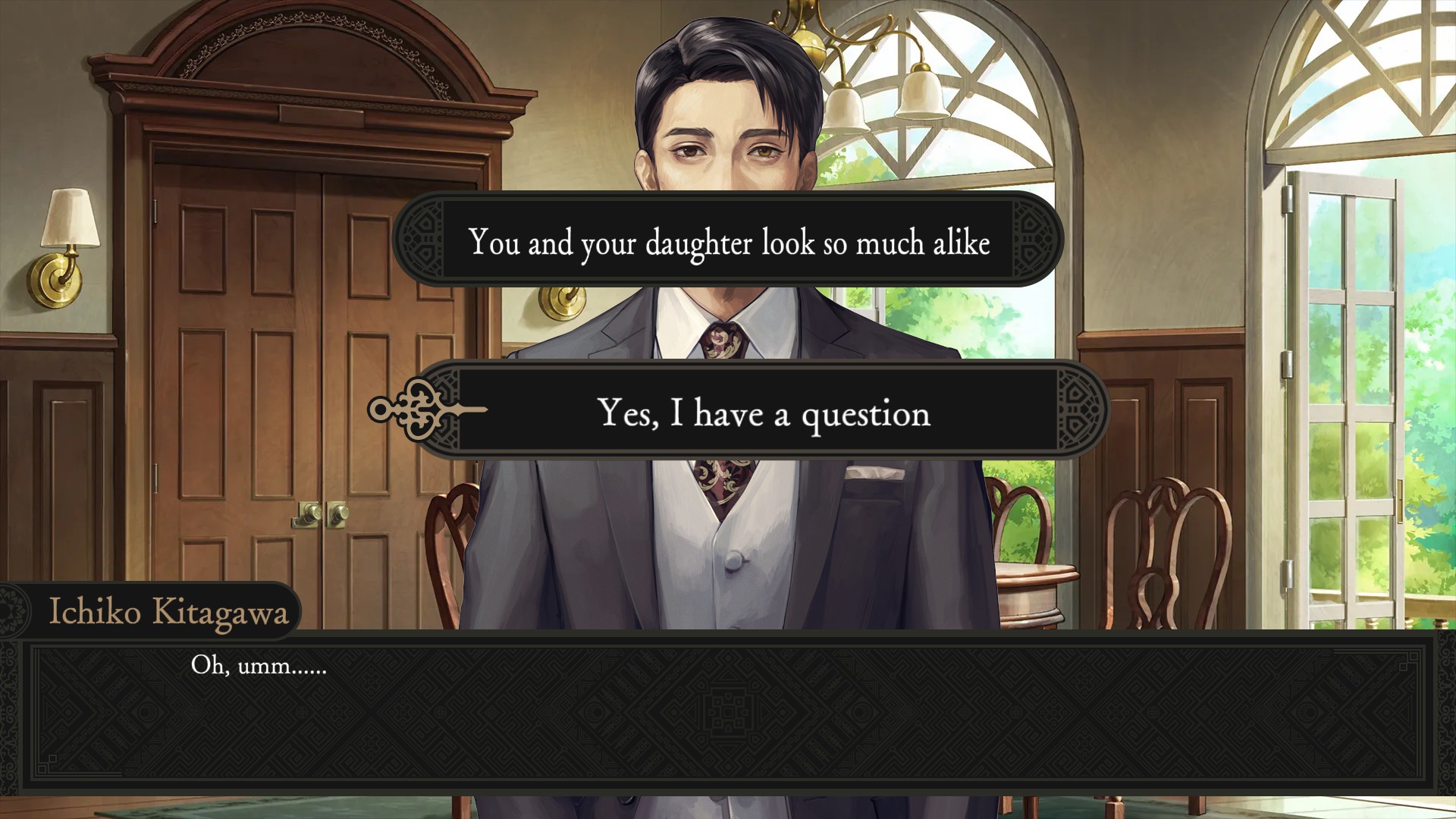
The text gets pretty squishy for longer choices.

The more direct method of choice boxes appears throughout the story as well, to more concretely push you along while still involving you somewhat. These choices can be benign, simply influencing the current conversation at best in ways that impact nothing further, or they can throw you headfirst into an immediate ending. It’s very unpredictable in that sense, and to a degree, I’m not necessarily against that kind of turbulence in a story, especially a suspense narrative like this one. I don’t think it has the tact of Remember11 in pulling this off (as hardly any games do), but I can see the vision.

Remember11: This is the prime way of doing things.

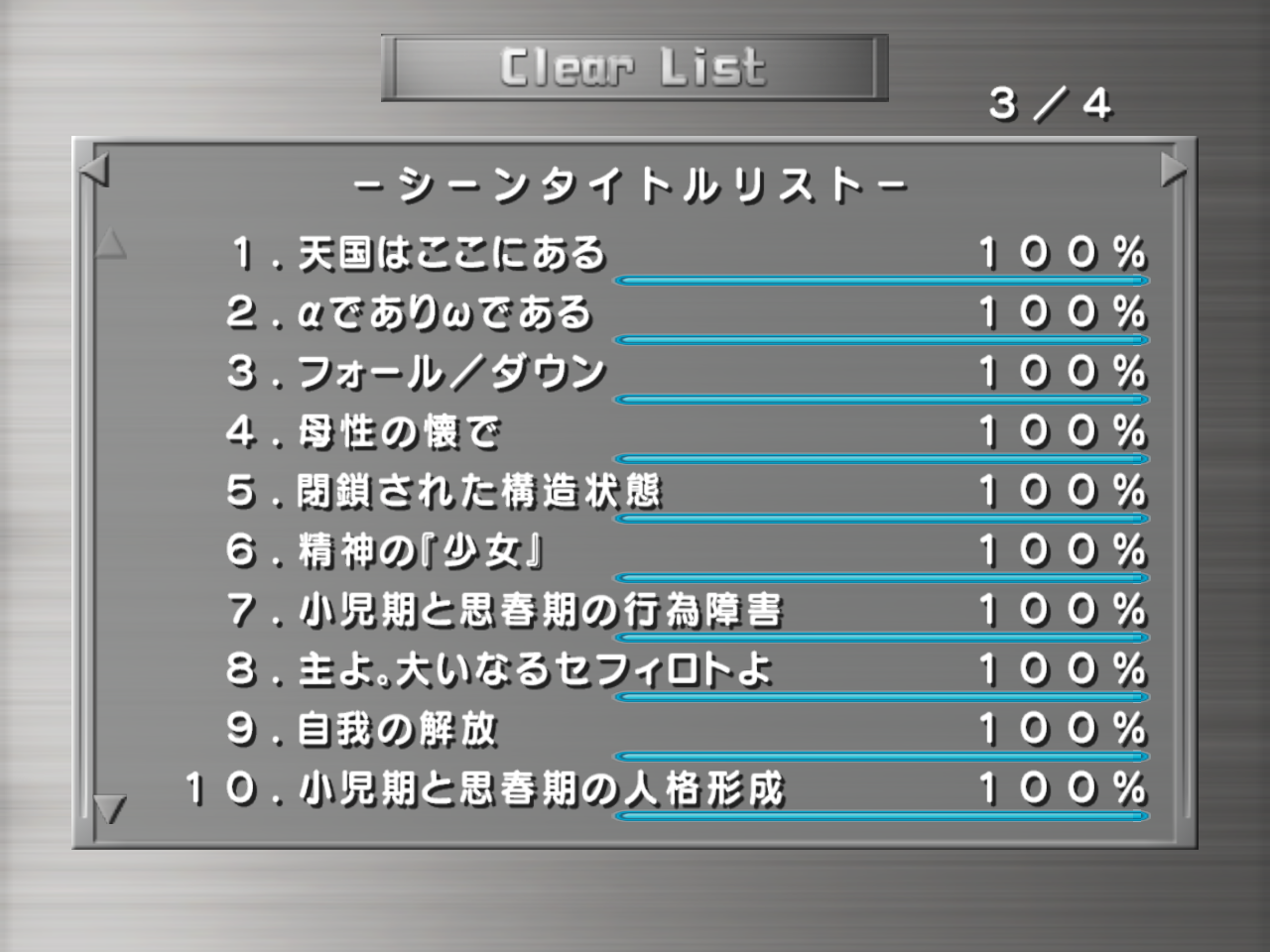
Why does this not have the tact of something like Remember11, you might ask? I am so glad you asked. Hailing all the way from 2004, Remember11 boasted progression menus that let you know the percentage of each individual scene in the game you’d read, allowing you to figure out where you had to look for possible hints to get every ending, or even just additional optional dialogue.

Surprisingly, a lot of the quality-of-life features of older visual novels simply didn’t find their way into the industry at large. Sure, you have some games that’ve adopted certain features, but rarely the sheer amount that something like Remember11 or I/O had. As a result, backtracking through Iwakura Aria is a headache if you don’t already know where to look, assuming you’re playing through it blindly and picking what feels natural.

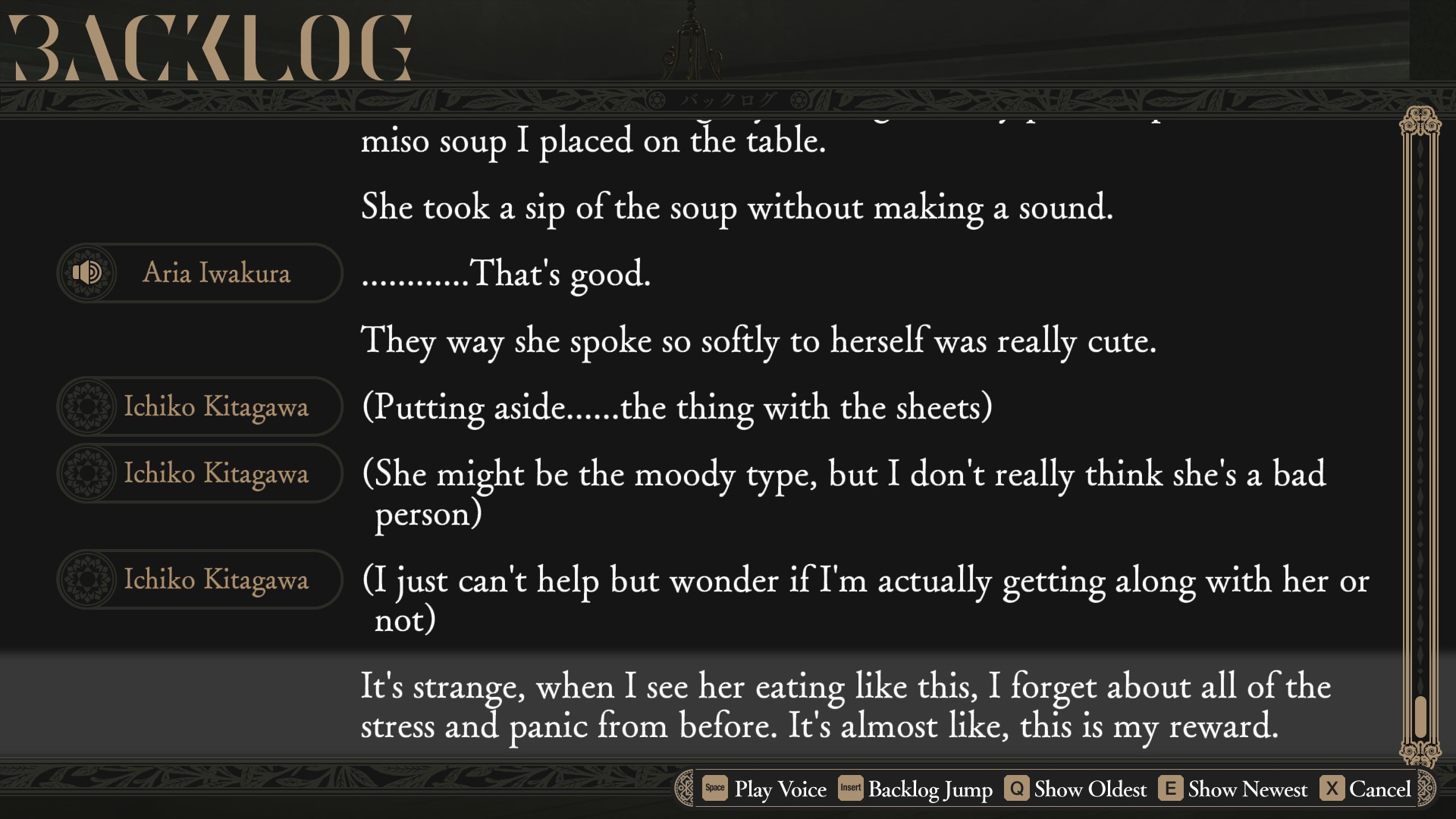
Backlog jump, yay! Weird key bind, though.

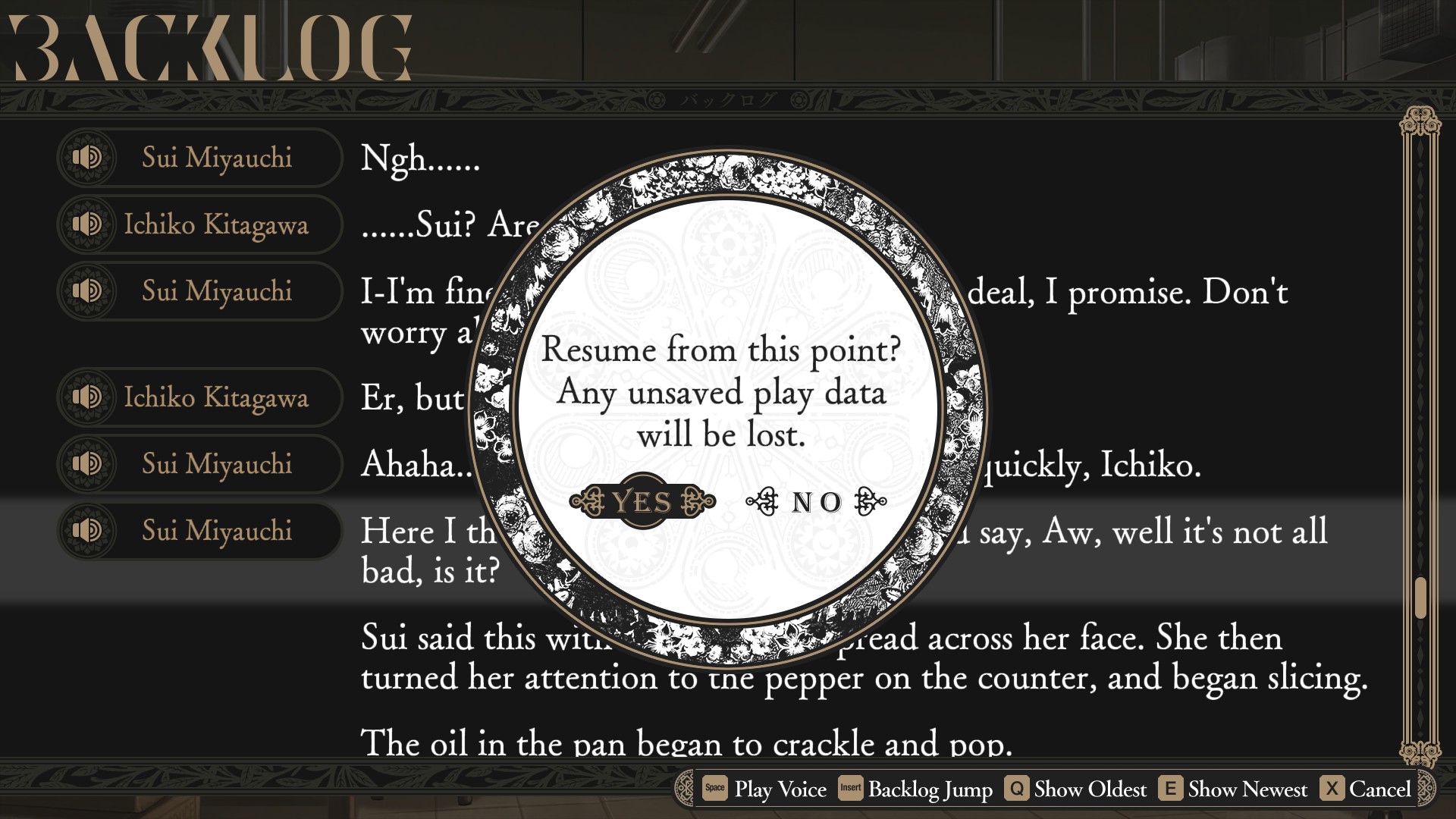
I will say, though, that I appreciate the backlog allowing you to jump back to prior text you’ve already read. It’s a feature that’s sorely missing from a lot of visual novels, and I love that Iwakura Aria caught on to this.

What does confuse me, though, is the lack of a number of other features. For one, the clear list’s lack of any gameplay timer. If you want to track how long you’ve been playing, you’ll have to resort to external methods. Granted, for a game with the length of Iwakura Aria, I can somewhat understand the rationale to not include this feature, despite a vast majority of other MAGES. titles having it, but I’d still prefer to have it even then.

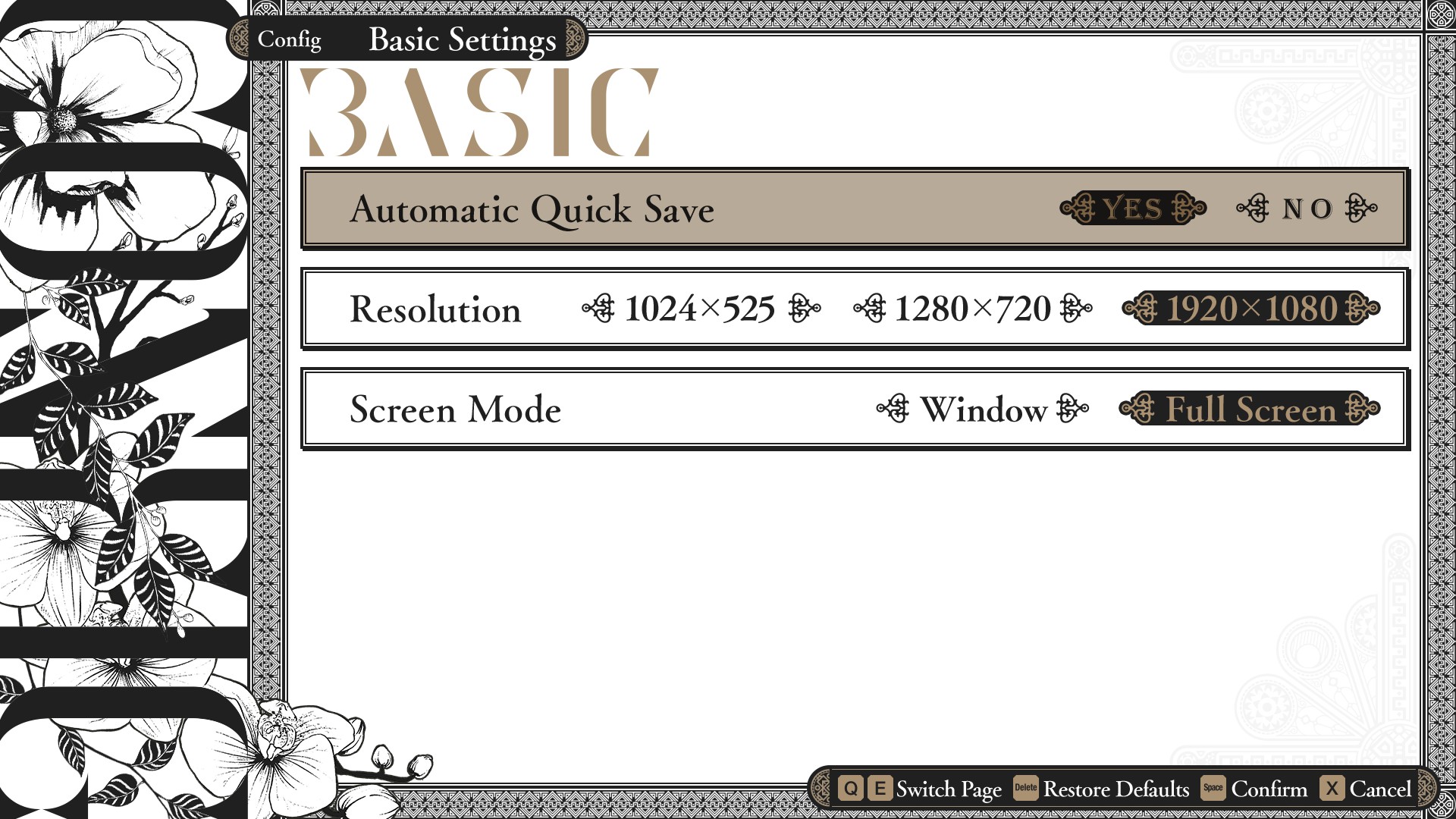
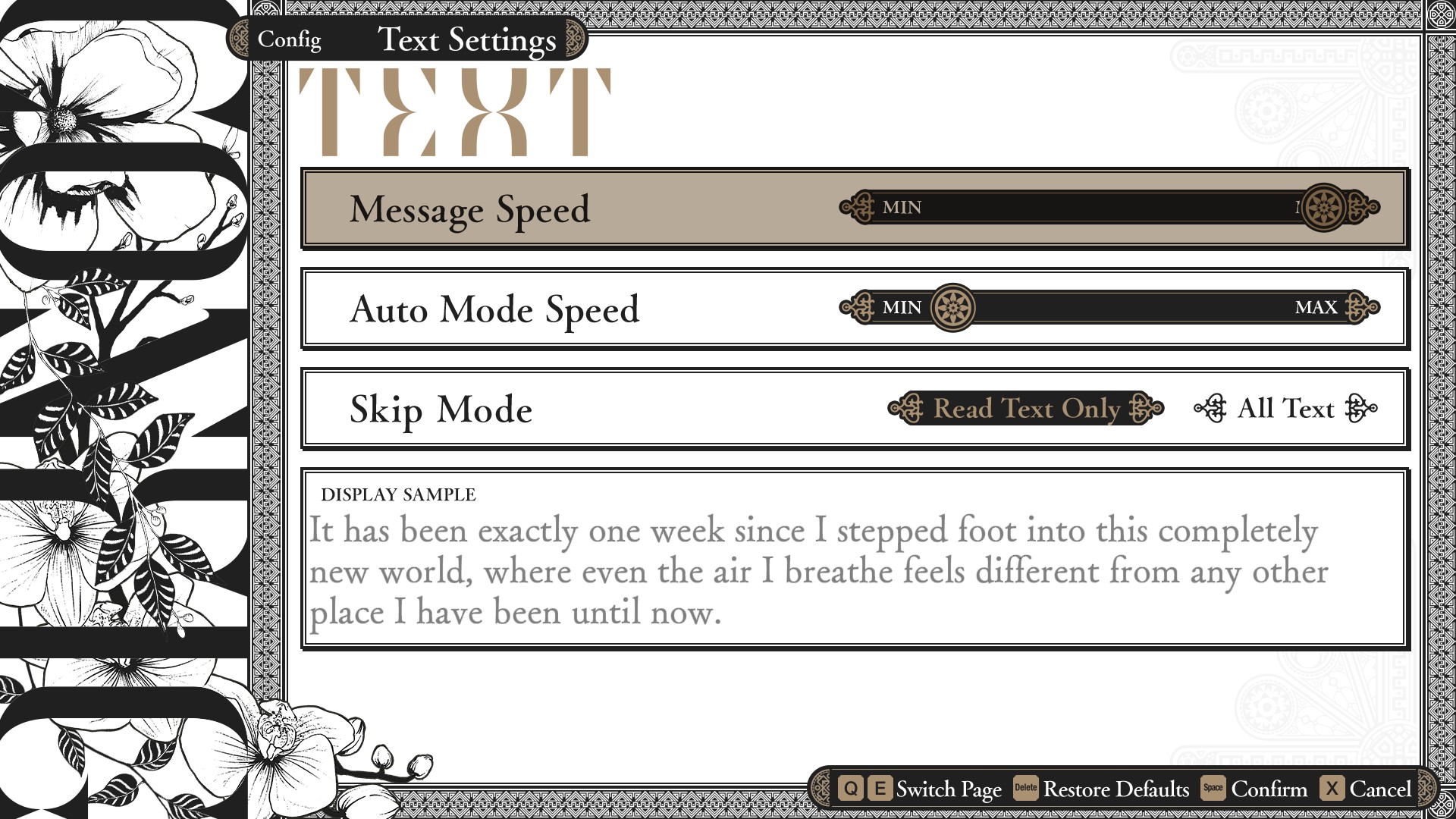
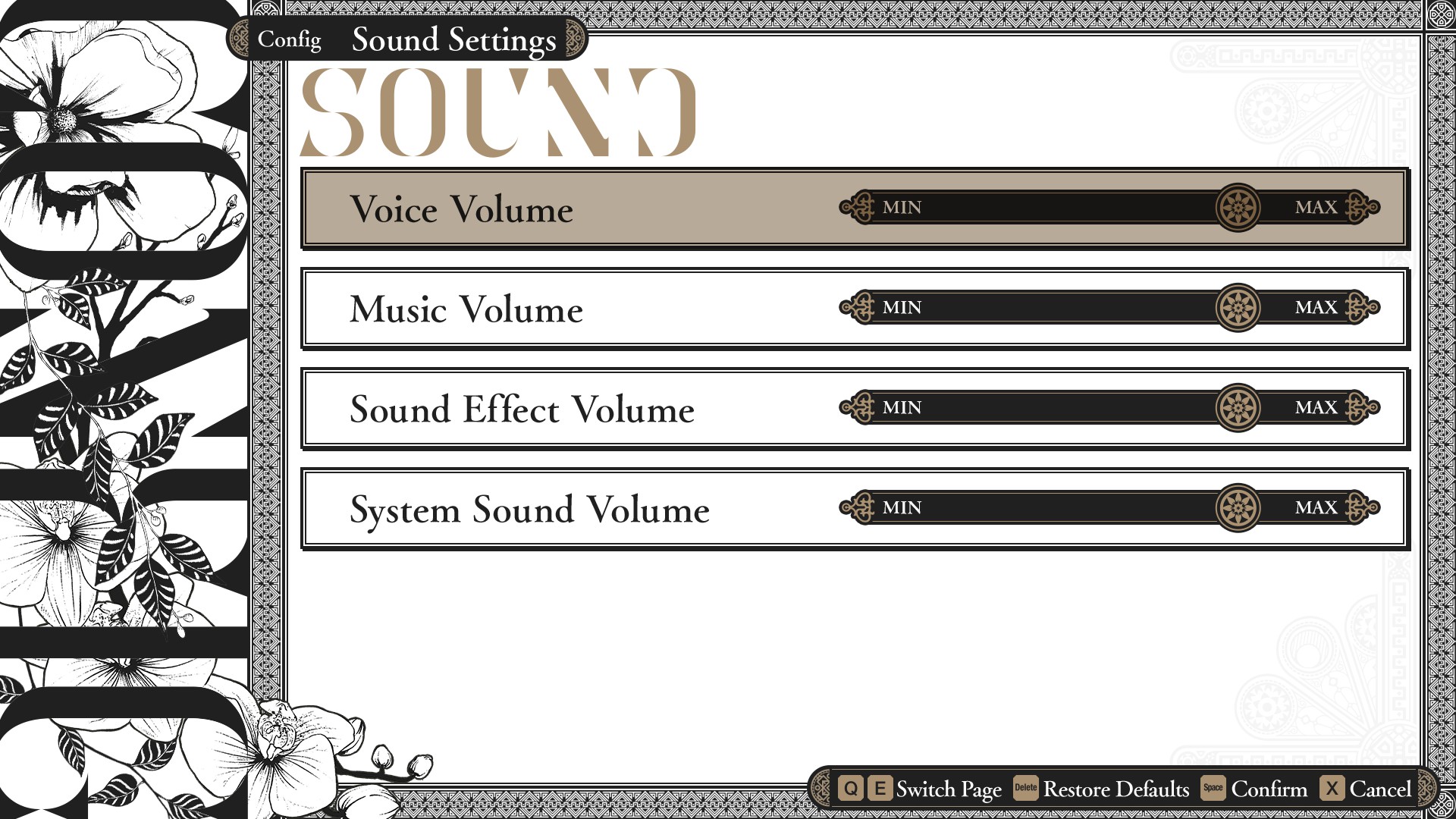
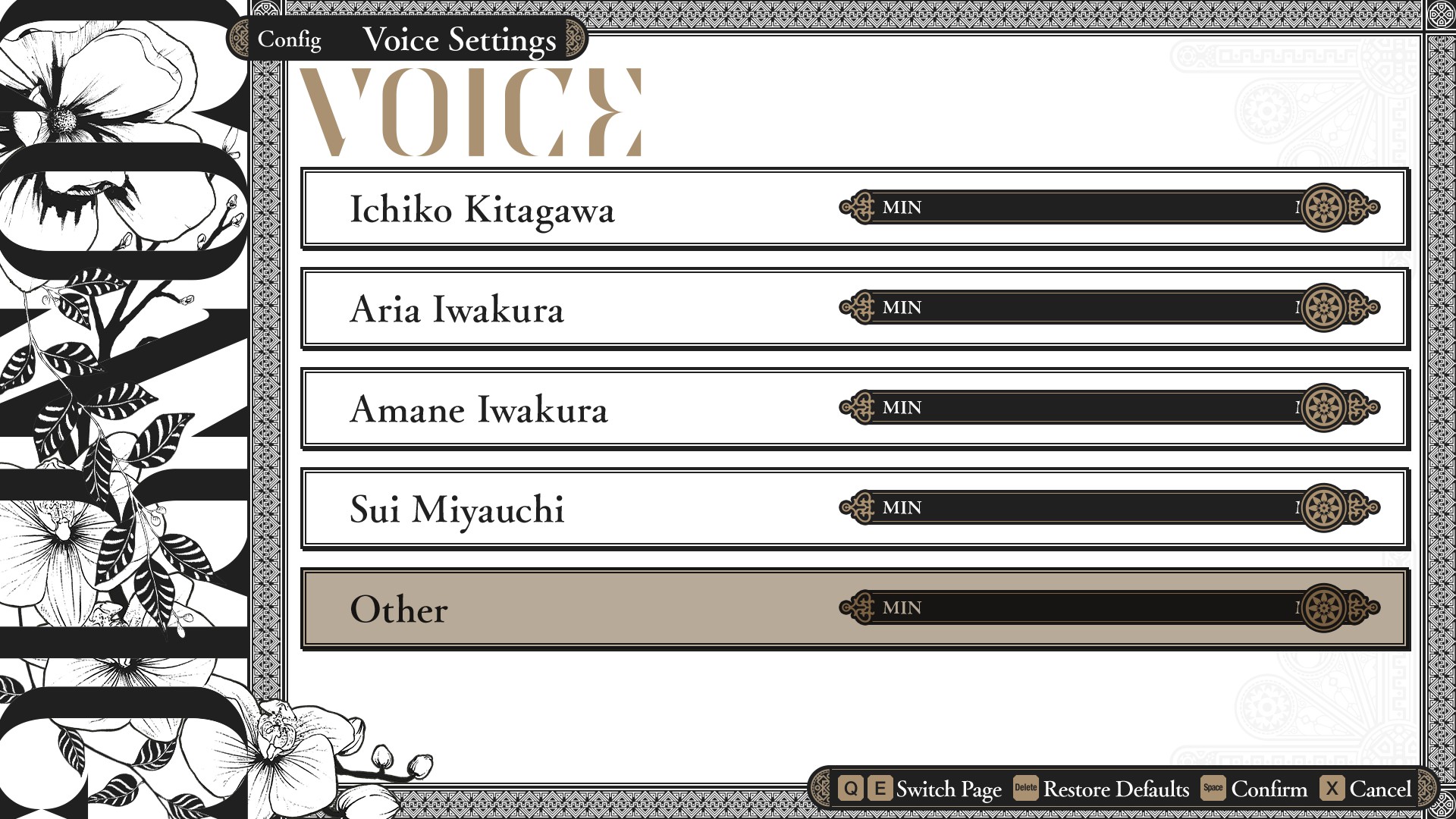
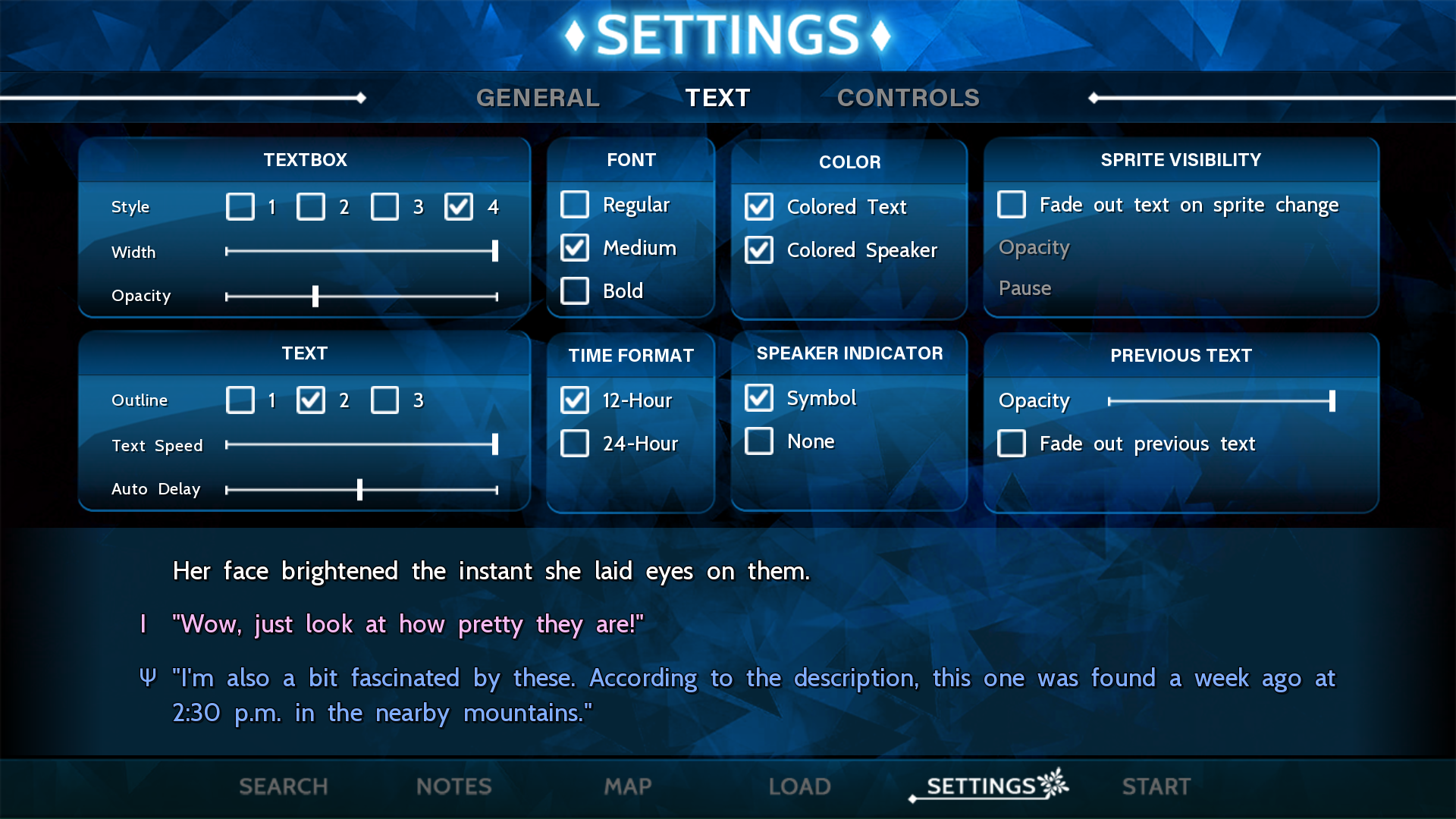
What’s really startling is the total absence of any deeper configuration options beyond the immediate surface level. For basic config, there’s an autosave toggle, a choice of three resolutions, and whether you’d like to play in windowed or fullscreen mode. For text config, there’s text display speed, auto mode speed, and whether or not the skip mode will only skip past lines you’ve already read. Lastly, there are volume sliders for music, sound effects, system sound effects, voices overall, and the specific cast members.

These are all good config options for sure, but they’re sparse compared to what there could be. There’s nothing to adjust the legibility of the font through its size, type, or color. There’s not even an option to decide whether or not you’d like voiced lines to continue playing if you progress to a line of narration before letting the voice fully play out, which is a longtime boilerplate option that I don’t really understand the absence of.

The Sekimeiya: Spun Glass: This is what we call peak performance.

For a game whose entire existence revolves around reading and hearing, it’s oddly hostile to its own audience. This implicit hostility to its own readers isn’t exactly unusual for visual novels, mind you, but there are games out there that understand this sort of thing. *Cough, cough* The Sekimeiya: Spun Glass *cough, cough*. Ahem. Sorry, had something in my throat there.

Sound

Admittedly, I’m woefully uninformed in the ways of music theory or even just basic descriptions of instrumentation. I can only give a layman’s view here because I am in fact a layman regarding this facet of the game’s design. I was, however, excited for this game’s soundtrack anyway, given it was composed by Takeshi Abo, known primarily for his work on the Science Adventure series, though I tend to more heavily enjoy his library from other works like Remember11 and Dunamis15.

Over the many years of my exposure to Abo’s music, I’ve learned to appreciate his specific style (or at least, the way in which I parse his style). He’s capable of all sorts of soundtracks: from soothing slice-of-life music that brims with this sense of vigor and excitement (like Never7), to hectic scores whose rhythms and chants instill this absolute urgency that solidifies the stakes like never before (like Anonymous;Code). To me, Abo is distinct in his capability while also being able to produce a wide range of moods and sounds. He’s had a few tracks I don’t quite like, such as “It’s funny” from 12Riven, “WWW” from Occultic;Nine, and “Okey-dokey” from Steins;Gate 0, where the common thread is that all of these are intended for slapstick comedy scenes or similar scenarios. Either way, for every Abo song I’m not a fan of, there’s usually a dozen that I think are awesome.

Unfortunately for Iwakura Aria, I can’t exactly say I’m huge on its soundtrack. It does serve its purpose, however, and I’d never make the claim that it’s a bad soundtrack or anything absurd like that. Just for me personally, I don’t find its tracks all that memorable in general, or even all that distinguishable from one another. The sounds sort of blend together and make the whole game sound very similar all the way throughout.

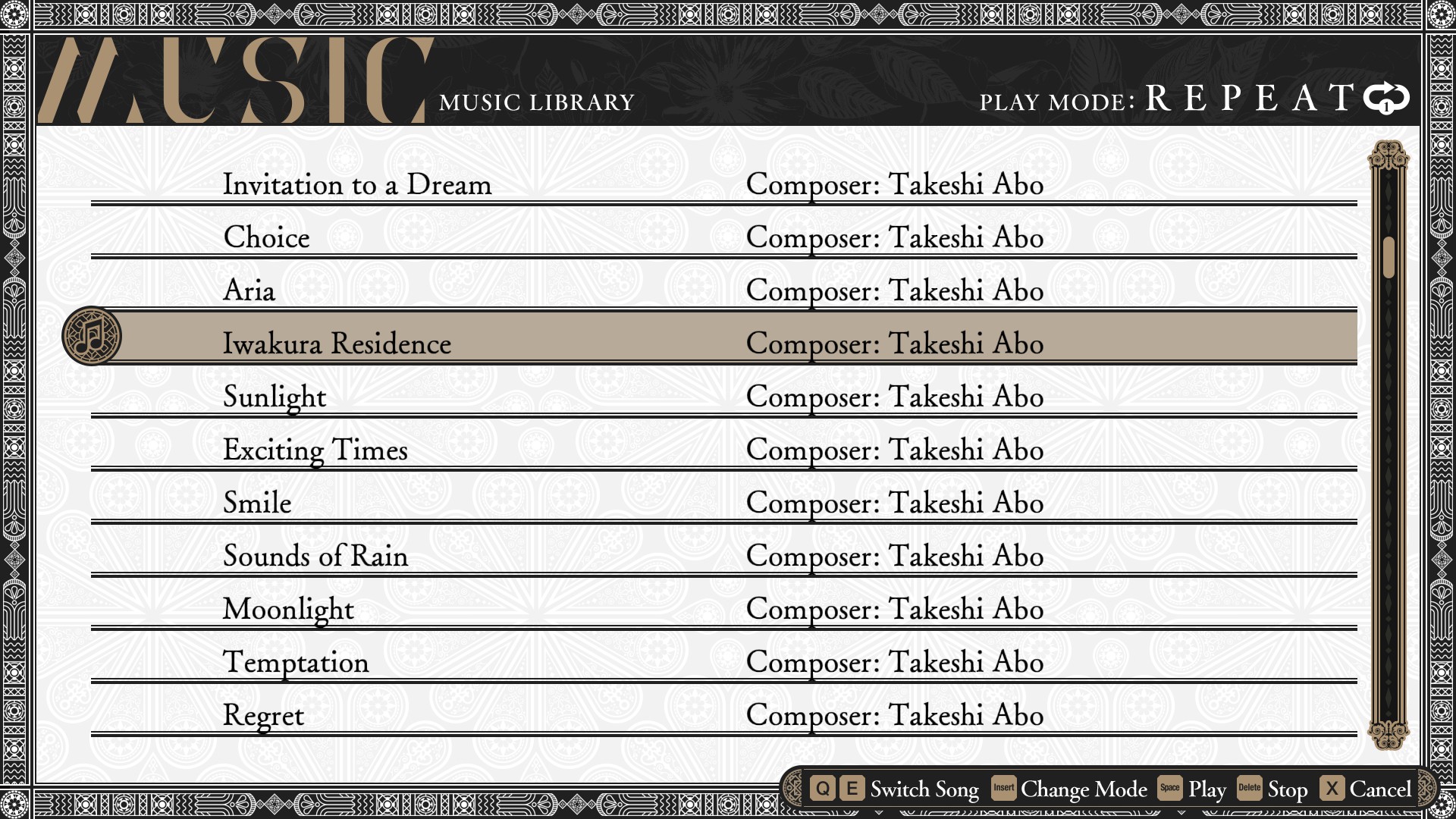
Composer: Takeshi Abo.

I’m sure this lukewarm reception to the music might not hold true for those with sharper ears for instrumentation and sharper minds to discern how these songs are constructed, but it wasn’t much of a standout point for me, which is an especially strong statement to make considering this is the Takeshi Abo here. I largely love his music to death, but I don’t think everything is a win.

To get slightly more granular, I don’t have any qualms with the size of the soundtrack or the lengths of the tracks. My personal rule is that a visual novel should have one song in its soundtrack for every hour that you spend reading the game. This doesn’t account for the disparity in how often certain songs get used, or for how reading speed is heavily variable among an audience, but it’s usually worked in my favor as a metric. Iwakura Aria does adhere to this rule, though I feel the lack of variety in its sound somewhat negates this—not to mention the occasional instance of dubious music direction, where a song may be placed in a scene without necessarily fitting the current mood.

To end this section, I don’t have much to say regarding the overall sound design. I think it’s good. The use of sound effects in the story is always relevant and impactful, the voice cast and their direction are a perfect fit for the characters, and even the UI sound effects are pleasant to the ears. I feel a bit like I’m robbing the voice actors of the spotlight by not elaborating on them, but I think their work really speaks for itself. They’re just good, and they’re handled well. Sayumi Suzushiro. Toshiyuki Morikawa. Chie Nakamura. Mariko Honda. Maybe any of these names mean something to you, maybe they don’t. I’m personally only familiar with half of them, but they all do great. The game might be worth it just to hear them speak.

Localization

Having prior familiarity with the script of Iwakura Aria through its initial Japanese release in 2024, I knew from the get-go that a strong localization would be necessary to convey the atmosphere, characterization, and setting in any intriguing manner. To concisely sum up the quality of the English release of Iwakura Aria, it would be: “So close, yet so far,” much to my dismay. This is saddeningly not all that uncommon for official localizations of MAGES. visual novels, and if anything, it’s simply par for the course regarding their works. While much of what I present might feel like nitpicking or simply me being downright pedantic, I personally strive to represent the more well-read audience and would like to convey my thoughts for those who are looking beyond the surface level.

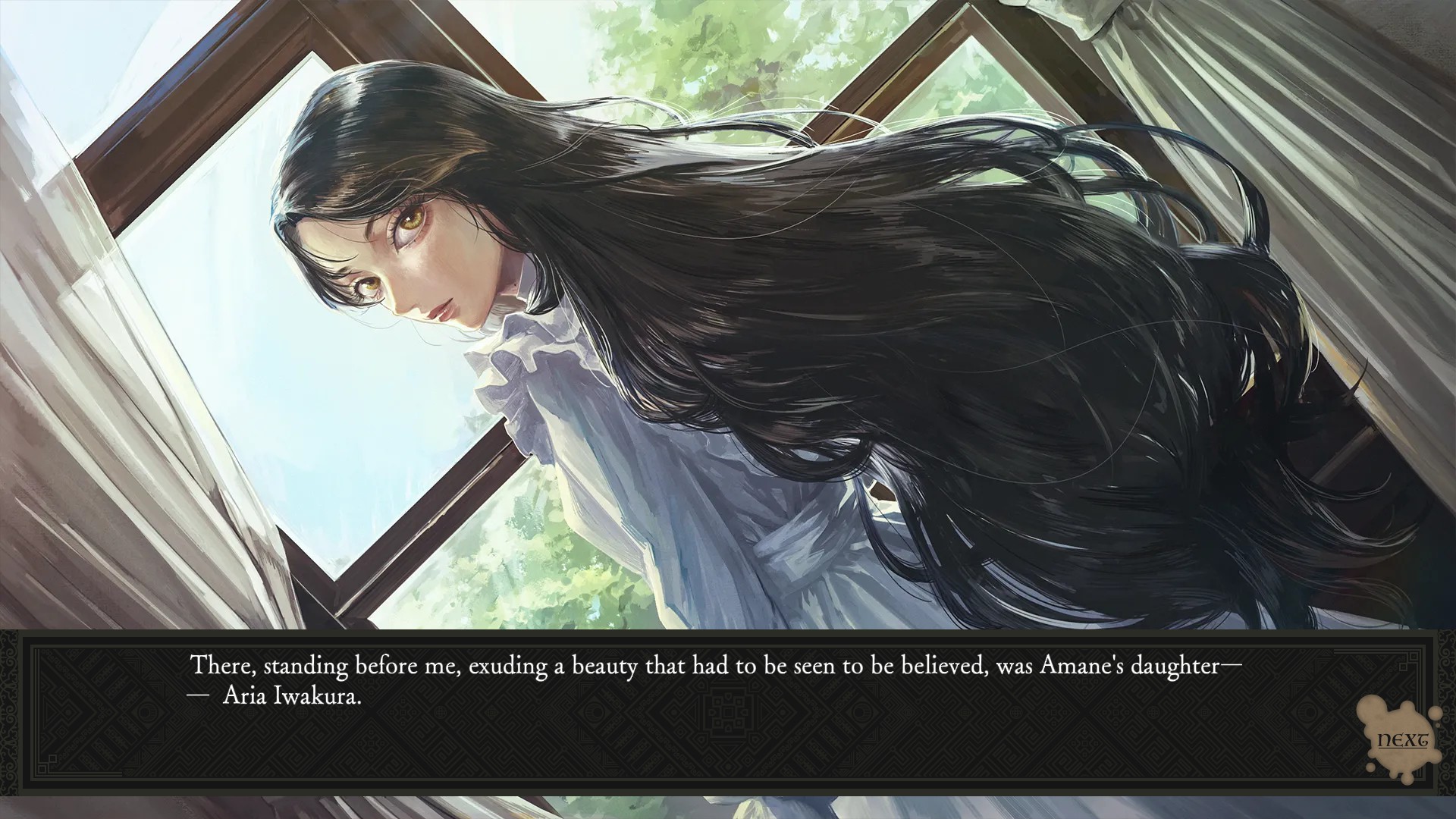
There, standing before me, was Aria Iwakura, titular main love interest of, uh... Iwakura Aria.

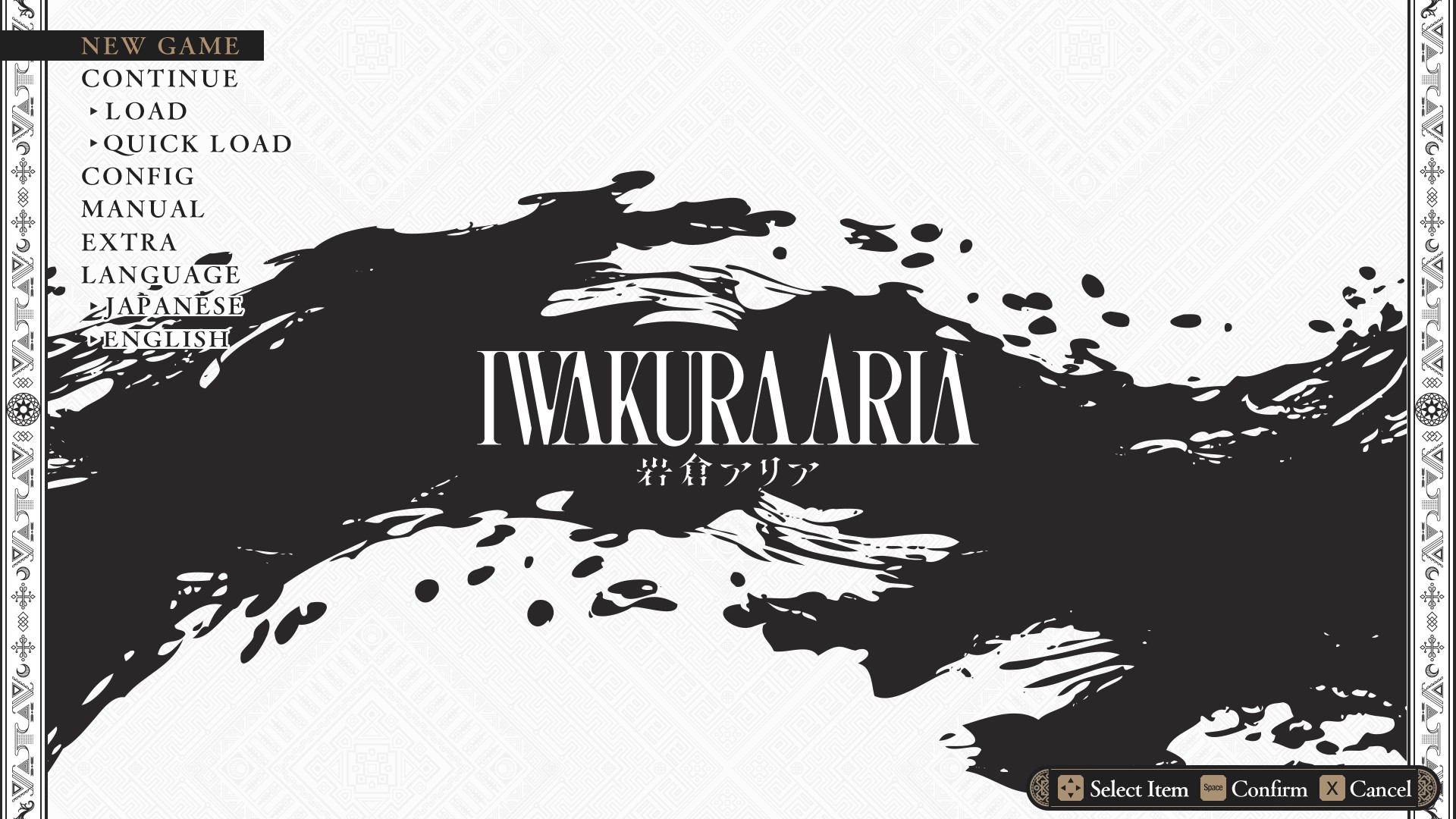
I think the most excellent, easy-to-understand example of what I mean is how this release handles character name order. In Japan, the family name comes before the given name, i.e., “Iwakura Aria” describes an individual named Aria who is of the Iwakura family. Despite the game being titled “Iwakura Aria,” the character is consistently referred to as “Aria Iwakura” in-game, in the common Western style of given name and then family name. I have nothing against this choice in isolation, as I think it is understandable to concede certain aspects of culture in order to convey a greater sense of immersion to the intended audience. The problem is, this game is literally called Iwakura Aria. Again, this likely sounds like a nitpick, but I think this single facet of the release is emblematic of all its other facets—there is simply something slightly unsettling or off about Iwakura Aria’s text as a whole. In a meta way, you could argue this describes the game very well.

Another odd choice that consistently stuck out to me is the English script’s absolutely overbearing adherence to the Japanese punctuation and formatting, as if its life depended on maintaining it. At best, it comes off as amateurish, deeply reminiscent of the fan translations you’d download in the days of old where it was clear more polish was needed, but you’d accept the product because of the passion put into it. At worst, however, it’s actively grating and completely distracting, spamming you to death with totally meaningless dashes and ellipses every other line………… so as to remind you that you’re reading something that could easily have been written more carefully.

I understand that Japanese as a language has a deeper tolerance for this kind of punctuation, but it’s a major issue in my eyes to not recognize that English literature really should not be doing this, especially professionally published literature.

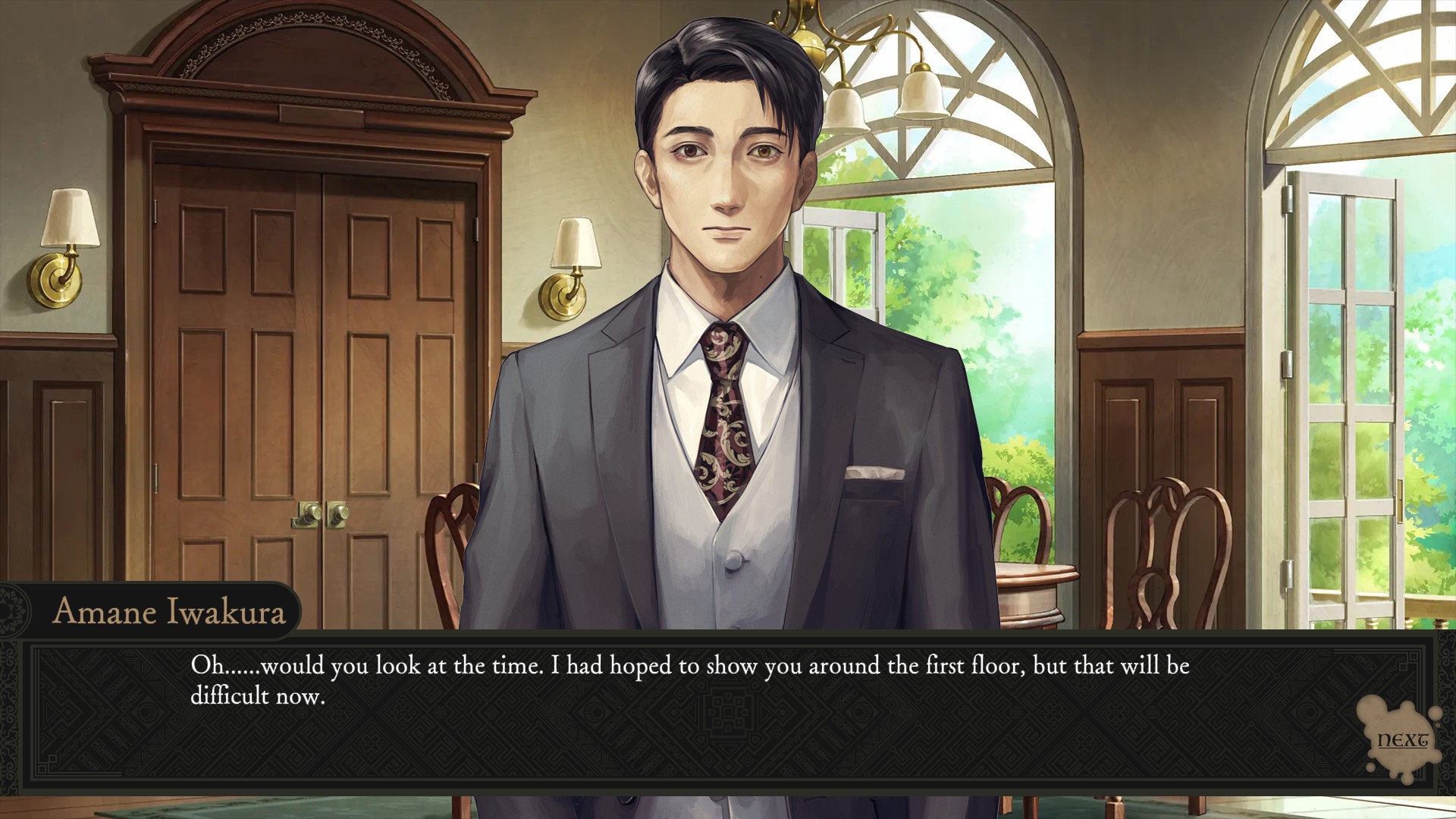
I'd hoped to show you around the first floor, but that'd be quite difficult now.

To clarify, I think the experience of reading the overall script is a serviceable one. You’re not gonna be missing any major plot beats or foreshadowing just because of the formatting oddities. It’s fine. The English script isn’t the end of the world. You can read it and enjoy it, especially if you’re not patently pedantic like I am. I, as an example, get really bothered by the lack of contractions (where I’d prefer “I’ve” instead of “I have,” “you’d” instead of “you would,” and so on) in many sentences that would benefit from them, resulting in characters coming off as wooden in their speech or just totally alien. But I know the history of visual novel translations has inoculated many people against this kind of stiff writing. Maybe I’m making it sound worse than it really is, but it’s hard for me to not be bothered by this.

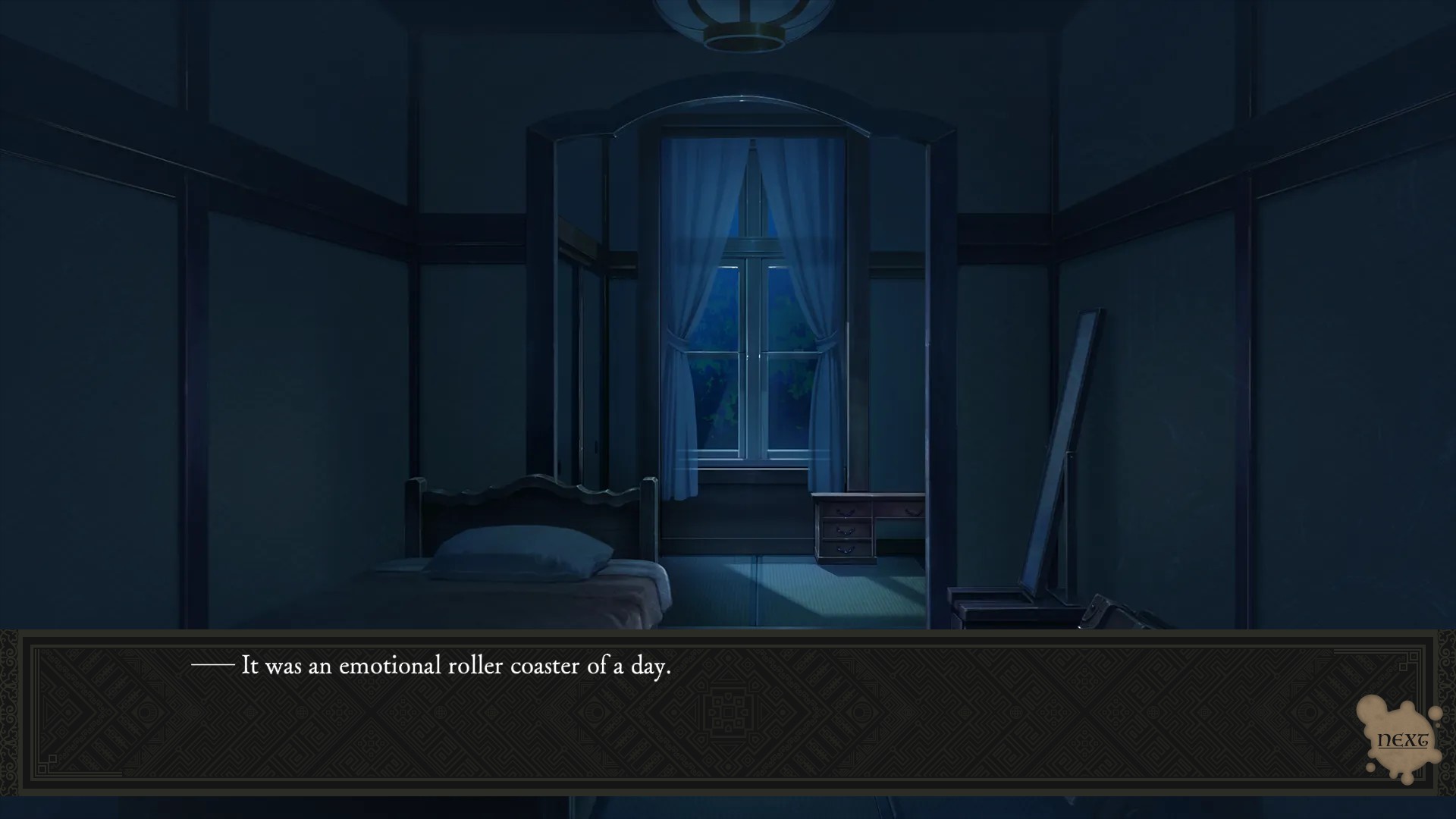
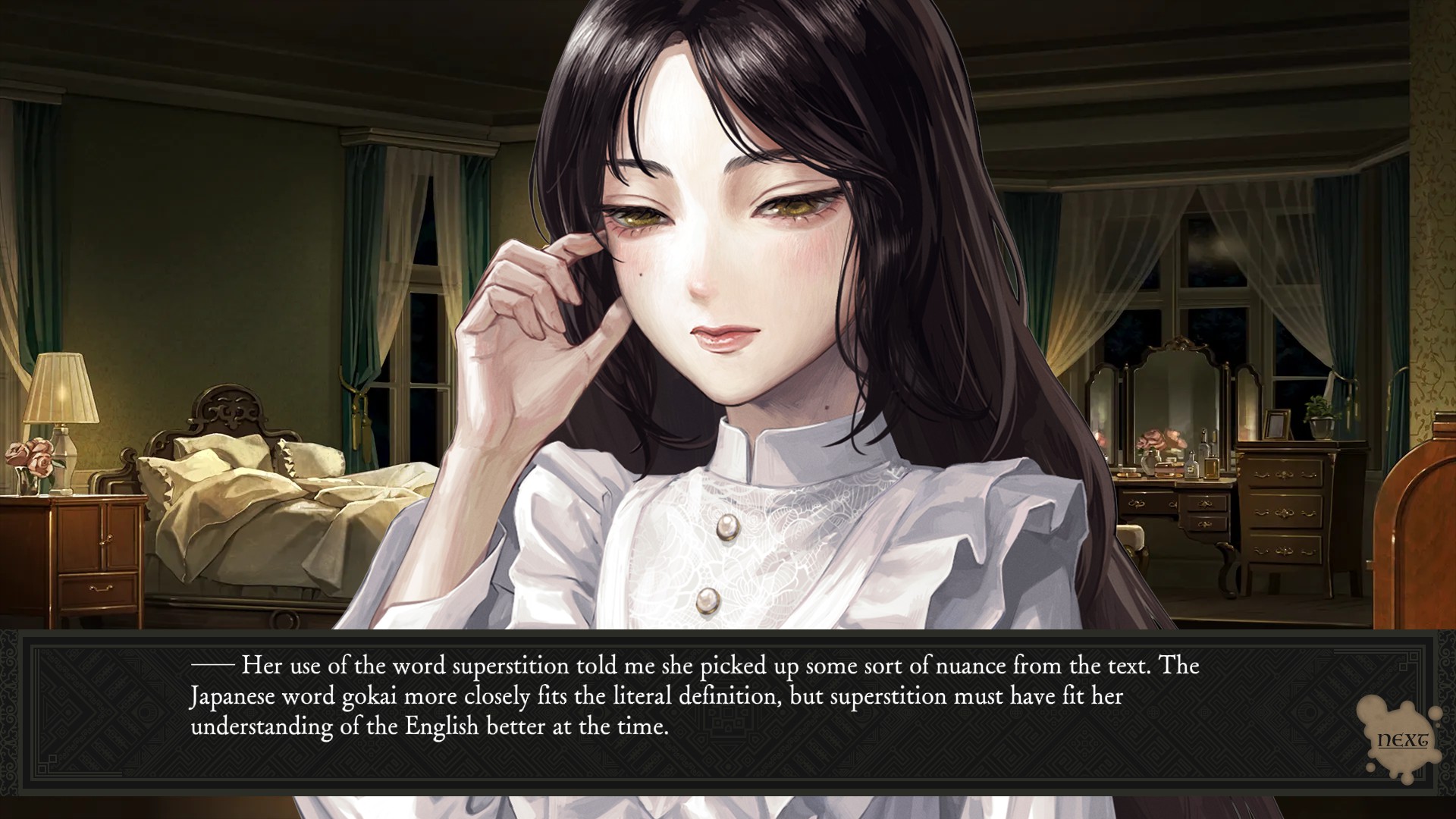
Did it used to be cute, since it's in past tense? I mean, contextually, obviously not. But it still opens the avenue for misinterpretation since it's followed by present tense narration at the bottom.

I imagine, for instance, that I’m among a small minority of people who are actually bothered when the narration switches between past and present tense within the same scene—or even within the same line. I’m not referring to when Ichiko uses parentheses, as she often does to mentally voice her more stream-of-consciousness thoughts, either. The standard narration of the game’s events is what’s occasionally switching tenses, which can cause confusion by allowing the reader to conflate whether an event transpired in the past or in the present. This is something I always keep an eye out for, as Japanese does not operate by the same tense logic as English when it comes to literature. In English, you should be consistently narrating with a particular tense in mind (past or present, usually), whereas in Japanese, this is not really a thing you do.

To backtrack to the cultural elements, I think there’s some inconsistency in philosophy regarding how the English script handles honorifics and titles in dialogue. I have no issue with localizing for a specific audience, but it still needs to make sense. I like that Ichiko’s お嬢様 (“ojou-sama”) is rendered as “Miss Aria” when someone speaks to her, but something feels off about how Ichiko, Sui, and Akari’s 周さん (“Amane-san”) is consistently rendered as “Mr. Amane.” Amane is the head of the household, so it feels unnatural to see them all addressing him by his given name, even with a “Mr.” in front. In English, “Mr.” is almost always followed by a family name, whereas in Japanese, the honorifics can accommodate this situation more naturally. I think “Mr. Amane” is absolutely better than just “Amane,” to be clear, but the former does leave room for interpreting the family name as “Amane.”

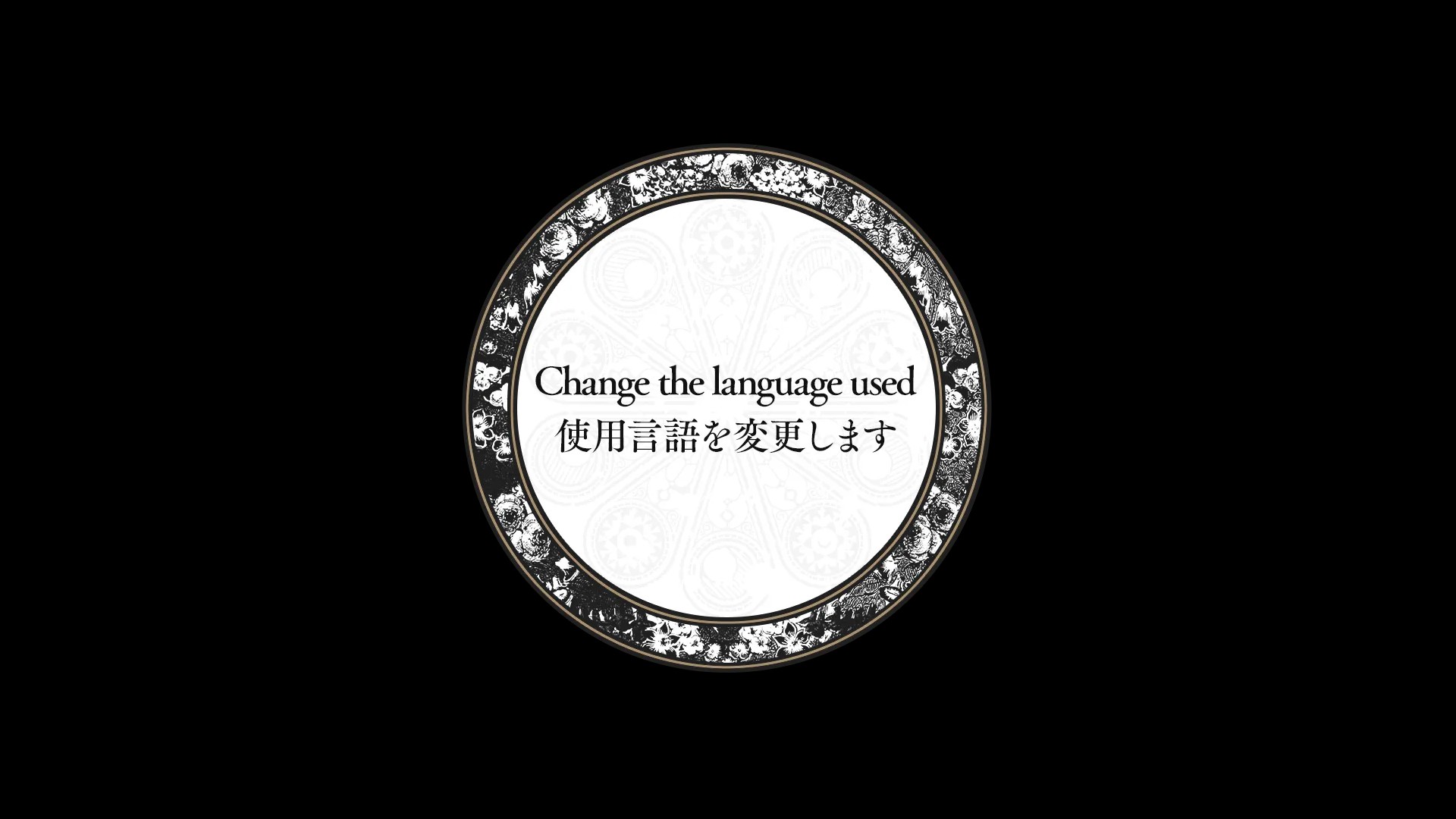
I’ll also say that the UI elements are another point of contention for me. MAGES. games have recently started including multi-language options to allow readers to select a given language without having to buy or download a totally different build of the game. I think this is neat! This trend has been taking root in the industry for a number of years now, and I’m all for it. In all honesty, I doubt anyone reading this review in any significant number would ever care to hit the language toggle button in the main menu. I did hit it, though. A number of times, really, to check the accuracy of certain lines that bothered me in the English script.

The English text that displays when changing languages reads, “Change the language used,” which sounds like a description of what the button does, rather than… well, what the button is currently literally doing. The real part of the English UI that bothers me, though, is that the save file descriptions don’t have any word-wrapping, causing the English text to render very jarringly.

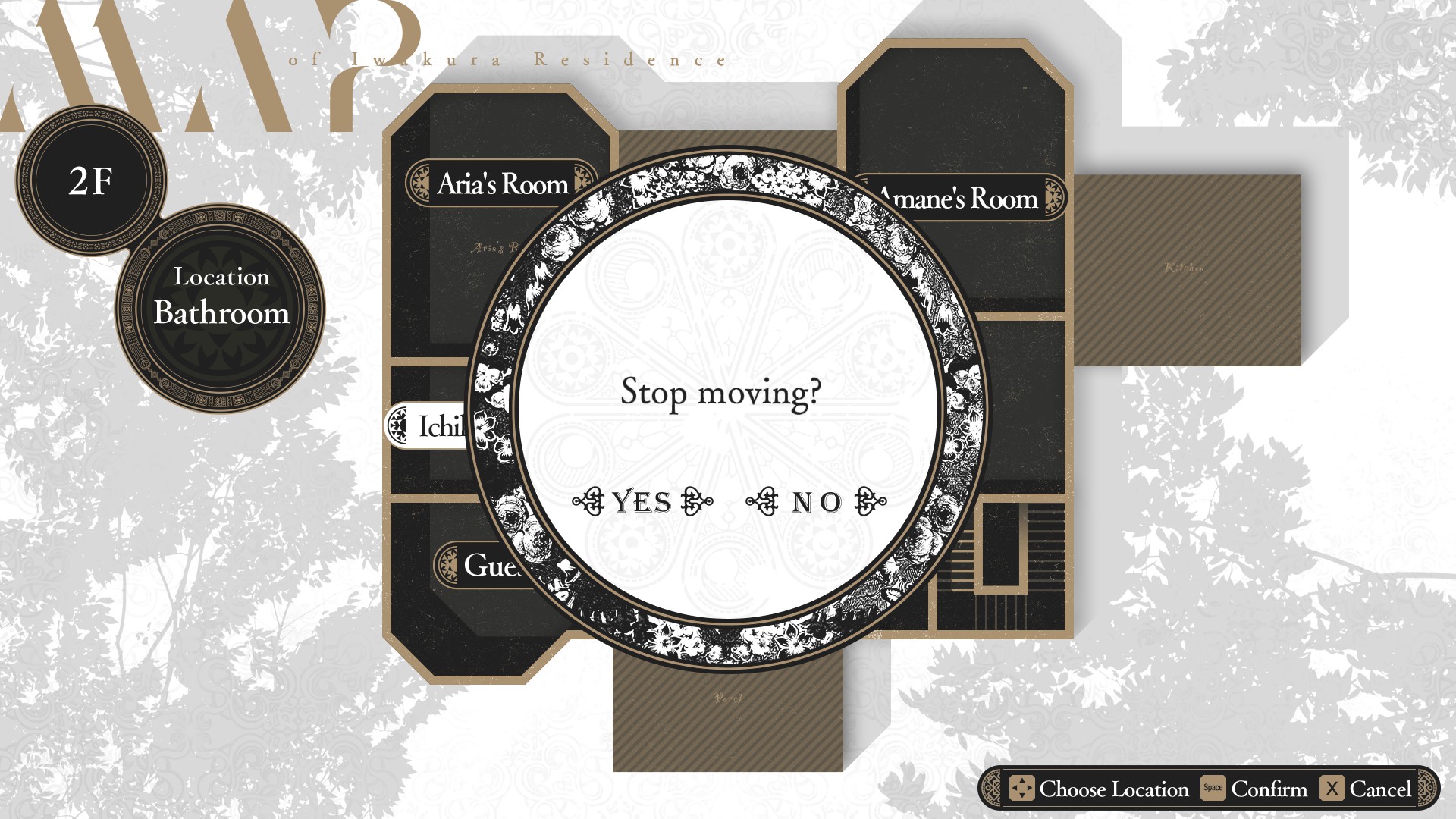
This other bit is just sort of funny, and it’s not exactly wrong, per se, but what always makes me chuckle a bit is the English text that appears whenever you decide you’re done exploring the residence. For confirmation, it asks: “Stop moving?” That makes it sound like I’m giving up and dying! I’d maybe write, “Finish exploring?”, “Finish searching?”, “Finish rounds?”, or really anything that would more organically convey that you’re done moving about the residence. It’s not a huge deal, but it does feel a little silly to me.

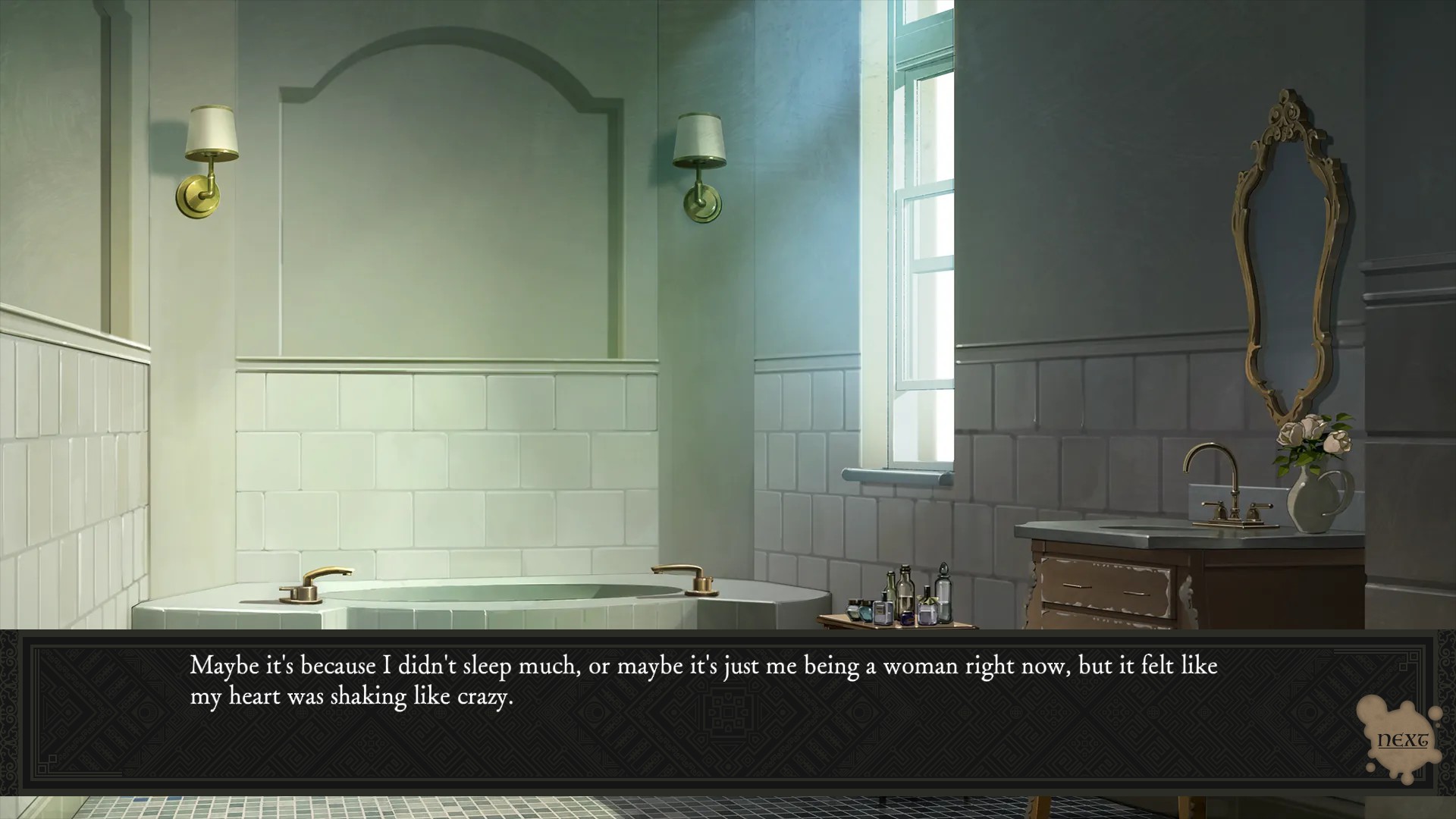
A brief example of when I switched languages to verify some narration was close to halfway into the game, during a scene where Ichiko’s menstrual cycle causes her to doubt herself and wonder if it’s impacting her in some way. (I’ll set aside the fact that she’s already on her period at this point, and that it’s the PMS unrelated to period activity that would really be affecting her, if anything.)

Being a woman right now sure sounds tough. Hope it gets better, Ichiko.

Anyway, the English text goes, “Maybe it’s because I didn’t sleep much, or maybe it’s just me being a woman right now, but it felt like my heart was shaking like crazy.” I did such a massive double take at this line that my head almost flew off. Maybe it’s just me being a woman right now. What?

In my confusion, I hurriedly switched languages to compare with the original text: ほとんど眠っていないせいか、女の身体の仕組みのせいか、心が酷く揺れるのを感じる。This made a lot more sense to me. In case you can’t read that, she doesn’t seem to be talking about womanhood in the gendered sense of the societal expectations that come with “being” or “acting” like a woman; she’s talking about the physiology of quite literally having the body of a woman [who experiences a menstrual cycle].

If I had to ascribe some sort of metaphrase rendition to the original phrase, it would be along the lines of, “[maybe because of] the workings of a woman’s body,” which sounds rigid and bizarre in English; if I were translating this game, I’d never actually write that in the script. I’d probably have written something that conveys what workings she’s referring to, i.e., her cycle itself. Really, anything other than what is currently written there would probably work, I think.

I have a very roundabout assumption about how the line ended up this way, but it’s pure speculation, so I don’t really feel like entertaining it. Either way, I don’t assume anyone maliciously intended to write something that comes off as misogynistic in the translation of a yuri game, as that would be counterintuitive and frankly weird—especially since this line is the only real instance of that even happening.

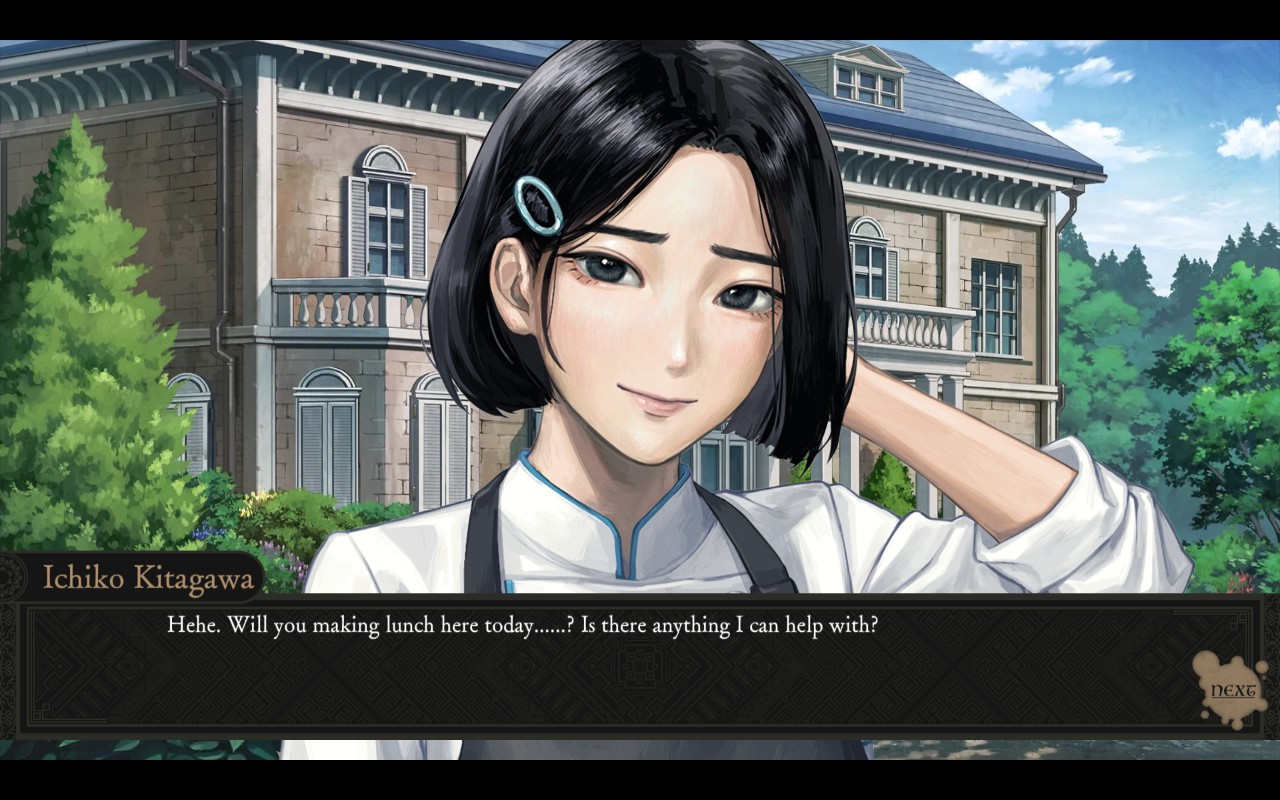
The missing "be" in "Will you be making" is fixed in the day one update. I just have to point this out since it existed when I played it and it might exist in physical copies as a result.

I’d also like to point out that while playing during the review period, there were numerous moments in the English script where an entire word was either missing (“Will you making”) or extraneous (“I’m doing the exact the same things”). For many people, the heuristics of their brain will probably kick in and they’ll just mentally substitute the word in without noticing, since they expect it to be there anyway. Or in the other case, they’ll just skip over the word that shouldn’t be there. I am unfortunately cursed with the ability to simply perceive eaten or superfluous words anyway. It’s not a big deal for digital copies, since there’s a day one update that seems to rectify this specific oddity, but I still have to note it in case it persists for the physical release.

This is the

Future me here from after writing this entire review and replaying the very end of the game: Well, this is awkward. The day one update to the game also just deletes most of a line from the very ending of the game. Not only is most of the line just gone, but they also seemed to have removed the scripting to denote that the line is over with, so the following line also renders with it. This originally said “–—This the present in which we now live.” I think what happened is that they were trying to fix the typo here (the missing “is”) and they, uh… somehow forgot the rest of the line? This stuff happens, I guess. Anyway, back to the other me (the lamer me).

The phrase “It’s not a big deal, but” describes my thoughts on pretty much everything I’d point out as a negative in the English script. Nothing on its own is especially worth criticism, but it piles up for me. The proverbial straw that broke the camel’s back for me was a gag scene that didn’t exactly make sense, since the translation relied on romanizing Japanese words to form connections with English text. Admittedly, no translator really wants to deal with wordplay, and I can’t say they didn’t try to any degree with it, but it does stand out.

There’s even a scene where Aria tells Ichiko about her English-Japanese dictionary, and as you can imagine, the translation pulls out romanized Japanese in comparison to English almost instantly. Again, I don’t envy anyone who had to contend with the script, but I wish it felt more organic to read in English.

On a more positive note, I’m happy to report that the staff credits are translated into English, which isn’t something that always happens with MAGES. games, unfortunately—or even many translated games in general, especially when it comes to localization staff. Everyone on the original Iwakura Aria production team, as well as any parties involved in the localization, seems to be credited here in English. Granted, I’m not exactly sure if the localization team itself is an in-house MAGES. group, unrelated freelancers, or a contract agency, since the credits don’t specify.

There are three staff listed for the English localization itself: Matt Papa (English Localization Director), Jeff Wilson (English Translation), and Amelia Myers (Assistant QA). I looked these individuals up online, and they do seem to be operating freelance, but I can’t know for sure. Despite my seemingly endless criticisms of this release, I do want to put their names out there, because I still think the base quality of the script is mainly good if you ignore the formatting quirks—which might not have even been the English staff’s choice to implement. Adherence to strange Japanese formatting is, in my experience, generally part of a style guide or corporate mandate, since there are producers that tend to think they understand how to localize something better than the actual translators they hired in the first place. To clarify: I have no idea if this is the case here! It’s just that it wouldn’t surprise me if it was.

Localization 2: Electric Boogaloo, or: How I Learned to Start Worrying and Explain the Industry

Localization credits are something I’ll always advocate for, as a translation simply crediting a blanket agency (or even worse, nobody at all) has been actively used as a cudgel against translators in the industry to prevent them from expanding their careers while allowing rates to stagnate, keeping them trapped in a perpetual cycle of low pay and no recognition. It’s unfair and it needs to stop, which is why I’m glad that this release actually seems to name the people who worked on it. This sadly isn’t proof that they were even paid well, but I at least hope they were.

There’s something to be said about how translators are “invisible” until they aren’t. That is to say, when the average consumer interacts with a translation of some kind, they probably aren’t really thinking of who wrote the translated words unless there’s something that sticks out to remind them that this is, in fact, a translation. To a reader, the work of a translator must be seen while the translator themself is never heard. They are invisible yet omnipresent, weaving every word while not being perceived in doing so. This is, of course, to say nothing about the involvement of people outside the translators, like editors, copy editors, directors, project leads, producers, image editors, graphic artists, typesetters, quality assurance, proofreaders, and so forth, but I digress.

In academia, the translator of a given work tends to be more visible, as the nuance and history are so vital that anyone who interacts with relevant academic or historical literature is generally quite intimate with who penned their favorite copy of a respective translation.

Take Ciardi’s translation of The Divine Comedy and Rutherford’s translation of Don Quixote. These are classic examples where the translator is extremely visible to the point you really can’t ignore it, especially due to the many translator intermissions containing oceans of context regarding the translation itself and the history of the original writing. For visual novels, on the other hand, you really only have so much discourse around who worked on a translation if it’s perceived as really good, or really bad.

I don’t think Iwakura Aria’s English release leans too heavily in either direction regarding its quality, which is why I’m so interested in emphasizing the localization. It’s not particularly possible to just write it off as bad or simply sing its praises, since it does have its merits that shine through while not exactly being top-notch in my eyes.

Overall, I think saying the translation being “so close, yet so far” in terms of being good is very apt. It captures a lot of moments really well to the point it almost feels like an entirely different game at times, which I wouldn’t say is an artifact of the Japanese script’s tedium, but a result of the inconsistent quality of the English script. I think with additional editing and QA, Iwakura Aria’s English release really could’ve shined.
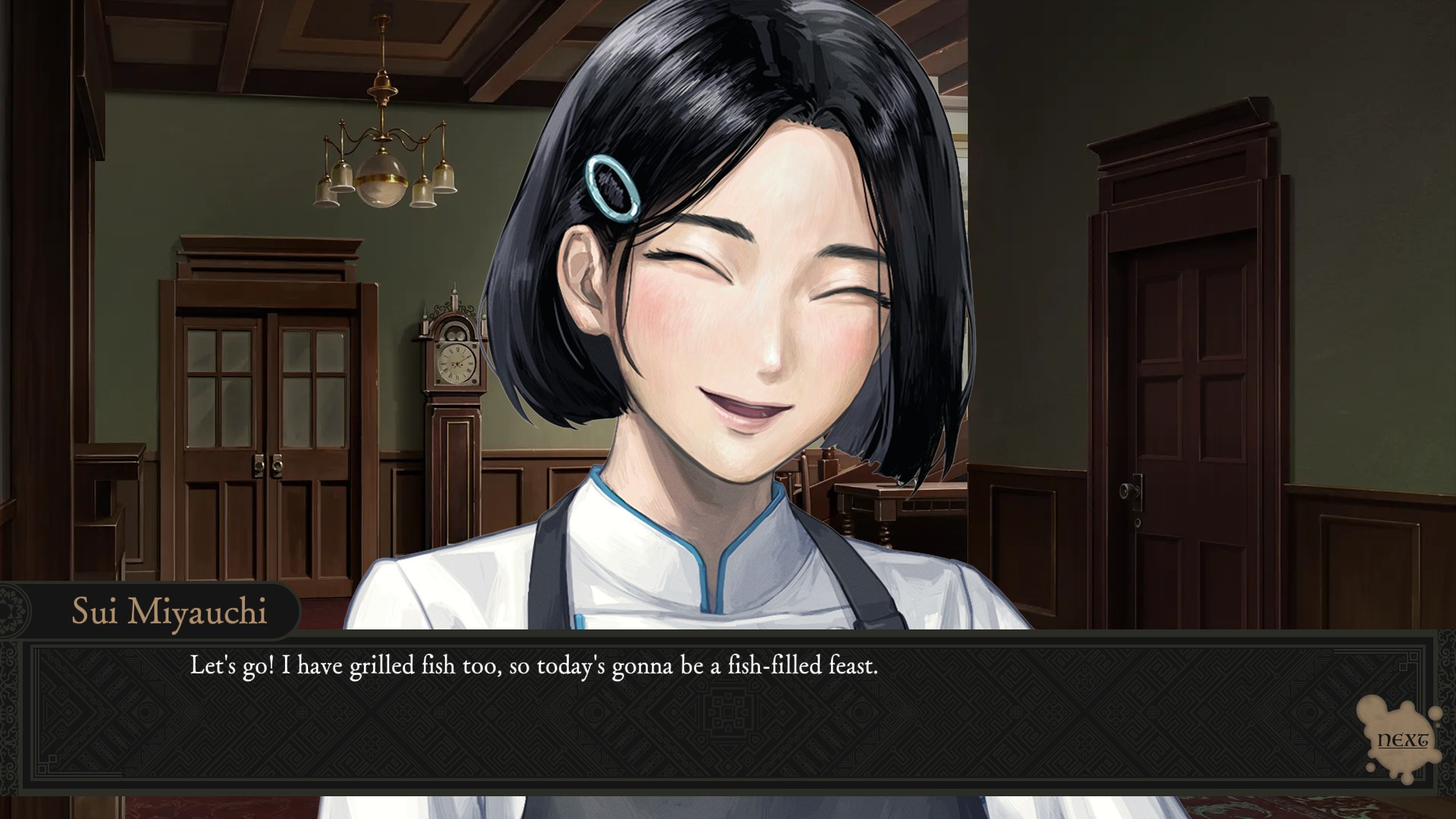
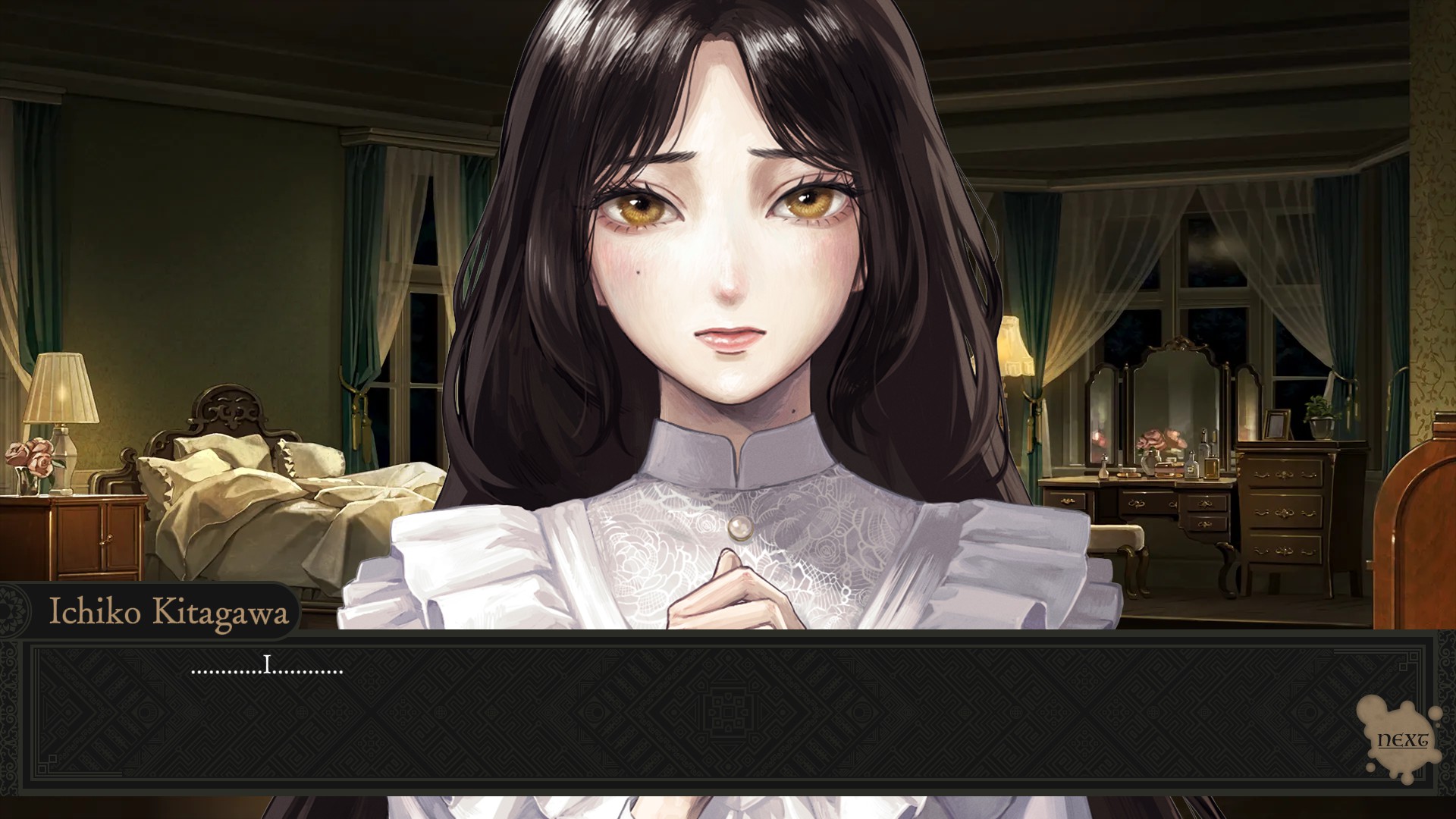
I want Sui to make grilled fish and feed it to me by hand all lovey-dovey.

Admittedly, I have to commend the font: it’s comfortable to read for extended periods and is plenty legible. A majority of MAGES. releases in English have used dubious fonts with absurd kerning and character heights/widths, so it’s nice to see that it’s genuinely fine here. Props for that.

I know the localization sections have mainly focused on me being disappointed in the English aspect of the release, but I want to clarify that Iwakura Aria’s localization is still fine enough in my eyes and probably won’t even bother that many people with its quirks.

Final Thoughts

Honestly, go and buy it if the premise really interests you. Hell, go and try the demo if you’re still apprehensive. I promise that you probably have a spark of joy in your heart, unlike me, and you just might like it. I think a fundamental aspect of being a reviewer is recognizing that my impressions will not be universal or even possibly widely held to any degree in the first place. This is a new IP by MAGES., and despite my qualms, I’d love for it to succeed more than anything. At the same time, I need to be honest about my feelings toward it—I’m largely not invested in Iwakura Aria as it’s written.

I think that every aspect of it is, at best, simply serviceable. If the game does gain and hold a real following, though, I’d be happy that it found an audience, because I don’t think that my perception of its quality should stop people from enjoying it when I can very much recognize that it’s a fairly earnest story, even if I think it’s immensely half-baked. I went into Iwakura Aria really wanting to like it, but I simply don’t like it all that much. I don’t exactly hate it, either, since I think it had the potential to be so much more if it had simply been twice as long (which admittedly is a big ask). If you end up reading it and taking something away from its themes about intimacy and autonomy, then I’d genuinely be glad to hear that.
I think the cost of $40 (digitally) to $50 (physically) USD is what especially leaves me questioning whether people will find the value they’re looking for or not. This is more expensive than a majority of visual novels available in English while also offering very little production value in comparison. I would’ve priced the game at $20 USD at most, which is still iffy compared to the price and quality of other visual novels, but that’s just my view as a consumer rather than a developer.

With the value of the yen right now, the Japanese Switch LE would honestly be cheaper to buy than the physical Switch version releasing through PQube. It would be in Japanese, obviously, but it has a cool box. The otaku collector spirit is all about having the cool box.

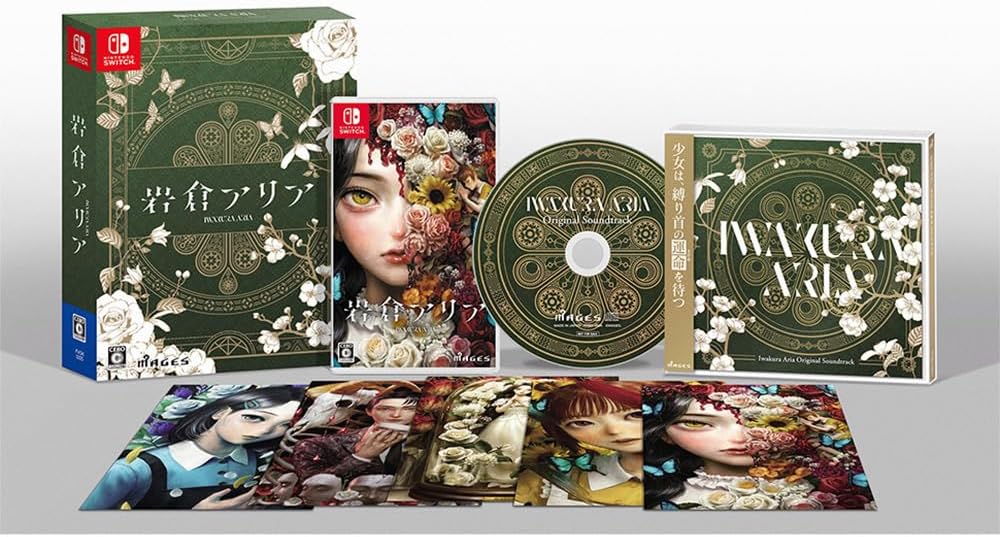
Personally, I bought Iwakura Aria’s Japanese limited edition Switch release about a year ago, which came with an assortment of goodies (soundtrack CD, some visual cards, and a neat box) that not even the physical Switch release in English has decided to retain. It’s understandable that Japan would have all that, since licensing and printing those goodies all over again for a smaller audience would probably cost more than it would ever possibly recoup, but I can still dream.

5/10

Iwakura Aria is middle-of-the-road in every way. Its production value could’ve been stronger with more polished presentation, interactivity, interfacing, localized text, and story. It’s not awful by any stretch, but it’s also not great. Filled with intrigue, it clearly had more than enough love—but perhaps the same doesn’t go for time or money.

Iwakura Aria is available now on Steam and Nintendo Switch. A physical release is also available from various retailers; visit the official website for more details.

If you like this site, please consider supporting us on: