
In the last two videos, we covered why Robotics;Notes Elite was made, and we unboxed a copy of the original Robotics;Notes release from 2012. So now it’s time to take a closer look at both versions and examine what the exact differences between them are.
The footage of the original game was captured on PS3, while the Elite version was captured on PC. As always, you can watch the video, or read the article below. We would highly recommend checking out the video, as we show exact comparisons of several scenes.
At first glance, both versions look almost identical, and honestly, they kind of are.
First thing you’ll notice on PS3 is that character models have pixelated edges. This is due to the basic anti-aliasing that the engine used on PS3. The game also runs at the resolution of 720p and with 30 frames per second. This was pretty standard for this generation of consoles, however when we compare it directly to the Elite version running in full 1080p and 60 FPS, you can clearly see the differences. Not only everything looks sharper, but also characters seem to move “faster” even though technically nothing actually changed.
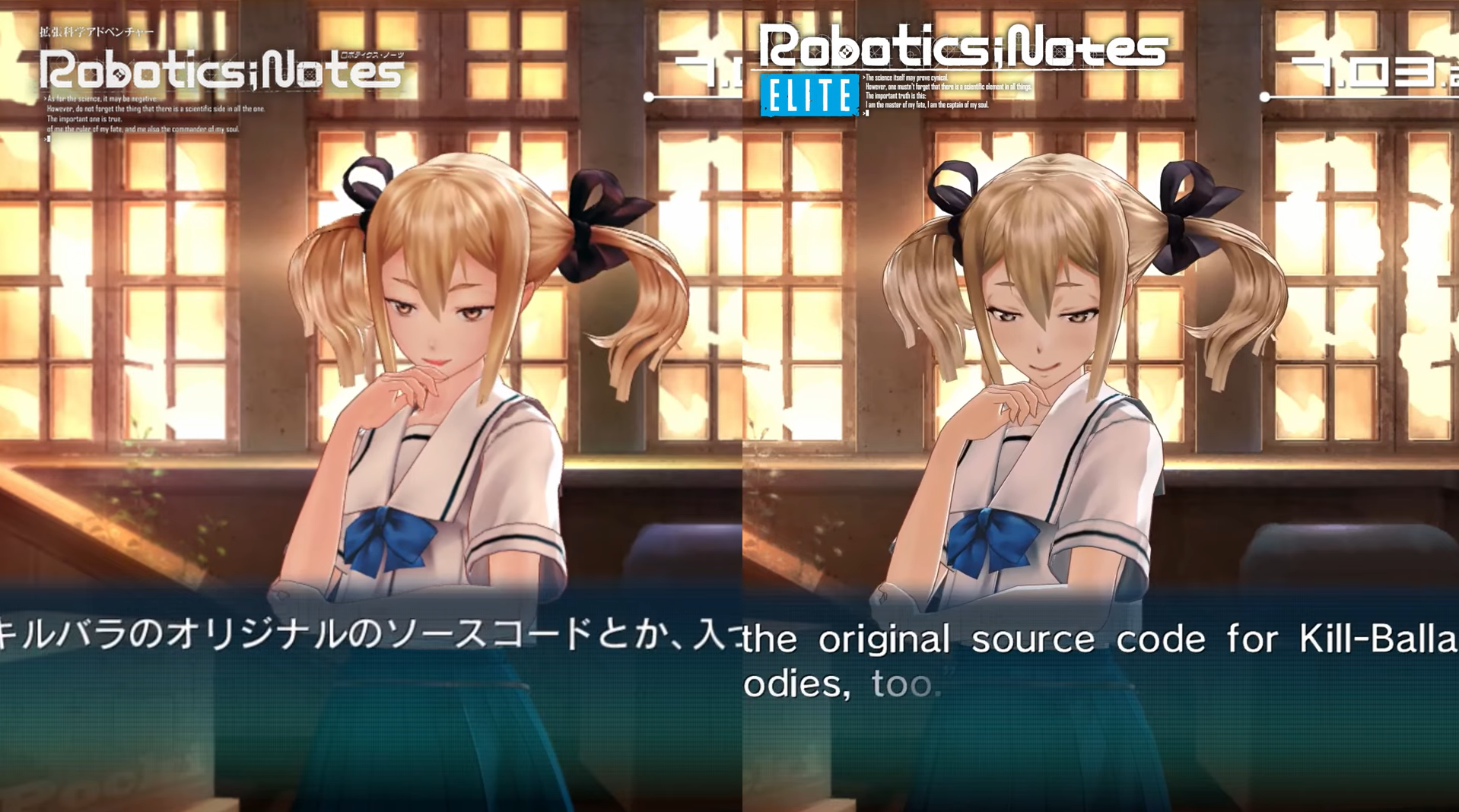
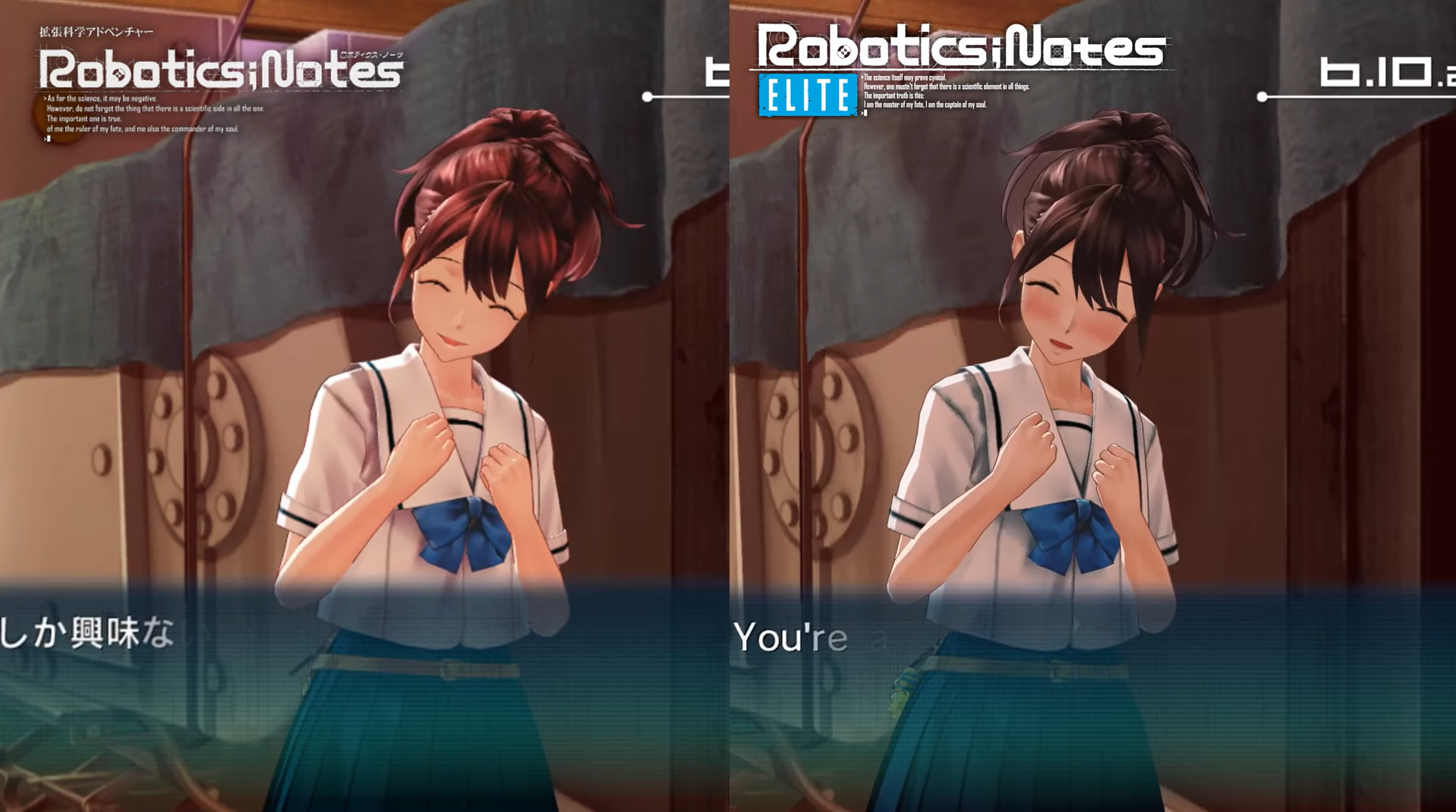
Character models in Elite also feature more detailed textures, and the anti-aliasing is improved. Characters have a wider range of expressions and movements in Elite, for example, here we can see Akiho blushing in the Elite version.
Another noticeable difference is that Elite introduces many more animated scenes to improve the flow of certain moments. That said, there is still a surprising number of animated sequences in the original version as well. For example, all Kill-Ballad battles use the same animation. The lower resolution isn’t as big of an issue as we initially expected. Background art, CGs, and even the few animated scenes look almost identical to the Elite version.
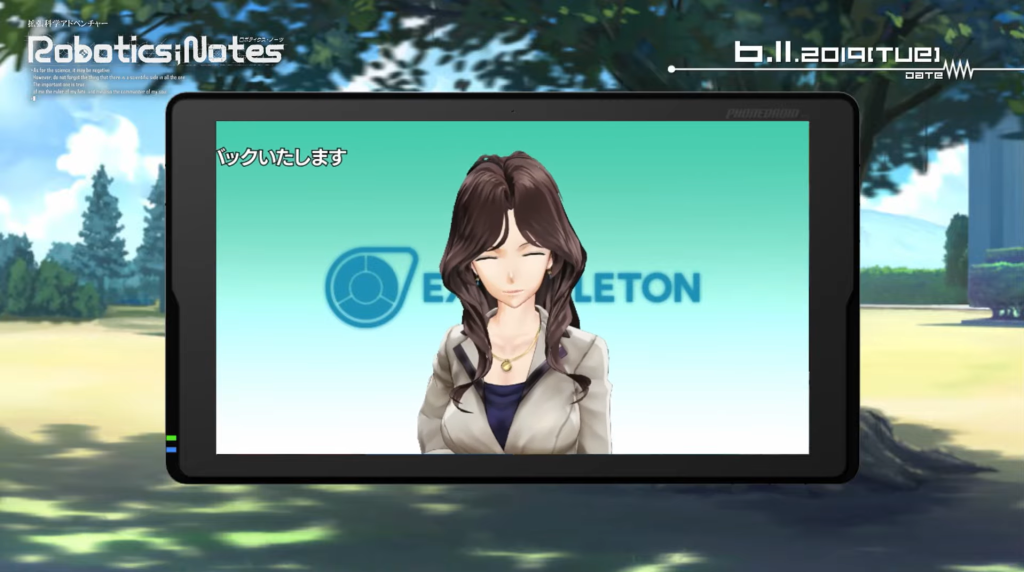
This scene, where Kaito watches an advertisement for the Exoskeleton company, also exists in the original game, but the main difference here is presentation. In the original release, the video plays on the Pokecom screen, while in Elite it is shown in full screen.

The opening movie is completely different between the two versions. The original opening was produced in-house by MAGES. and features the song “Augmented Place.”
The Elite opening, featuring the song “The Promised Augment,” was produced by Production I.G, the same studio that handled the anime adaptation. This also makes the opening visually consistent with the rest of Elite’s animated scenes, many of which are taken directly from the anime.
Several other scenes are now fully animated, for example moments during the Robo-One tournament, Nae’s first appearance at the hangar or when Gunbild takes it’s first steps. While the Robo-One tournament’s animated scenes improve the overall presentation, some of them are reused multiple times, which can get a bit repetitive. There are many other animated scenes as well, although most of them feel more like unnecessary additions. Usually, they depict fairly mundane moments, like the van approaching when Nae shows up at the hangar, or when Mitchi drives his car in front of the old hotel.
MAGES. also made changes to the game’s script, specifically by rearranging some scenes and reducing the amount of Kaito’s internal monologue. This was one of the main criticisms mentioned in Japanese reviews, so some of these monologues were shortened, while others were replaced with scenes from different characters’ perspectives.
The original game also felt more restrictive in terms of when you could reply to tweeps, so in Elite, the system feels more open, with clearer indications when new messages are available.
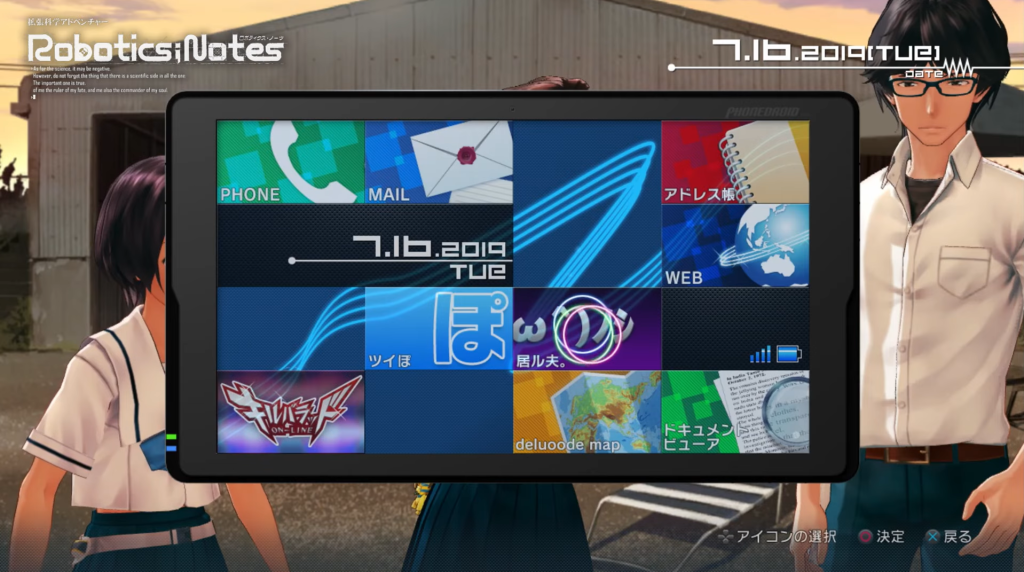
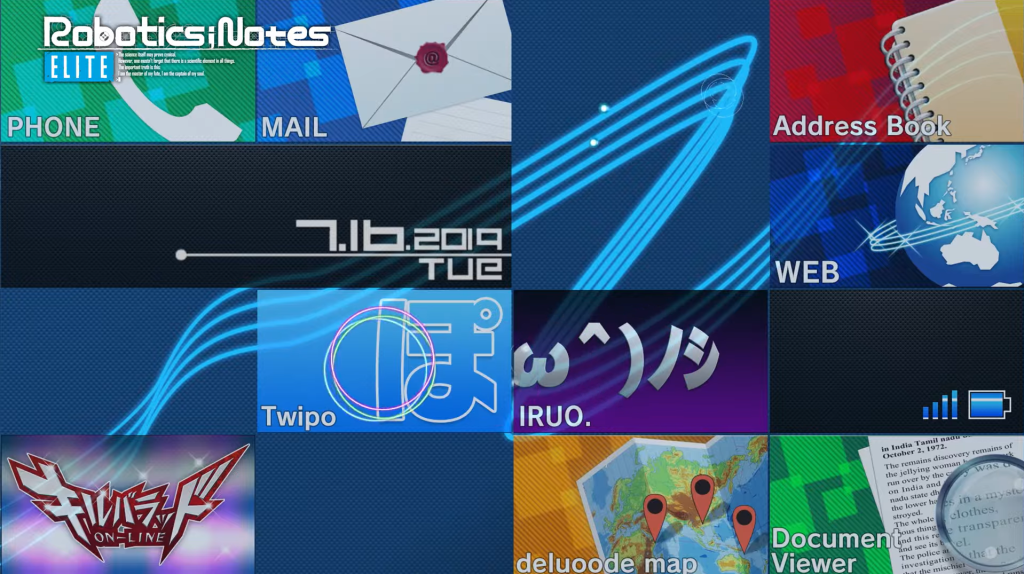
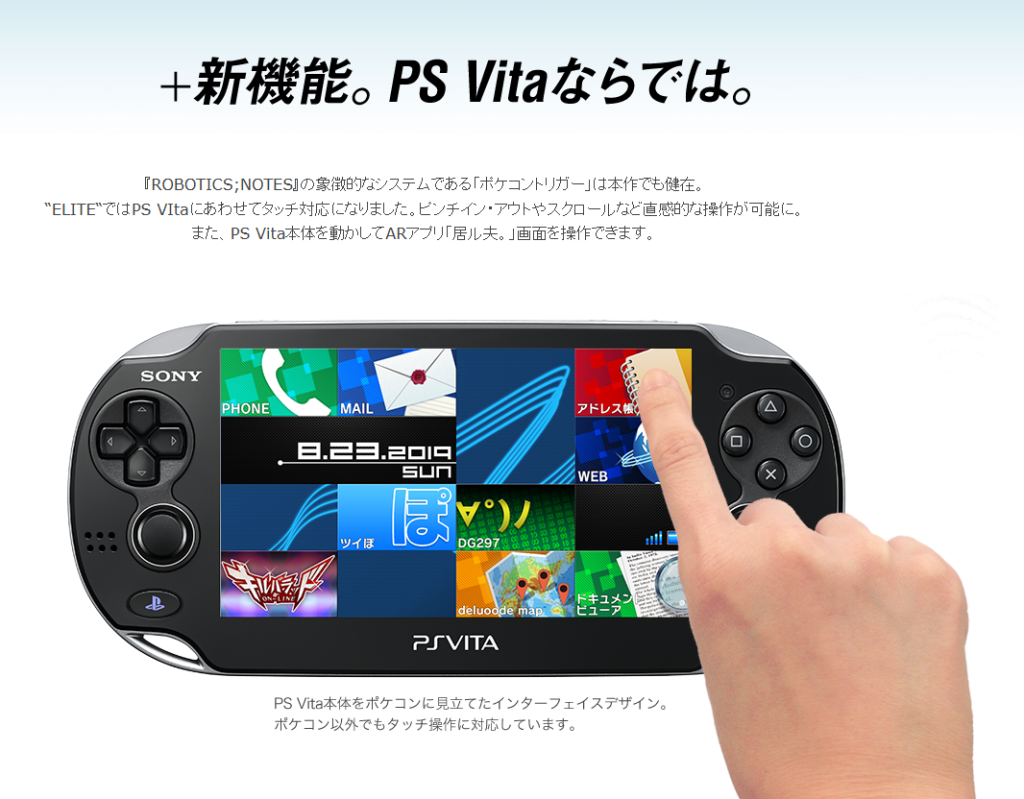
The PokeCom presentation also changed in the rerelease. Instead of seeing the tablet floating on the screen, the interface now opens in full screen. This is most likely a carryover from the PS Vita version, where the interface would otherwise be too small to comfortably use.
You can also see in this promotional image that the full-screen layout feels more immersive, as it allows you to interact with it as if you were using a touchscreen. So even with all these changes, both versions still feel pretty similar overall.
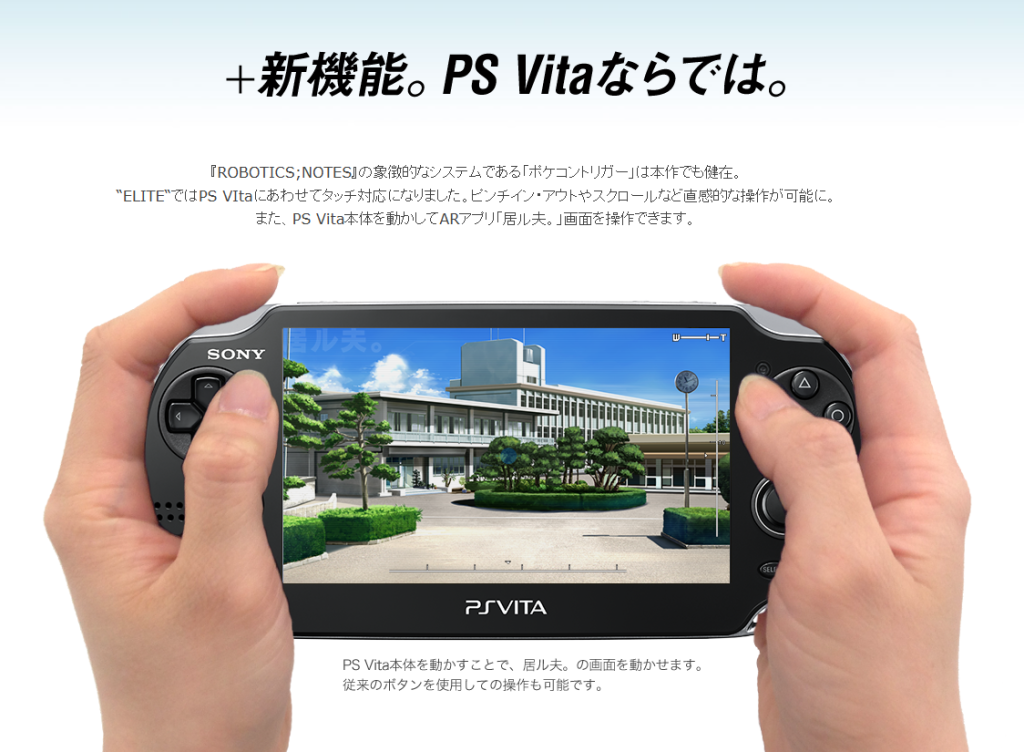
Elite definitely looks nicer and flows a bit better, but at the end of the day, it’s still the same game.
After this comparison, Robotics;Notes Elite really feels less like a remake, and more like a polished version of the original. And honestly, it kind of makes you wonder if the PS Vita wasn’t a thing, would this version even exist? Because a lot of these changes really do feel like they were made with that platform in mind.


KKB Community
0 comments