Steins;Gate now finds itself in the unusual position of having been remade twice. The original visual novel of 2009 was followed by Steins;Gate Elite in 2018, which reimagined the game using animation from the anime adaptation. Now, 2026’s Steins;Gate RE:BOOT has returned to the original visual novel format while rebuilding its presentation for modern hardware.
That leaves Steins;Gate Elite in a rather strange position. For several years, Elite had a fairly clear purpose: it was an accessible way for newcomers to experience Steins;Gate, particularly on newer consoles where the original visual novel was not readily available. Following the release of RE:BOOT, however, that advantage has largely disappeared.
So, in 2026, what exactly is the point of Steins;Gate Elite? As always, you can either watch the video or read the article version below.
To understand Elite’s current position, it is worth remembering why the game was created at all. By the time Steins;Gate Elite arrived, the original Steins;Gate was already nearly a decade old. In terms of modern accessibility, the visual novel remained available on PC, but its console releases were tied largely to older hardware such as the PlayStation 3 and Xbox 360.
That created a problem as the series continued attracting new fans. Console generations had moved forward, and interest in Steins;Gate remained strong thanks to the (at that time) recently released anime adaptation of Steins;Gate 0, and yet one of the most important entries in the Science Adventure series was becoming increasingly awkward to access outside of PC.
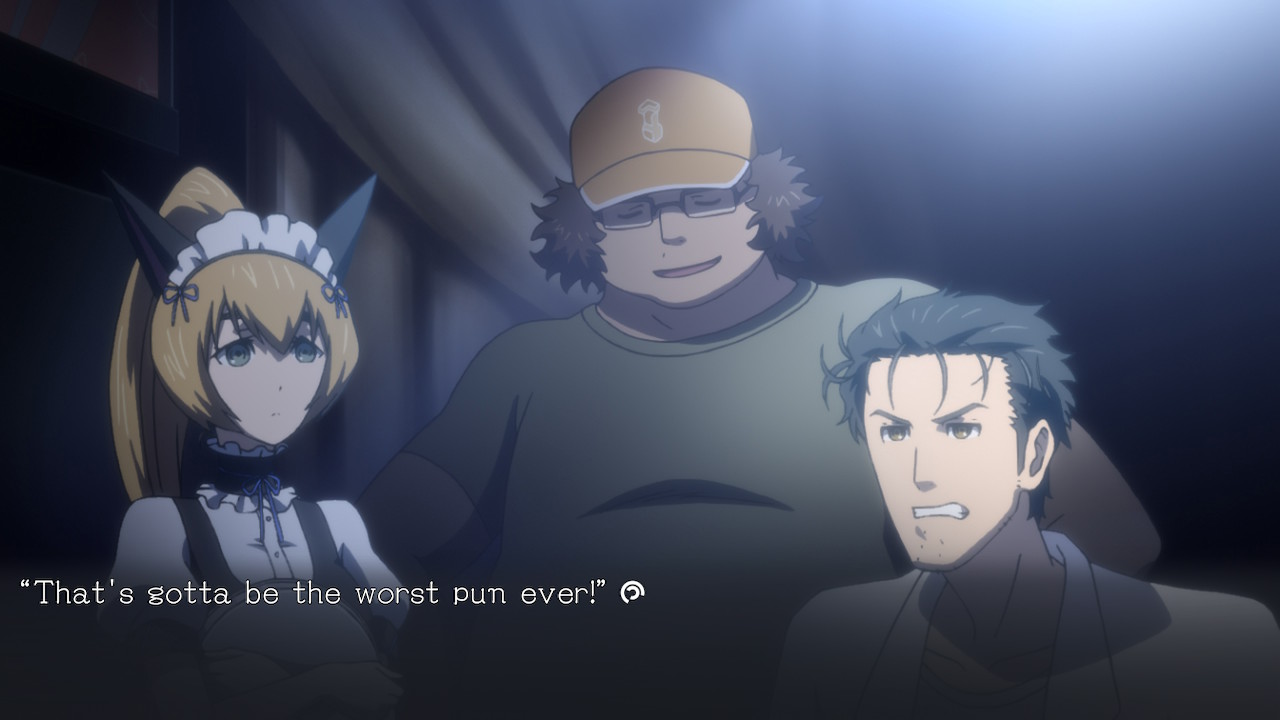
Elite brought Steins;Gate to newer platforms while also attempting to make the visual novel format more approachable for players who may never have played one before. Rather than presenting the story through static character sprites and backgrounds, Elite reconstructed the game almost entirely using animation from the Steins;Gate anime. Additional animation was also produced to accommodate scenes and routes that were not present in the anime.
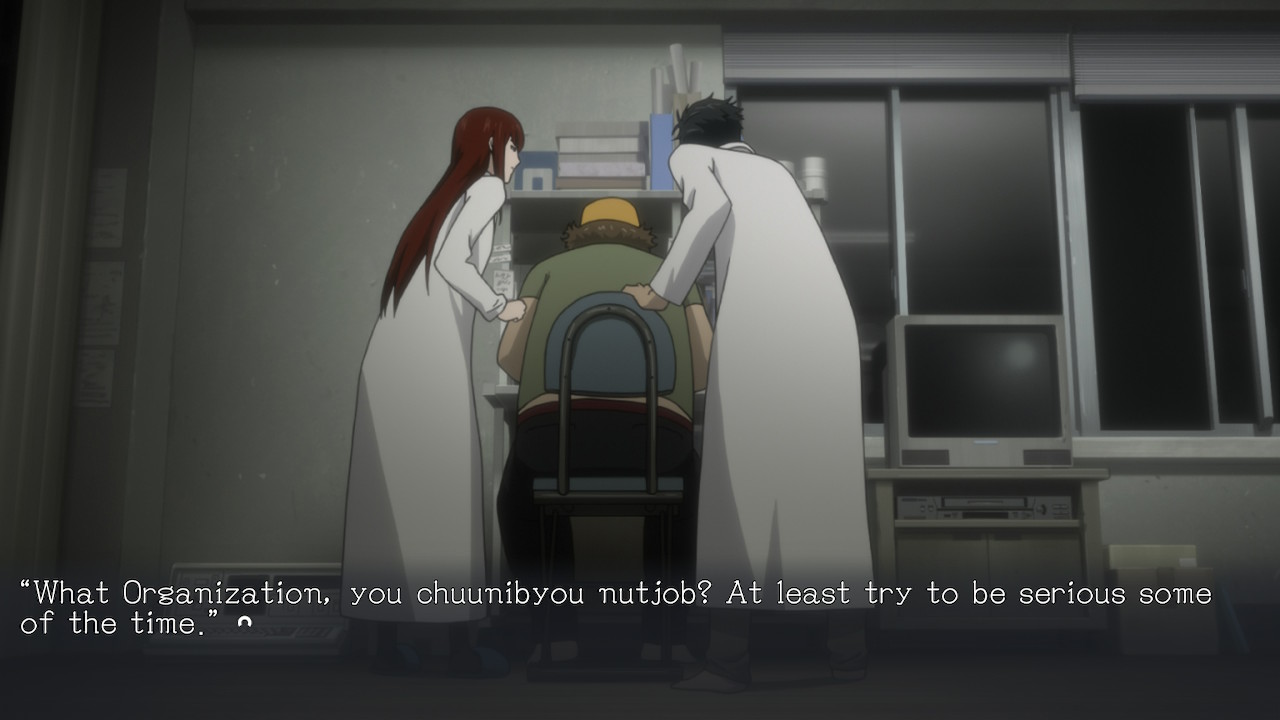
The result occupies an unusual space between visual novel and anime. You still progress through the Steins;Gate story, making decisions and accessing its various endings, but visually, the experience is akin to watching an interactive version of the anime adaptation. Even at the time, however, Elite was something of a strange proposition.
If someone simply wanted to see Steins;Gate fully animated, the obvious option was to watch the anime, which remains one of the most popular adaptations of a visual novel. Meanwhile, players interested in experiencing the source material could simply play the original game on PC.
Elite therefore existed somewhere between those two audiences. For the past several years, Elite’s strongest argument was simply that it allowed people to play Steins;Gate on modern consoles and was more approachable because of its animated scenes and condensed runtime.
The original Steins;Gate is a fairly long visual novel, particularly for players unfamiliar with the genre. Elite condenses or cuts portions of the script, removing some smaller conversations, explanations, and pieces of worldbuilding in order to offer a faster-moving version of the story.
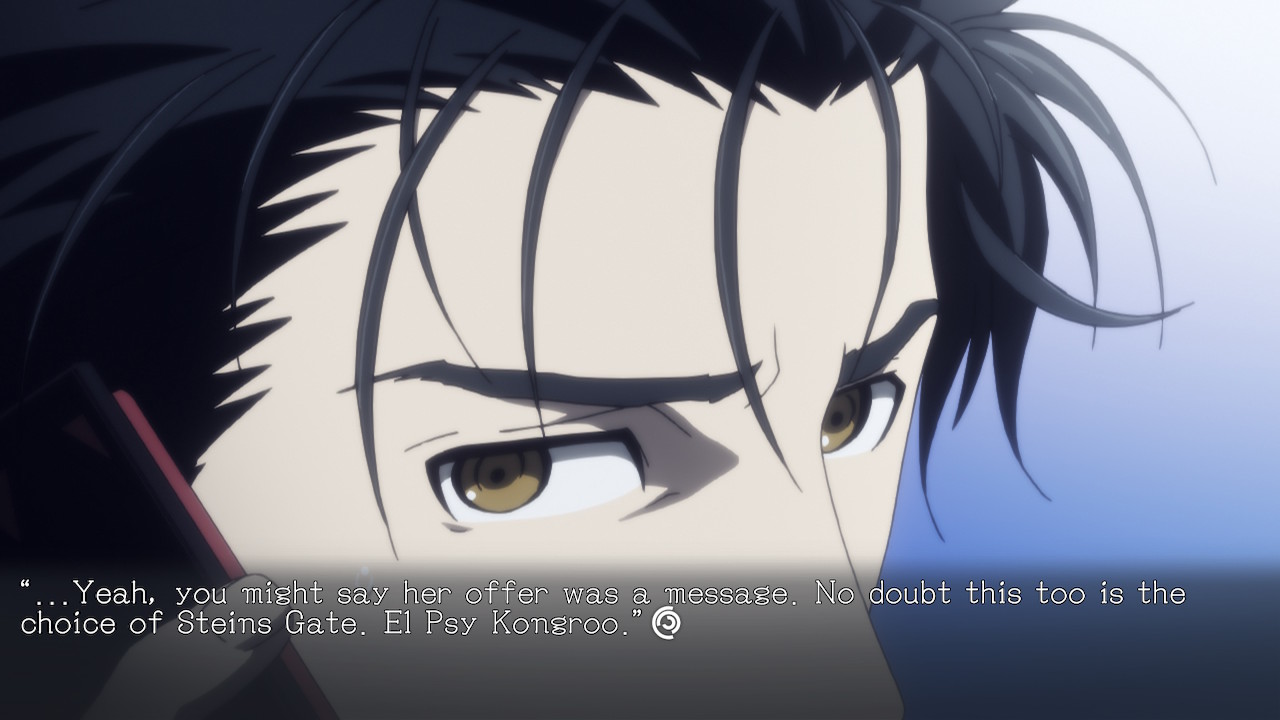
For established fans, those cuts are one of Elite’s biggest weaknesses. For newcomers, however, they can make Steins;Gate considerably easier to approach. We’ve even taken advantage of that ourselves; while researching for our video covering the real-life locations featured in Steins;Gate, we chose to replay Elite rather than replaying the original visual novel and rewatching the anime. With a tight production deadline on our hands, Elite’s condensed script made it much easier to revisit the entire story in both visual novel and animated form and confirm locations without committing to another complete playthrough of the considerably longer original. Elite therefore had its niche: it was convenient, relatively short, widely available, and approachable.
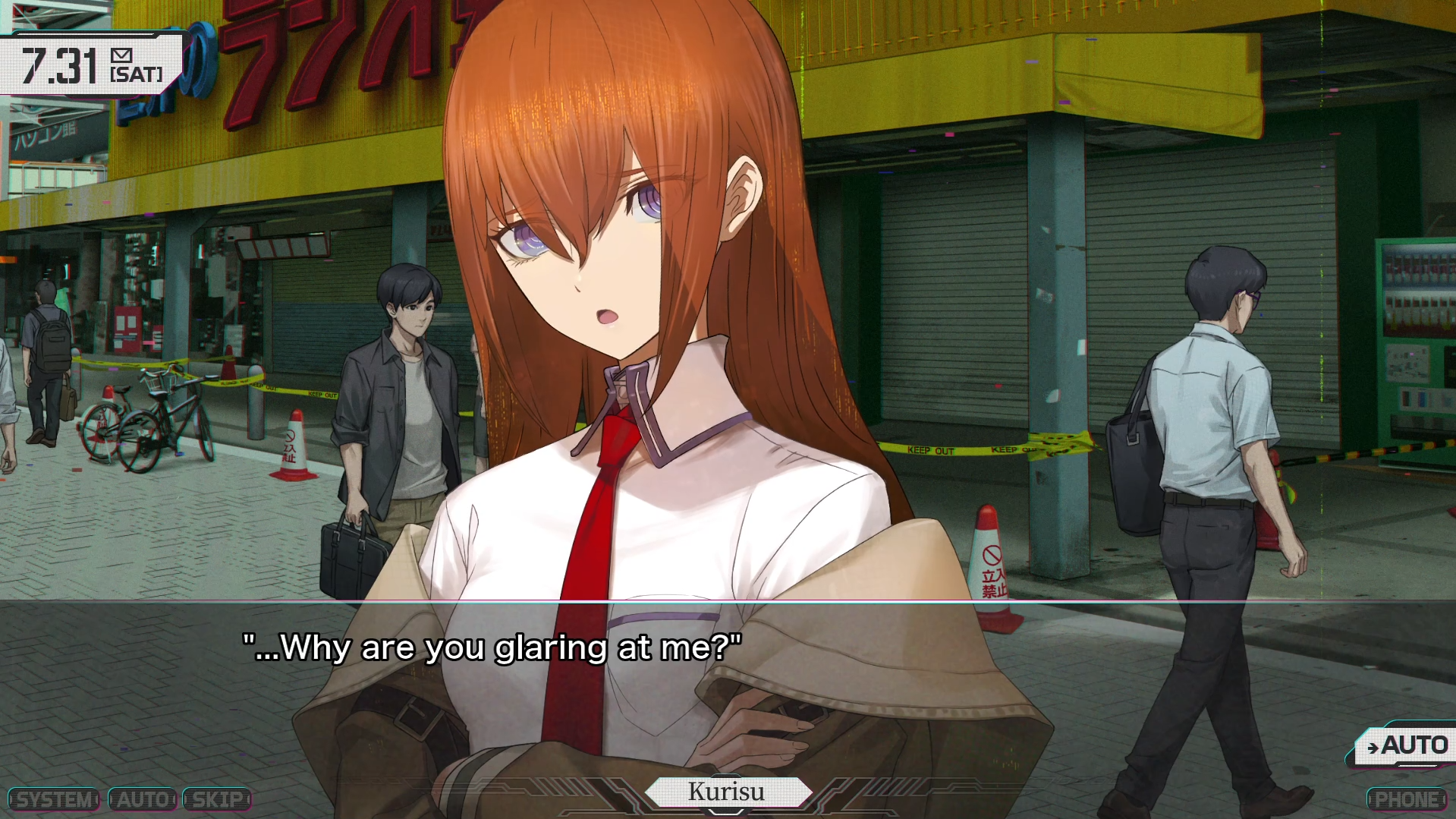
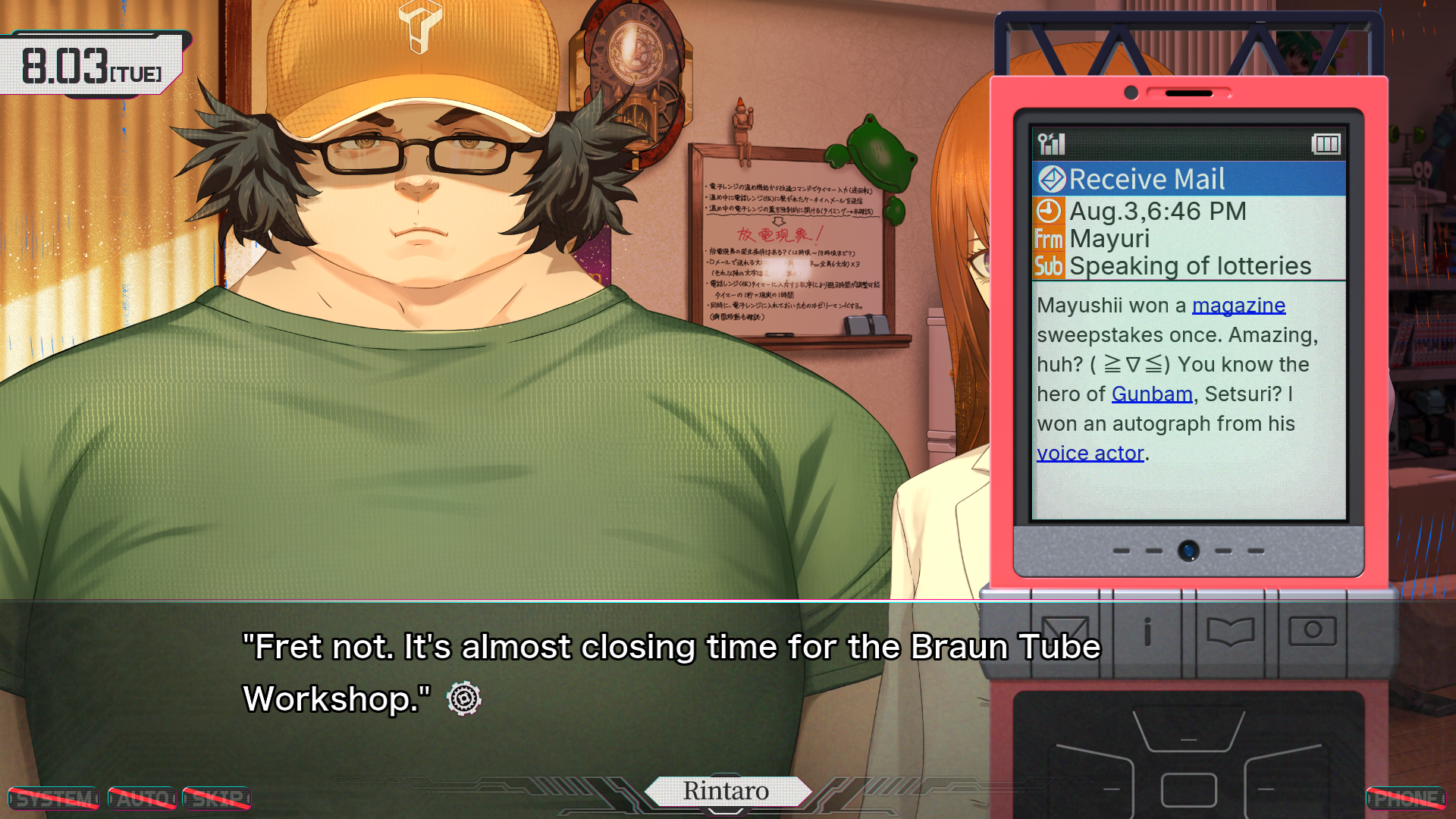
But then Steins;Gate RE:BOOT arrived. If someone wants to play Steins;Gate on a modern console today, there’s very little reason to recommend Elite over RE:BOOT. RE:BOOT retains the traditional visual novel structure while completely rebuilding the game’s presentation. It features new backgrounds, redesigned character artwork, more expressive presentation, rerecorded voice acting, and numerous other visual and audio improvements.
More importantly, playing RE:BOOT feels much closer to actually playing Steins;Gate. Elite’s animation-heavy presentation fundamentally changes the atmosphere of the original game. RE:BOOT instead modernizes that original experience without abandoning the format Steins;Gate was designed around. It also includes meaningful new material—most notably a route for Moeka—giving even longtime fans something they’ve never experienced in previous versions.
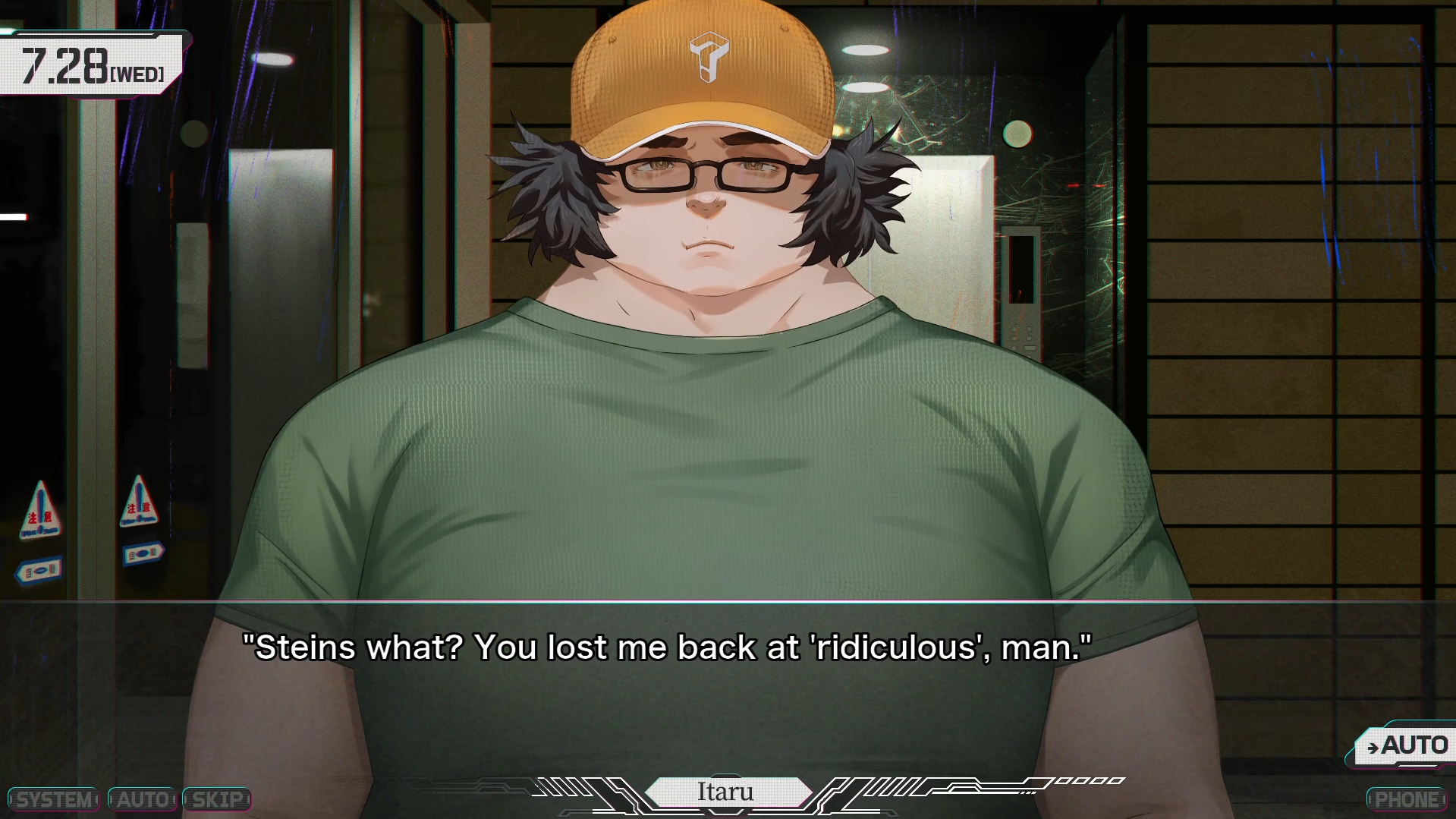
RE:BOOT is not without compromises, however. Like Elite, it uses a condensed version of the original script, meaning that some smaller conversations, technical explanations, and pieces of worldbuilding are absent. Nevertheless, for players purchasing Steins;Gate on a console for the first time, RE:BOOT has effectively taken over Elite’s old role. It is modern and accessible, and unlike Elite, it still fundamentally feels like the original visual novel.
However, on PC, players face a considerably more interesting crossroads, because the original Steins;Gate remains readily available alongside Elite and RE:BOOT. And despite two remakes, there are still very good reasons to play the original. In terms of the core story, the original Steins;Gate remains the most complete version. Its script contains conversations, explanations, and pieces of characterization that were removed when the story was condensed for Elite and, subsequently, RE:BOOT. These details are rarely essential to understanding the plot, but collectively, they contribute enormously to the atmosphere and worldbuilding that made the original visual novel so memorable.
There’s also huke’s original artwork to consider. RE:BOOT’s new character designs are beautifully reproduced, and their increased expressiveness adds a lot to the presentation, but they are ultimately a reinterpretation. The distinctive character artwork of the original remains an important part of Steins;Gate’s identity.
RE:BOOT instead offers a different set of advantages. It is considerably more modern in its presentation, features newly recorded voice work and audio, and contains additional content that simply does not exist in the original release. Choosing between the two therefore becomes a question of priorities. If you want the fullest version of the original Steins;Gate story, the original game remains difficult to beat. If you want more modern presentation and are interested in seeing what RE:BOOT adds to a story you may already know, the remake becomes extremely compelling. Ideally, serious Steins;Gate fans should eventually experience both.
So why would anyone choose Elite? With RE:BOOT available alongside the original game, there is no longer one major reason to recommend Elite above either of them. But that does not necessarily mean Elite has become completely pointless. Its strongest remaining argument is accessibility for people who are uncertain whether they will enjoy a traditional visual novel.
That was something I personally worried about before getting into the genre. Reading dialogue over relatively static backgrounds for dozens of hours can sound intimidating when your previous experience with games revolves around constant movement and interaction.
Elite creates a bridge between anime and visual novels. Someone who has watched anime but never played a visual novel may find its continuously animated presentation much easier to get accustomed to. You are effectively watching an alternate, interactive version of the Steins;Gate anime while gradually becoming familiar with concepts such as branching routes, dialogue choices and multiple endings.
And despite the obvious comparison, playing Elite is not exactly the same thing as simply watching the anime. Elite retains the visual novel’s branching structure and alternate endings, including material that the television adaptation could not fully explore. It therefore remains an interesting way to experience parts of the original game through the visual language of the anime.
There is also one far more practical argument: the price. Steins;Gate Elite has been available for years and can frequently be found heavily discounted during digital sales. RE:BOOT, as a recent release, naturally commands a considerably higher price and will likely take some time before similar discounts become common.
If someone encounters Elite extremely cheaply and simply wants to discover what Steins;Gate is about, it remains a perfectly reasonable entry point. It is just no longer the version we would recommend first.
Perhaps the best way to describe Steins;Gate Elite in 2026 is that is no longer the modern replacement for the original Steins;Gate. Instead, Elite has become something closer to an alternative interpretation of the story. The original Steins;Gate remains the best choice for players who want the complete classic experience, preserving the full script and huke’s original artwork.
Steins;Gate RE:BOOT is the easiest version to recommend to someone wanting a modern visual novel experience, especially on consoles. Its presentation is excellent, it remains closer to the identity of the original game than Elite, and its new content gives even returning players a reason to experience Steins;Gate again. Elite sits between them. Its condensed story and anime presentation make it less complete than the original and less compelling as a remake than RE:BOOT. But those same characteristics also give it a distinct identity that neither of the other versions provides.
For players curious about visual novels but hesitant to commit to the format, Elite can still serve as an unusually gentle introduction, for very low price. For existing fans, it can also be interesting simply as an experiment in adapting a visual novel back into an interactive version of its own anime adaptation. But for everyone else, its purpose has become increasingly difficult to justify. If you are playing on latest generation of consoles, our recommendation is simple: choose Steins;Gate RE:BOOT.
On PC, the decision comes down to whether you value the original game’s more complete script and classic artwork or RE:BOOT’s modern presentation and new content. And if you want the definitive Steins;Gate experience? Play both.
The original allows you to experience Steins;Gate as it was originally created, while RE:BOOT provides a fascinating new interpretation and meaningful additions to a story that has now endured for more than fifteen years.
Steins;Gate Elite has not suddenly become a bad game because RE:BOOT exists. It has simply gone from being the most practical way to experience Steins;Gate on modern hardware to becoming perhaps the strangest version of the story, and one intended for a much more specific audience.


KKB Community
0 comments