Chaos;Head almost wasn’t Chaos;Head. For as highly regarded as the IP is, its development was very turbulent—filled with more twists and turns than even NoAH itself.
To commemorate NoAH’s 17th anniversary, let’s take a deep dive into the development of Chaos;Head, a game many thought the English-speaking world would never, ever see. Feel free to either watch the embedded video or read the article below.
Disclaimer: this article contains spoilers for Chaos;Head NoAH.
In the year 2006, Kindle Imagine Develop (or KID), the company behind the Memories Off and Infinity series went bankrupt and defunct. And during this time, many of its former employees banded together to join Chiyomaru Shikura’s 5pb., which was established shortly before KID’s bankruptcy. For one of the studio’s first major works, they wanted to make a full length sci-fi game. Core to the project were 5pb. founder Chiyomaru Shikura, scenario writer Naotaka Hayashi, and general director Tatsuya Matsubara—a trio that would ultimately form the foundation of the SciADV creative team in the years that would follow.
Under their initial project pitches in the summer of 2006, the game’s original title was AI Sword, or otherwise, Sword of Sorrow. At this point in time, they had a very rough outline of the plot and hadn’t decided upon working with other companies yet. They continued to refine and iterate on the ideas of this outline for several months. And by the end of 2006, they brought on board artist Mutsumi Sasaki of Memories Off renown as character designer. Within a few months, by March of 2007, they had also finished writing an initial scenario for AI Sword. And at this point in time, they decided upon collaborating with visual novel powerhouse, Nitroplus. The distribution of roles would have it so that 5pb. would do the story, character designs, and sound, but Nitroplus would handle the visuals, direction, and programming—a role split they would continue even until the final version of the game.
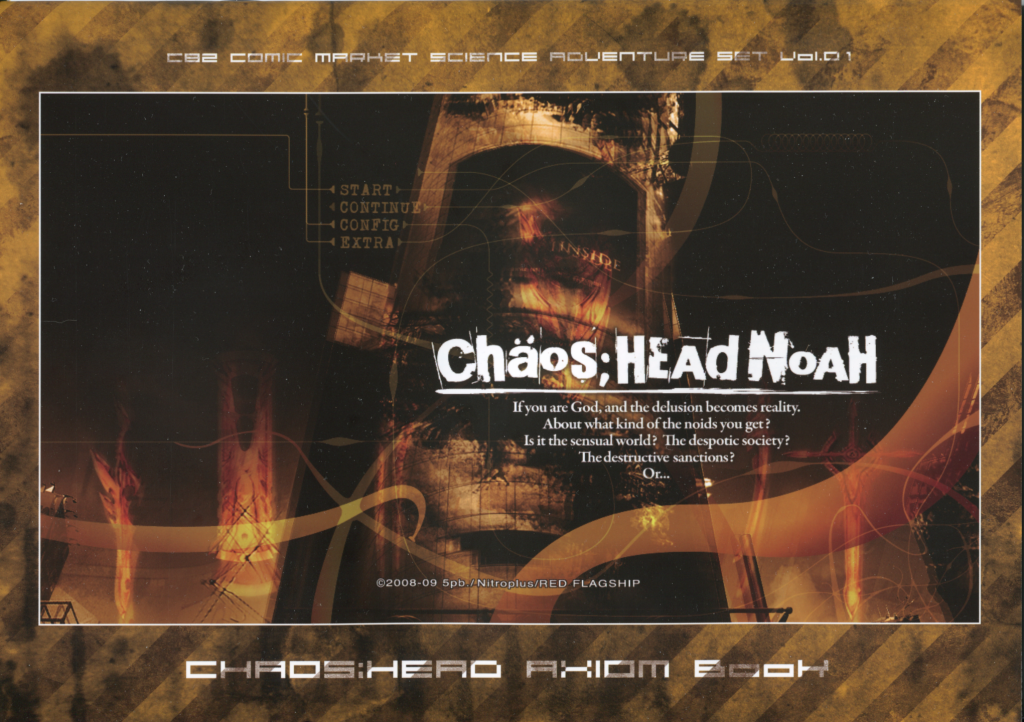
By the middle of 2007, 5pb. had changed the game’s title to Project C.O.D.E. The Chaos;Head Axiom Book from Comiket 82 provides an in-depth snapshot of this iteration of the project. Compared to the final version of the story, this one had a radically different plot, albeit still taking place in Shibuya, and revolving around the New Generation Madness, delusional science, these thematic focuses on the blurred boundary between the real and fake, as well as the validity of artificial existences. Under this iteration of the story, the big twist of the game was that the entire world as the characters knew it, was in a simulated delusionary world. Indeed, the characters were all just in Rimi’s delusion. And with that being the case, does that make it so that their lives and their decisions were meaningless? Does that make it so that the whole game was meaningless? I wonder.
Aside from the story, Project C.O.D.E. also had different names and personalities for a good chunk of the central cast. For instance, Rimi Sakihata was Rimi Kurosaki, Sena Aoi was Risa Aoi, Yua Kusunoki was Yua Hiiragi, Kozue Orihara was Kae Oozora, Ayase Kishimoto was Sayumi Kishimoto, and Gen’ichi Norose was a homeless French man named Simon Germain. In this iteration of the story, Takumi was a delusional shut-in like he was in the final version. However, this element was toned down, with Takumi actively interested in pursuing the truth behind the murders in spite of Rimi’s warnings against doing so. With that, Rimi was actually from their school’s Newspaper Club, making their dynamic a little closer to what was eventually seen out of Takuru and Nono in Chaos;Child. But as it turns out, she is constantly locked in a battle with Simon Germain over control of the simulated Shibuya. And the reason they’re all in this simulated Shibuya in the first place is because Rimi wanted to seal Takumi’s memories and powers away in order to save him. As for the other characters, their personalities and the twists surrounding them were also quite different. Originally, it was Nanami that was a delusional existence, as opposed to Takumi. Yua was also supposed to be Grimm instead of Hazuki. Kae or Kozue was able to speak. And it was Risa or Sena who was locked away in a mental hospital rather than Sayumi or Ayase.
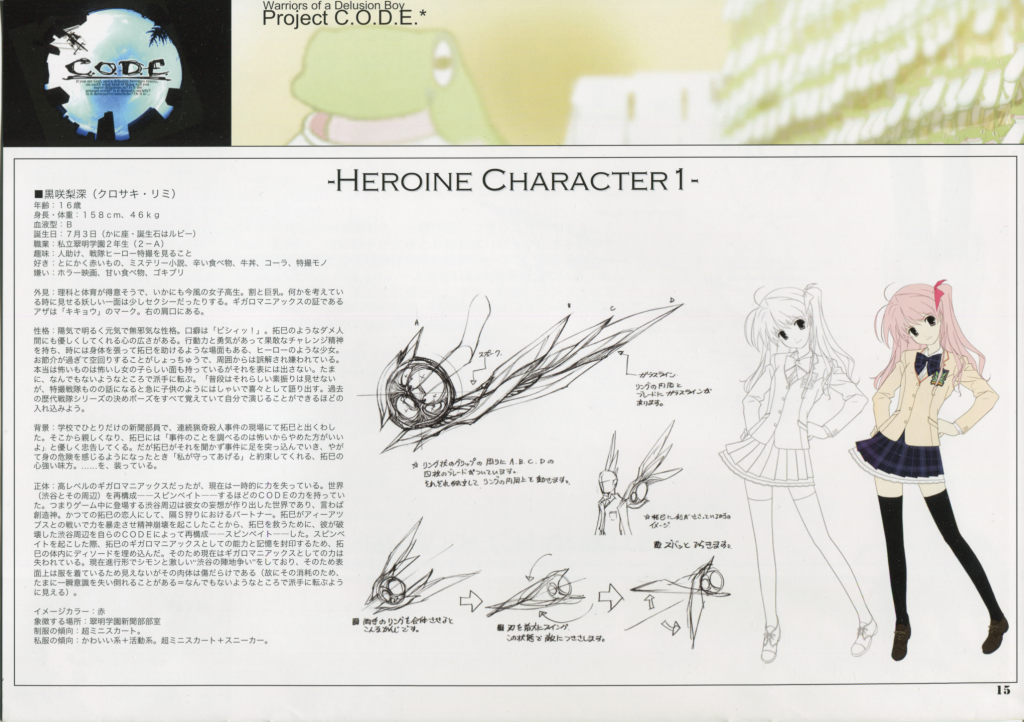
Hayashi personally felt as though the first iterations of the story had a plot that was too focused on romance—to a point that it felt more typical of a Memories Off game than a Nitroplus one. Upon suggestions from Shikura, they ultimately decided to scrap the story entirely. Thus, within a matter of months, they needed to completely rewrite the scenario from scratch. After iterating on the plot, by the end of the year, they had renamed the game to GIGALOMANIAX, which they had started to advertise in the months leading up to the game’s release. But by the final retail version of the story, the game’s title was changed to Chaos;Head.
Upon release, Chaos;Head was a resounding critical and commercial success, establishing 5pb. as a visual novel pioneer. And in less than six months after the visual novel’s release, the Chaos;Head anime started airing. As per interviews, the anime adaptation was greenlit and approved before even the visual novel story was written, with it being in the works concurrently with the game. And for the most part, SciADV staff gave the anime staff free rein on handling the story with little input on the product. Unfortunately, this led to significant deviations from the source material. And with the anime only having twelve episodes to adapt the considerably lengthy visual novel in the first place, it was not very well received.
However, it did lead to an increase in the global brand recognition of the Chaos;Head IP. And in conjunction with the original visual novel’s great success, the company pivoted towards porting the game to consoles, with a director’s cut version of the game titled Chaos;Head NoAH—designed to refine and complete the overall story with scenario adjustments, six new character routes and a revamped true ending. This would ultimately release on the Xbox 360 in February of 2009 and serve as the first entry in the Science Adventure series, whose following entry Steins;Gate was in the concepts and planning phases during Chaos;Head NoAH’s development. Like the PC version, the Xbox 360 release of Chaos;Head NoAH sold quite well: 18,000 copies in its launch week.
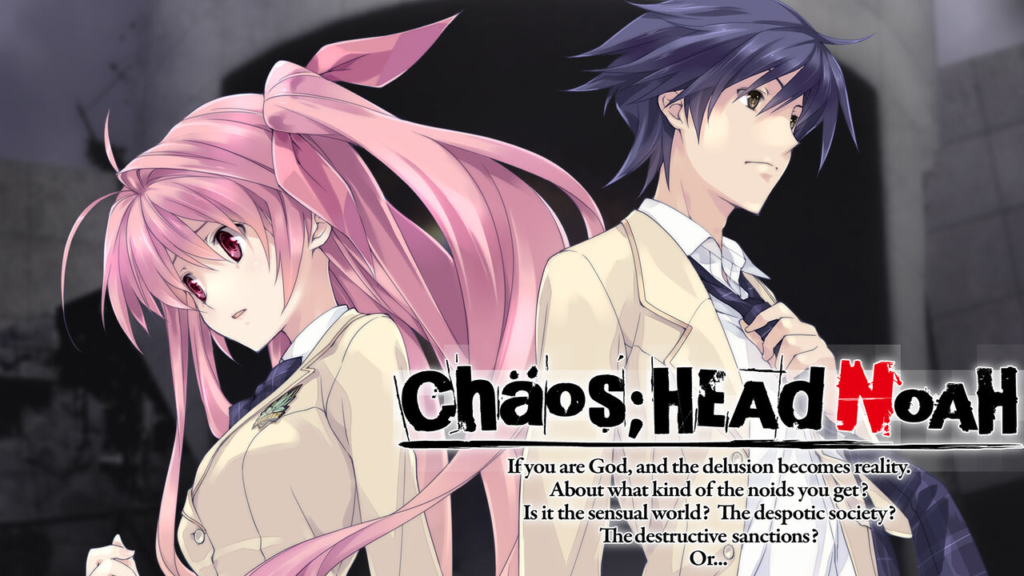
During Steins;Gate’s production, the team had also begun planning a sequel disguised as a romcom dating spin-off: Chaos;Head Love Chu☆Chu, which released for the Xbox 360 in March of 2010. Like the original Chaos;Head, this too, was a success, selling over 24,000 copies by the end of its launch year. Ultimately, this game would conclude the Chaos;Head subseries. But in the aftermath of Love Chu☆Chu’s release, series staff and cast members expressed hope to one day see a more proper sequel to Chaos;Head as well. But for years, despite numerous Chaos;Head-related multimedia developments and side material releases, time would pass by with little word on a Chaos;Head sequel. At some point, Chiyomaru Shikura discussed making an 8-Bit Chaos;Head game in the style of 2011’s Variant Space Octet, a sequel to Steins;Gate that served as a crossover with Chaos;Head.
While this game did not release, between 2010 and 2012, 5pb./MAGES. would port the two Chaos;Head games to the PSP and later on, the PS3. However, due to content concerns, they released Chaos;Head NoAH censored on both platforms, resulting in a CERO D rating as opposed to a CERO Z rating like the Xbox 360 port of Chaos;Head NoAH. These versions of the game had a fair bit of cut content, making the only uncut way to play it at the time being the 360 port. But alas, the SciADV series would continue, with numerous multimedia developments and eventually, a third mainline game in 2012: Robotics;Notes. This game would effectively serve as a Chaos;Head/Steins;Gate crossover in many ways, acting as the first major culmination title in SciADV. But the desired Chaos;Head sequel was seemingly nowhere in sight.
That is until the end of 2013, when MAGES. broke their silence and announced the long-awaited sequel to Chaos;Head: Chaos;Child, the fourth mainline game in SciADV. However, this would not be a conventional sequel to Chaos;Head, but rather, a thematic sequel. In essence, it was a sequel in every way besides the cast, but especially so in its thematic development, which played heavily off of one’s expectations established from Chaos;Head. Thus, to lead up to its release, MAGES. ported both Chaos;Head games uncensored for the PlayStation Vita in what was titled Chaos;Head Dual. For a good 8 years, this would serve as the last time the Chaos;Head series would see any official release. And it would also be the final time that Chaos;Head NoAH was officially released uncensored. Nonetheless, only four months later, they released the long-awaited Chaos;Child.

Like Chaos;Head NoAH, Chaos;Child was very well-received, leading to MAGES. advertising it as the game fans often consider the best entry in the Science Adventure series. Unfortunately, however, it was a commercial flop at launch, selling a mere 1,415 physical copies despite being one of the best-selling Xbox One games in Japan. Even after porting the game to PlayStation, it still sold a fraction of what the previous mainlines did in their respective launches. Nonetheless, after ports to numerous platforms, Chaos;Child fared decently well in the long run.
But even with the Chaos;Child IP seeing numerous developments, the Chaos;Head IP remained shelved for many, many years. Even in the localization scene, numerous attempts by multiple different parties ended up in complete failure.
The way the Steins;Gate localization happened was that the fan translators for the game submitted it to localization companies and MAGES. in an attempt to make it official. Lo and behold, what was once just a fan translation was now significantly revised and published officially by JAST USA. To this day, it is regarded as one of the best localizations in series history. And in the aftermath of this success, the game’s translators attempted to replicate this process with Chaos;Head NoAH. Thus over the course of the next two years, they fan translated the game. And once they were done, they sent it over to a number of different localization companies, to little avail.
JAST USA, who first published the Steins;Gate localization, indicated that numerous conflicting interests on the Japanese side rendered them unable to do a Chaos;Head English release. The same sorts of sentiments were reiterated a few years later by PQube, who had gone so far as to say that for reasons they could not get into, the game would likely never ever be released in English. Fans speculated for a while that this may have been a rights-related issue as Chaos;Head NoAH had three different companies work on it: 5pb. (which became MAGES.), Nitroplus, and Red Flagship.
But when asked about a Chaos;Head English release, SciADV series staff would indicate in interviews that while they would like to localize and re-release Chaos;Head, they had significant engine-related difficulties due to it being one of the first titles they had ever made. After all, the existing versions of Chaos;Head NoAH were on Nitroplus’s N2System and âge’s rUGP engines, which were more challenging for MAGES. to work with. So fans’ understanding was that the holdup with Chaos;Head NoAH getting an English release was both rights-related and engine-related.
Nonetheless, these hurdles did not stop fans from asking for an official English release, and it did not stop them from attempting their own fan localizations either. The original Chaos;Head was fan translated by TLWiki back in 2008, within mere months of the original game’s release, albeit without the context of Chaos;Head NoAH and the rest of the series. While somewhat incomplete as a translation and criticized for inaccuracies, fans had given it multiple patches over the course of many years to get it into a more presentable state. For over a decade, TLWiki’s Chaos;Head fan translation remained the only way for English-speaking fans to play the game. And of course, it was without the critical context from Chaos;Head NoAH—context that would fundamentally define the Science Adventure series for what it was.
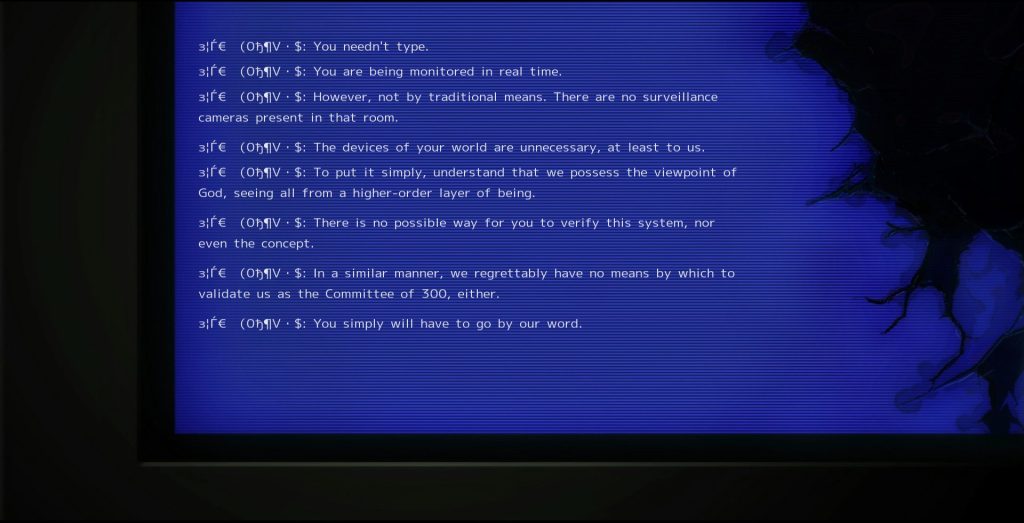
After all, despite the original Chaos;Head’s fan translation releasing very quickly, it would take many years to see one for Chaos;Head NoAH, the definitive and complete version of the story. TLWiki originally announced that they would be doing a fan translation for Chaos;Head NoAH as well. But upon suspecting that JAST would be localizing it themselves, they backed off and canceled the project. Years passed and there was still no localization or new port in sight.
Even after the Steins;Gate translator duo completed their own localization of Chaos;Head NoAH, they were unable to release it to the public since they had submitted it to MAGES. and other publishers for official release. Thus, in 2016, the Committee of Zero started up their own brand new fan localization attempt in the aftermath of this saga. Their philosophy at the time was that consistency was key in a localization and that too many cooks would spoil the broth. As a result, for many years, they had one translator and one editor. However, with there being very few staff members working on the project, and the staff themselves being busy with other real-life priorities, it saw slow progress for many years. Given the circumstances, to expedite the localization, the Committee of Zero completely overhauled and restructured their process in the summer of 2020, bringing in a team of six translators and more engine staff for the fan port. With this new team, the Committee of Zero was able to fully translate the game in just a few years. However, toward the end of their work on the fan translation, in a stunning twist of events, in November 2021, MAGES. announced that Chaos;Head NoAH would be ported to the Nintendo Switch bundled in a double pack with its thematic sequel Chaos;Child, for release in February of 2022. Despite citing engine issues for many years, it turned out that MAGES. had developed tools to make porting older titles much easier. Thus, for the first time ever, Chaos;Head NoAH would release in 1080p and on the MAGES. engine.
At this point in time, MAGES. and SciADV English publisher Spike Chunsoft had not indicated that the game would be receiving an English release. But nonetheless, the prospect of there being a new port made many suspect that they might announce one. Lo and behold, the day the double pack released in Japan, the SciADV Twitter account announced that fans should look forward to upcoming details concerning the English release for the Chaos;Head NoAH/Chaos;Child double pack. At long last, they had given soft confirmation that Chaos;Head NoAH was getting an official English release.
But with this confirmation came questions. Would they be using the Steins;Gate translator duo’s localization? And if they weren’t, would it still be a strong translation? The series’s track record with localization quality and the Switch port itself gave some cause for concern. Like the PS Vita port, it was rated CERO Z rather than CERO D, seemingly indicating that it would be uncensored. However, despite its age rating, for reasons unbeknownst to fans, the Switch release still ended up being the censored version of the game, with a script identical to the previous CERO D releases. Thus, even with an upcoming official English localization, it would be for a heavily censored version of the game with a fair amount of critical content cut. Moreover, the Switch port itself was missing many visual effects present in previous releases and had a number of significant bugs that were never fixed officially. In the end, fans remained apprehensive about the upcoming official release.
All the while, the Committee of Zero continued their fan translation and fan-porting work. Flash forward to Anime Expo 2022 and Spike Chunsoft would announce that Chaos;Head NoAH would not only be releasing in English on the Switch, but also on Steam. This was huge, as it meant patching any potential issues with the game would be much easier and much more accessible. They then pivoted to first making a patch for the eventual Steam port of the game.
For a few months, fans generally operated under the belief that Chaos;Head NoAH could just be patched on Steam like all the other localized SciADV games. But then came leaked assets from SteamDB that would only happen in the event that a game was banned from the platform. Fans immediately began to panic and wait for confirmation from publisher Spike Chunsoft. The official silence continued until a week before the game’s planned launch, when Spike Chunsoft officially confirmed that Chaos;Head NoAH was indeed banned from Steam due to content concerns. They would then be looking to other PC platforms to release the game on. To fans, this ban seemed completely absurd. After all, Chaos;Head NoAH had no explicit sexual content whatsoever and had been released on the Xbox 360, PSP, PS3, iOS, Android, and even the family-friendly Nintendo Switch without any problems. Moreover, the suggestive content that Chaos;Head NoAH did contain was comparable to the average anime and to what had been seen in all the other entries in the series, all of which also released on Steam without issue. Steam unjustly banning visual novels and Japanese-made games was nothing new. But in this case, it was especially egregious. And fans were furious.
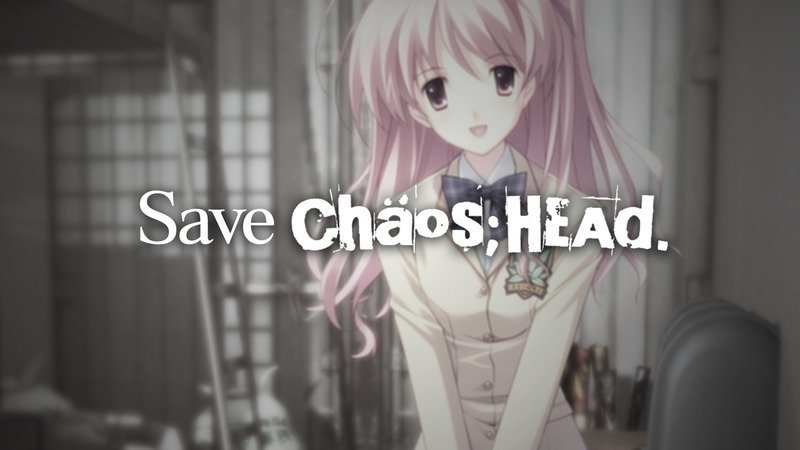
Shortly after Spike Chunsoft officially confirmed the game was banned, fans led by members of the Committee of Zero launched a campaign to get Chaos;Head NoAH unbanned from Steam—a revival of Operation HiddenHand, a movement previously successfully used in petitioning for an English release of Robotics;Notes Elite. This movement made tons of noise on numerous social media platforms, with its petition amassing almost 5,000 signatures—a petition that managed to make it onto news articles both in the West and also in Japan.
After almost a week of fighting, just 24 hours before the localization’s planned release date, Spike Chunsoft confirmed that Chaos;Head NoAH had been unbanned from Steam, something they stated they believed was only possible because of the loud, vocal, and emphatic support by Science Adventure fans.
Nonetheless, even with the game having finally released officially on PC and on Switch, the localization and ports were very, very poorly received—to the point they became regarded as the absolute worst in series history, a real shame for the first and most important entry in the series. At launch, the Switch version of the game was impossible to finish due to game-breaking bugs. And the PC version contained many of the same bugs as the Switch port.
In large part because of the sheer number of bugs, the Committee of Zero ended up taking a few months longer than anticipated to get their fan overhaul patch of the game in release-ready state. Even Spike Chunsoft themselves would come to formally acknowledge the Committee of Zero’s efforts in a survey on Chaos;Head NoAH shortly after the game’s catastrophically turbulent launch. But once the Committee of Zero’s patch was released in February of 2023, at long last, after a fourteen-year wait, English-speaking fans finally had an uncut and uncensored way to experience the first entry in the Science Adventure series—the entry that would set up everything that would follow suit. Ever since, it has been much more straightforward for English-speaking newcomers to start SciADV.
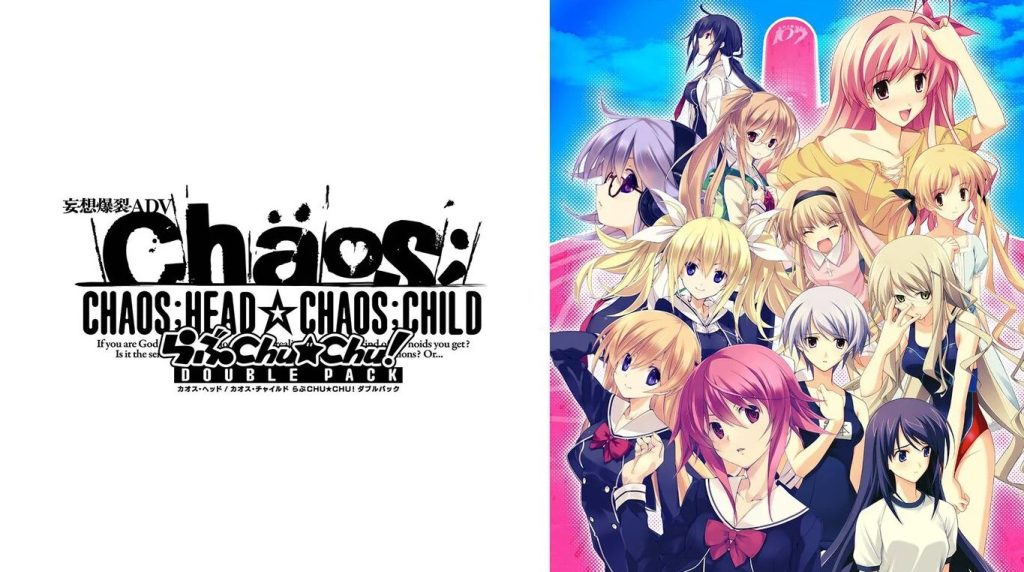
Until recently, these were the latest developments for the Chaos; series. But a few years down the line, in November of 2025, MAGES. would later port the Chaos; Love Chu Chu games in their own double pack. As of this time, there has been no announcement for a potential official English localization. But in the meantime, the Committee of Zero has been hard to work on the fan ports and fan translations for both games. They are expected to release sometime in 2026.
As for where we stand right now, will the Chaos; series continue in some form? I suppose we’ll just have to see. But maybe one day, our delusions will become reality, and we’ll welcome ourselves back to Chaos World. Until then, everyone.
Special thanks to Enorovan, Fasty, Martin, and the regulars of Beyond the Gate.
If you like this site, please consider supporting us on: