
If you’re a fan of Robotics;Notes, then you’re probably very familiar with the old Tanegashima airport. But few people know the details surrounding how the airport came to be, why it was replaced, and what’s happening with it now. Let’s take a look! You can watch the video or read the article below.
Tanegashima’s first airport was built in 1961, quite late compared to other Japanese islands. Most had their airports built during World War II. This new airport in Tanegashima was called “Anno” named after the nearby city of Anno. Instead of the Japanese government, the airport was operated by the city hall of Nishinoomote, the “capital” city of Tanegashima. It was a 900-meter-long gravel strip on the east coast of the island. Very little is known about it—only that it was served by a company called Fuji Airlines, which operated small propeller planes, most likely from Kagoshima.
With the start of the Japanese space program in the 1960s, Tanegashima was chosen as the location for the country’s space center, so it became clear the island would need a more permanent airport
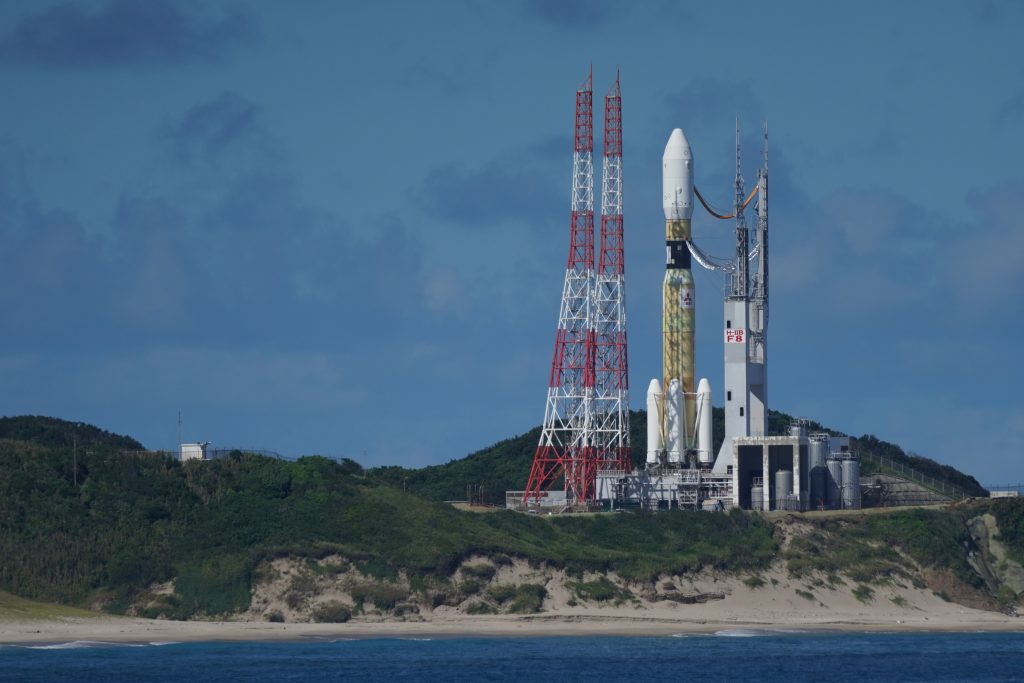
In 1962, the government opened “Tanegashima Airport” in the city of Nakatane. There were a few years where both airports were operating at the same time. However, the gravel strip could not compare to the paved runway of the airport in Nakatane. Hence, in 1964, Anno Airport was closed, and according to Google Maps, it’s now a shrimp farm.
The new airport’s runway was 1,200 meters long and paved, so larger planes could use it. It had three ground stands for planes, lights to enable night operation, and also, a VOR/DME radio beacon. This beacon allowed pilots to approach the runway with more precision. The runway was then extended in the 1970s to 1,500 meters.
We were unable to find which airlines operated on the airport from its opening, but from 1983, the airport was served by Japan Air Commuter, shortened to JAC. This is a regional airline owned by Japan Airlines, based in Kagoshima, flying to its many islands south of Kyushu. The airline still operates scheduled flights to Tanegashima to this day.
Most of their flights were and still are to Kagoshima, the largest city in the prefecture, although some sources say that there were seasonal flights to Osaka as well. Due to the short runway and close proximity to the city of Nakatane, only small propeller planes could land. Hence, the airline operated Dornier 228 and YS-11 aircrafts. The YS-11 aircraft type is notable, as it is the only civilian plane fully designed and built in Japan since World War II.
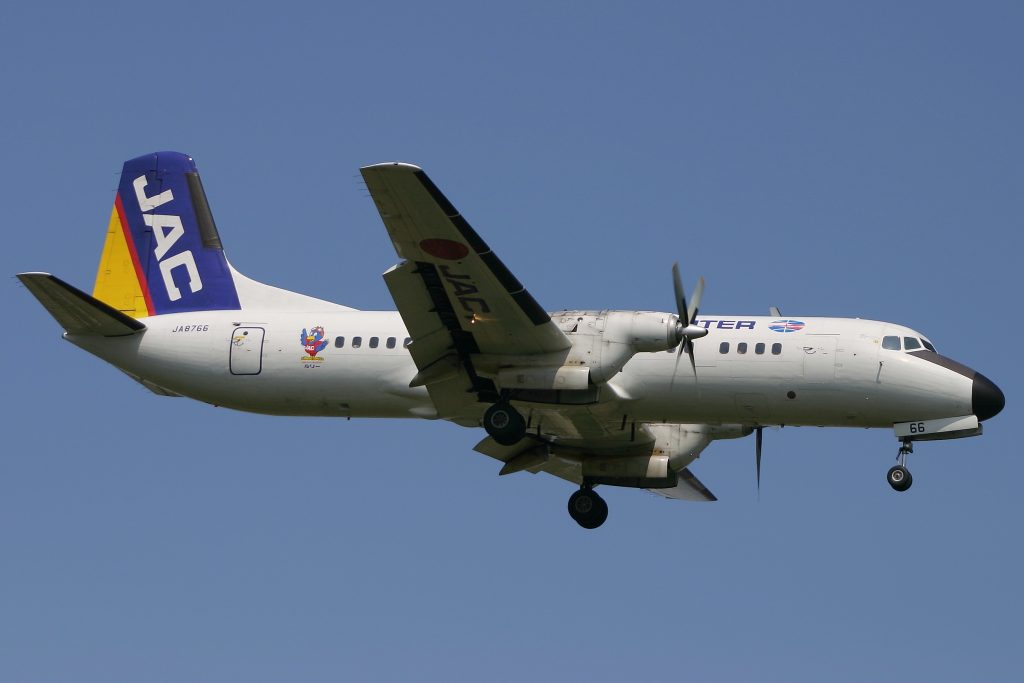
In the 1990s, talks began on upgrading the Tanegashima airport. The main reason was that the airport needed to be able to accommodate jet aircraft, as the life span of the YS-11 aircraft was coming to an end. And with the current location of the airport, it was not possible to simply extend the runway. On one side, you had the city of Nakatane; on the other side was a huge cliff, not to mention the noise that would flood the city if jets started flying there.
In 1992, the Ministry of Transport decided to build a completely new airport in the mountains, far away from any large city. The project was ready in 1998, with the groundwork starting that year. Because the new airport was being built in the hills, a lot of landscaping had to be done, which resulted in about 5.7 million cubic meters of soil being moved.
There was a tight deadline for the completion of the airport, as it needed to be finished by 2006. The reason was that, based on new aviation laws, YS-11 aircraft had to be either decommissioned by 2006 or upgraded with a new and expensive traffic collision avoidance system. Because of the upgrades’ cost, most airlines decided to decommission the YS-11. In 2003, the land works were completed, and the runway paving and terminal construction began.
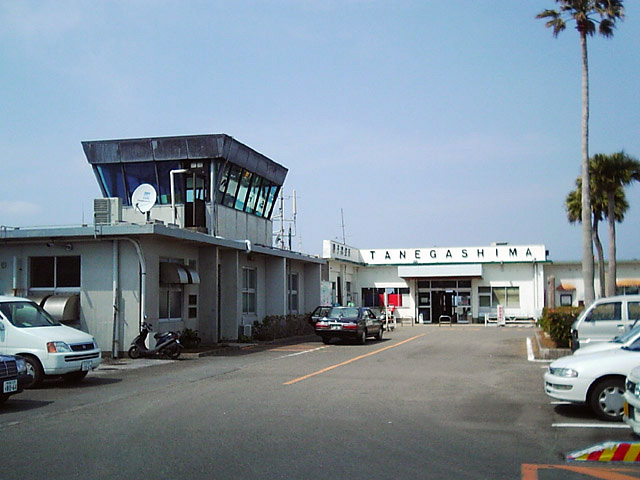
Then, in 2006, the shiny new Tanegashima airport was completed, and the old airport was closed. The new airport has a two-kilometer-long runway and an ILS beacon, which is a precision radio navigation system that provides guidance to pilots to make automated approaches to a runway at night or in bad weather. Even though in Robotics;Notes, Tanegashima is mostly portrayed as a beautiful island with a blue sky, the summer storms and fog can get really bad, especially with constant wind coming from the sea. This upgrade was really needed.
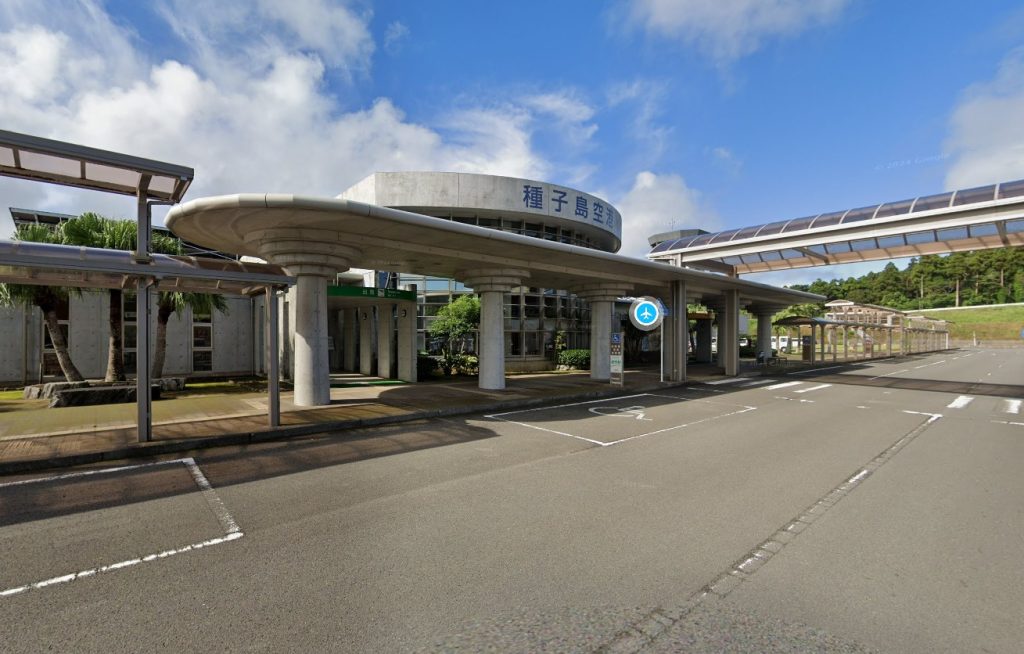
The new airport is still mostly served by propeller planes, this time with much newer ATR planes and SAAB 340s from Kagoshima, operated by JAC. These are scheduled flights year round, but several other airlines fly to Tanegashima during the summer season as charter flights, usually from Osaka. These flights are operated by airlines such as JTA or Fuji Dream Airlines, which actually use Embraer jets to fly in.
With the new airport opened, what has happened with the old one? Well, as we know from Robotics;Notes, not much. To this day, the old airport building is still there, with only the tower having been torn down. The runway and the aircraft stands are also still there.
In 2018, the airport was used as a training ground for the Japan Self-Defense Force and US Marines. The exercise included a boat landing on the nearby beach and then taking over the old airport from the enemy. This included several army vehicles moving there and JSDF helicopters arriving at the airport runway to disembark soldiers. You can check out a video of the exercise on the Nikkei news website. They also mention that many locals were quite worried about the exercise, believing it to be a real military operation. Some also complained about the noise.
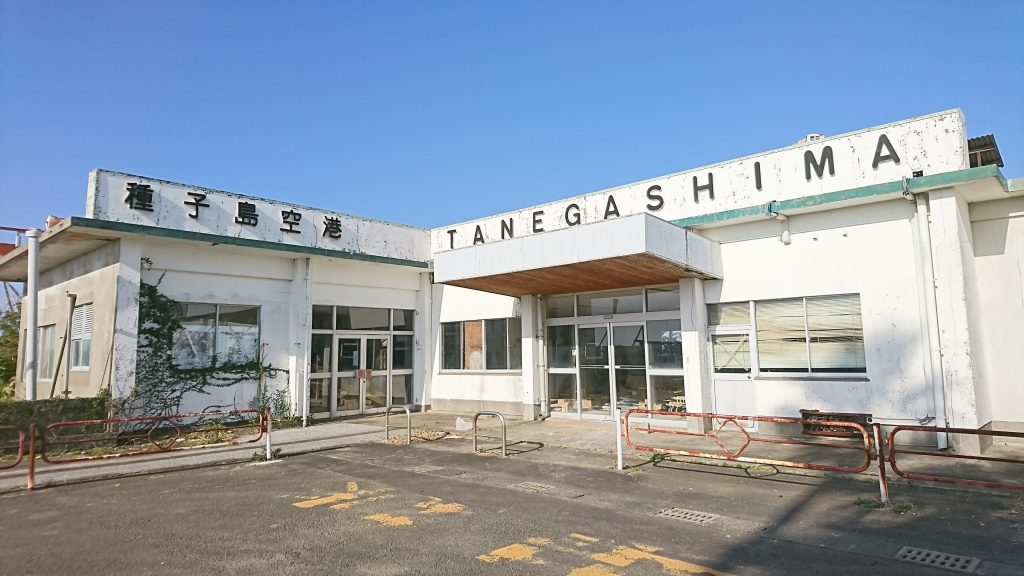
The old airport then lay quiet for a few years until it started bustling with life again in 2023. But to explain this, we need a bit of context first:
West of Tanegashima is a small uninhabited island called Mageshima. In 2009, this island came under consideration as a possible relocation site for the US Marines station in Okinawa. The work started; however, during it, the construction company came under investigation for tax fraud, and further investigation also showed that the initial logging to clear an area for the proposed runways had been performed without proper permission.
After this, the US military pulled out of the project and agreed with the Japanese government to relocate to Iwo Jima. The Japanese government then reacquired Mageshima to build a JSDF airbase. Construction started on January 12, 2023 and is expected to take four years. And where did JSDF decide to keep all the construction material and workers? At the old Tanegashima airport.
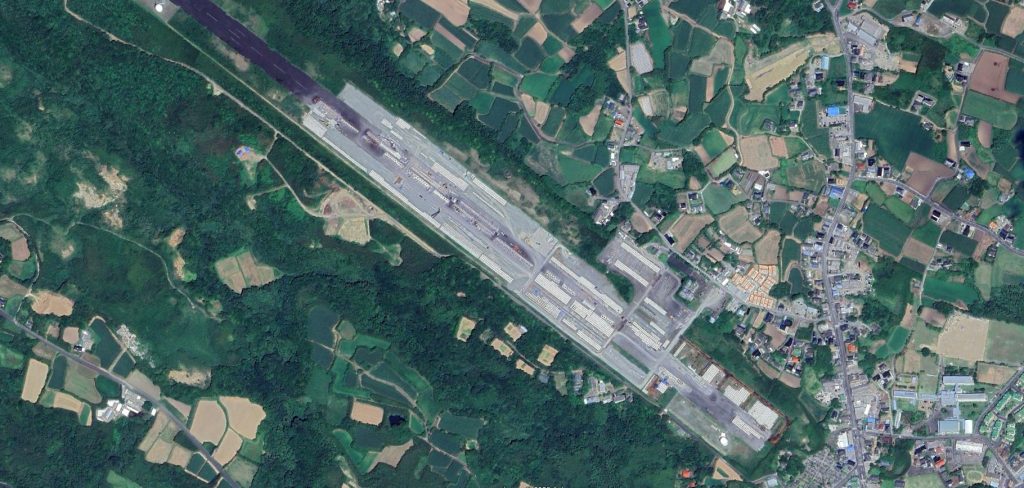
In these photos, you can see how the airport runway is covered with construction material. You can also see this if you check out the airport on Google Maps. There is also a substantial amount of worker housing built. At first, it might seem good that there are new jobs being created on an island. However, in this article, the journalists questioned locals on how they feel about the workers being housed on the island, and it is not so positive. journalists questioned locals how they feel about the workers being housed on the island, and it is not so positive.
Around 6,000 workers are expected to come to the island. Locals are already complaining that the prices of rent and hotels are skyrocketing, as there are not enough places to accommodate workers. They also mention that the shops are often empty, as the local food supply does not meet the demand for so many new people. Locals also point out that the trucks that carry the material to the harbor from the airport congest small island roads and do not drive very safely.
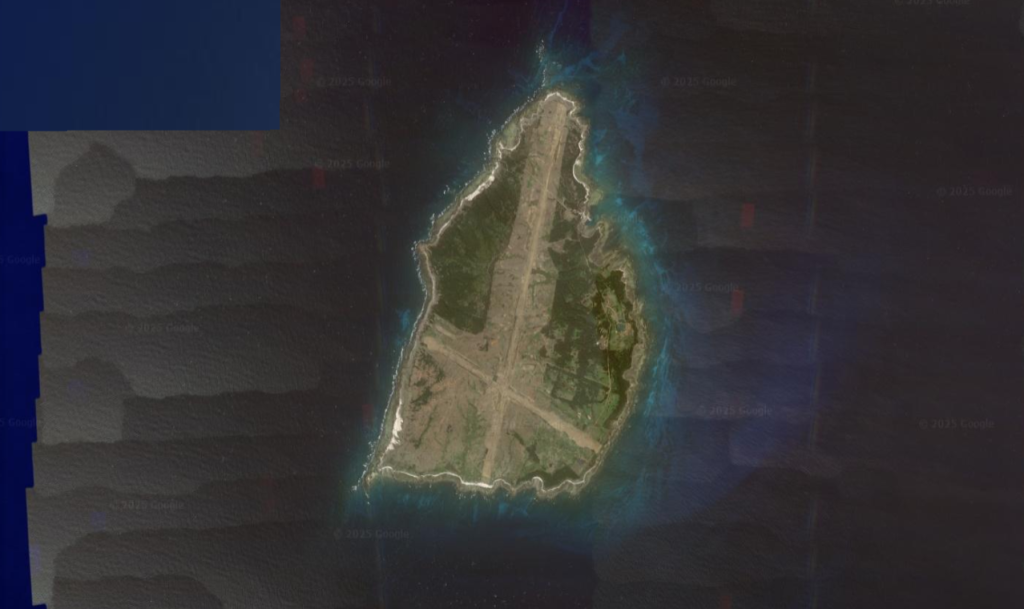
One of the islanders also explained that the island population is now torn in half based on who supports and does not support the military base. There are also occasionally local protests against the construction in front of the old Tanegashima airport.
Nevertheless, JSDF is there to stay, as they are expecting the work to be finished in a few years. Some locals have praised the nearby location of a military base, citing that they feel safer. But other locals have expressed their worry that, with the military base being so close, Tanegashima could be a target of a potential enemy attack.
The history of the airport is not over, despite being closed for more than twenty years. It still plays a major role in the lives of locals, just in a different way. Instead of being a gateway to the world, it has become a symbol of military presence, dividing locals into two camps. Because of all this, the airport will most likely remain an important part of Tanegashima for a few more years, far outliving its original lifespan.




KKB Community
0 comments