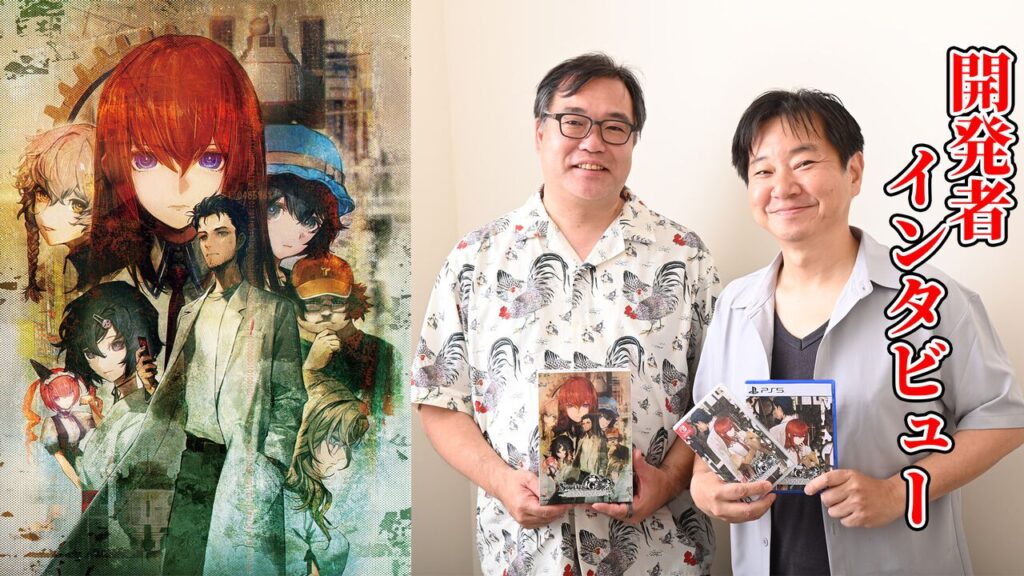
The following is our abridged summary of an interview conducted between Japanese magazine Famitsu and MAGES. staff Tatsuya Matsubara and Naotaka Hayashi—Steins;Gate RE:BOOT’s producer and scenario writer respectively. The original interview from Famitsu can be found here.
Seventeen years of Steins;Gate
- Producer Matsubara still feels as though Steins;Gate is a “recent” title due to its steady stream of new content and happenings—like the release of Steins;Gate 0, Steins;Gate Elite, new Steins;Gate-themed pop-up stores, and so on. This is why he’s surprised whenever he hears that the title is now seventeen years old. He still asks himself, “Isn’t it still only a decade old?”
- Scenario writer Hayashi remarks that Steins;Gate is like a title with neverending content, one he’s been continuously involved with over these seventeen years. He’s grateful to the many current fans, new players, and the overseas fans who share comments like, “I really enjoyed Steins;Gate,” or “I still love it to this day.” He appreciates the players of today willing to play a game from seventeen years ago; to him, this is why it feels evergreen.
- When Hayashi finished writing Steins;Gate, he felt as though he had written something interesting. A specific episode especially bolstered his confidence: as he was writing, the game’s composer, Takeshi Abo, once asked Hayashi if he was “done with the next part of the story yet.” This was the only time Hayashi had ever heard Abo make such a comment about a story he was reading for composition purposes, so Hayashi began think he might have actually created something particularly amazing.
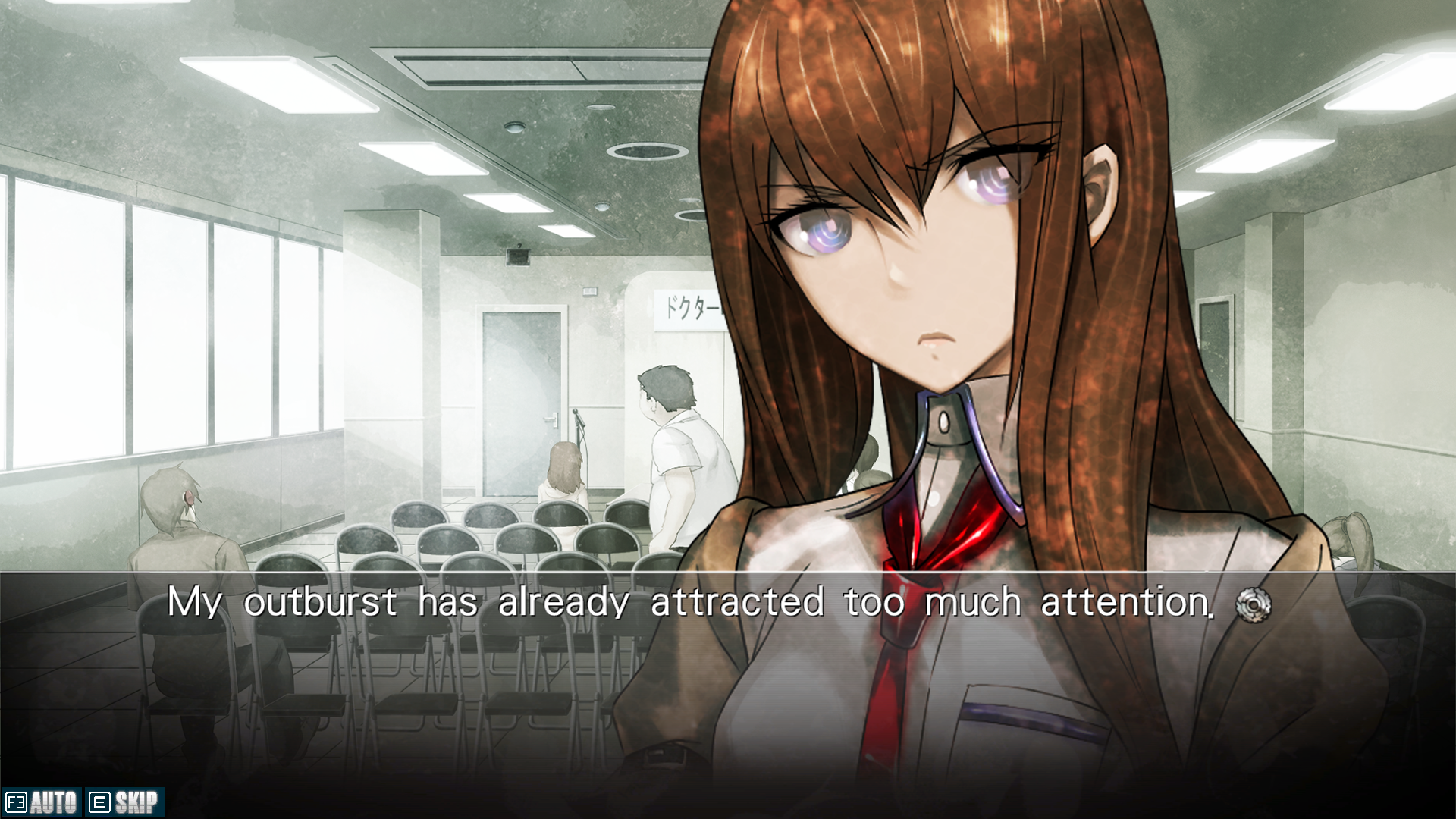
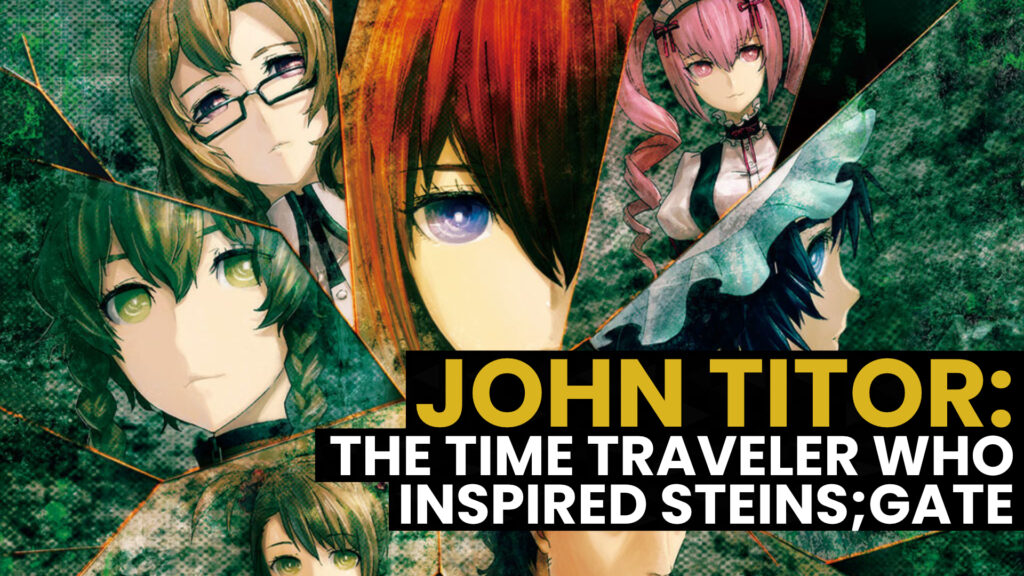
- Steins;Gate’s original artstyle emerged as a sharper alternative to the cutesy bishoujo artstyle commonly employed in that era of visual novels, including by its predecessor Chaos;Head.
- Steins;Gate’s character designs were handled by the illustrator huke. His involvement with the project began when development staff approached him at Comiket with their plans for the game.
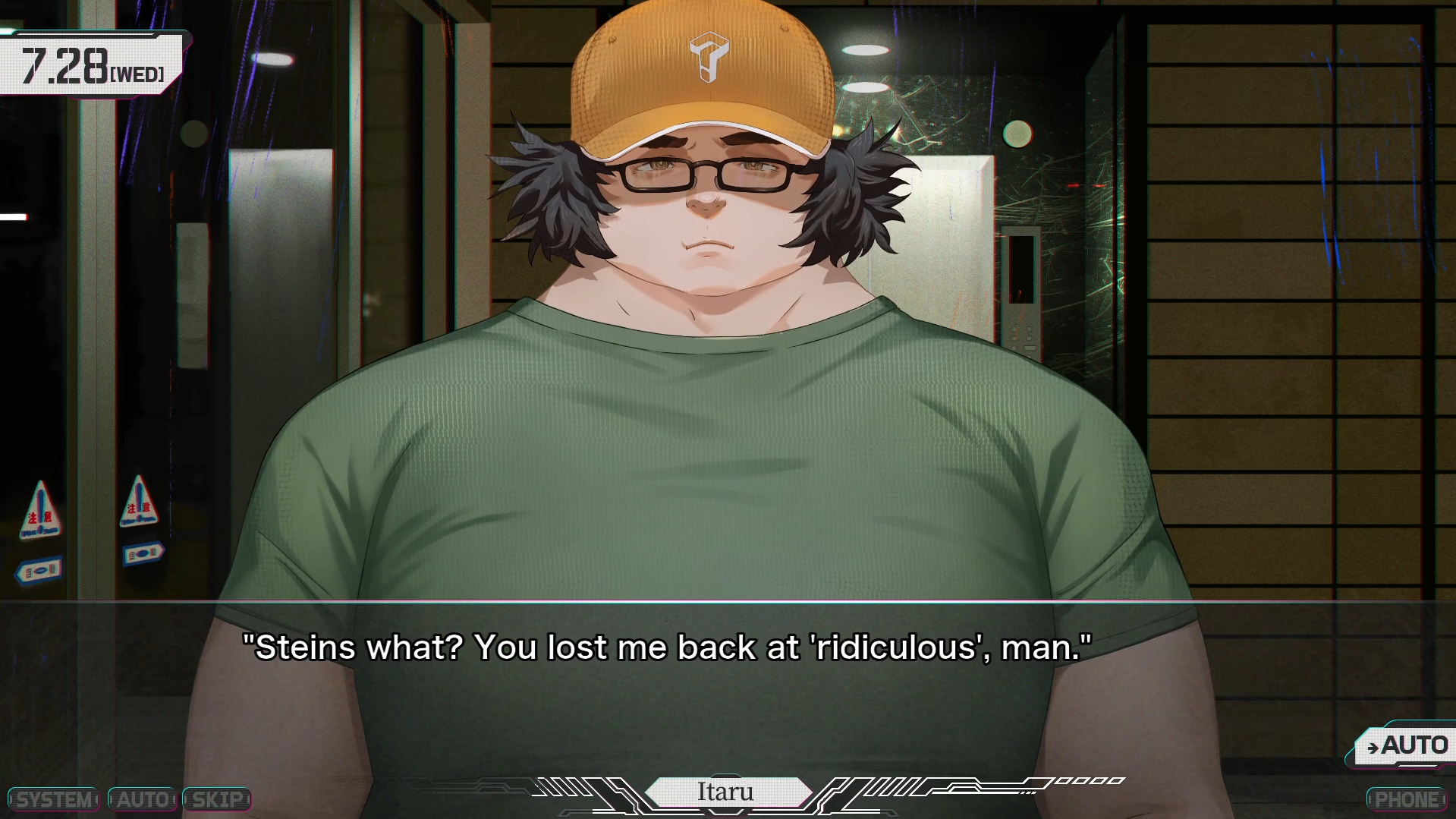
- Hayashi originally intended for Daru to be a skinny otaku, but huke drew him as overweight, surprising the author—who liked the interpretation and decided to proceed with it. Other small details, like Okabe wearing sandals, were not provided by the team but added by huke.
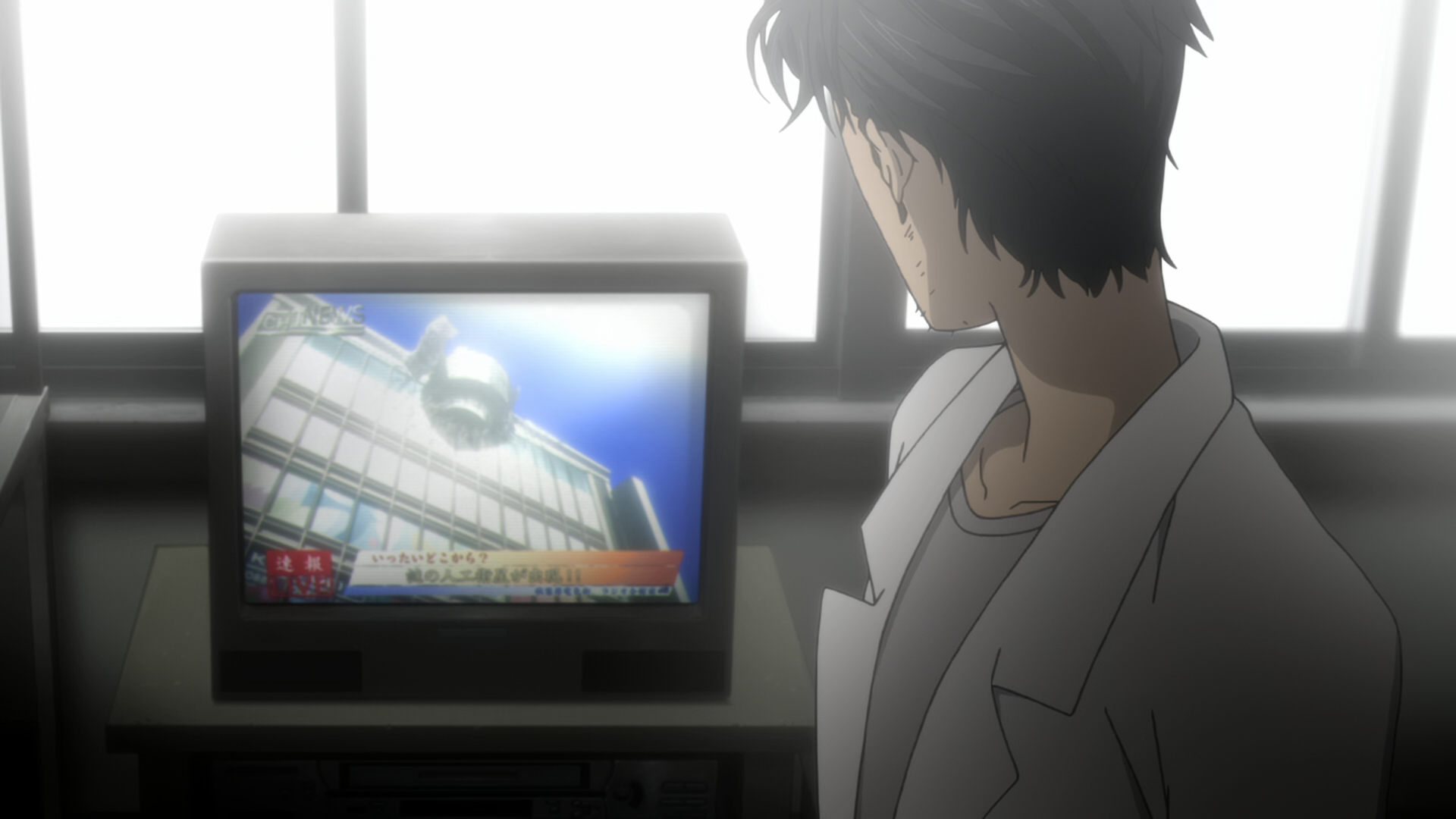
- Matsubara recalls that Steins;Gate was the first game he worked on as a producer. He remembers visiting shops in Akihabara and Shinjuku on its release day and finding that its impact was “surprisingly normal.” But he also remembers how, just a few days later, word of mouth about the game exploded on the internet.
- When it came time for the production of Steins;Gate’s anime adaptation, two director candidates were under consideration. Matsubara was asked whom he thought would be best for the task, but he saw positives in both and ultimately couldn’t decide. Luckily, and in a rare turn, both candidates were chosen for a dual-director production. When Matsubara met the directors and production staff, he learned they had already played the game six times in preparation for their work, and he felt grateful to be able to entrust the adaptation to them.
RE:BOOT’s artistic inception
- Matsubara reconnected with huke about two to three years ago for the first time in a while, and huke asked Matsubara about potentially renewing the Steins;Gate cast’s character designs. Matsubara took this idea further: why not update everything about the game, build a remake that connects to the Science Adventure series’s upcoming developments, and reboot the series?
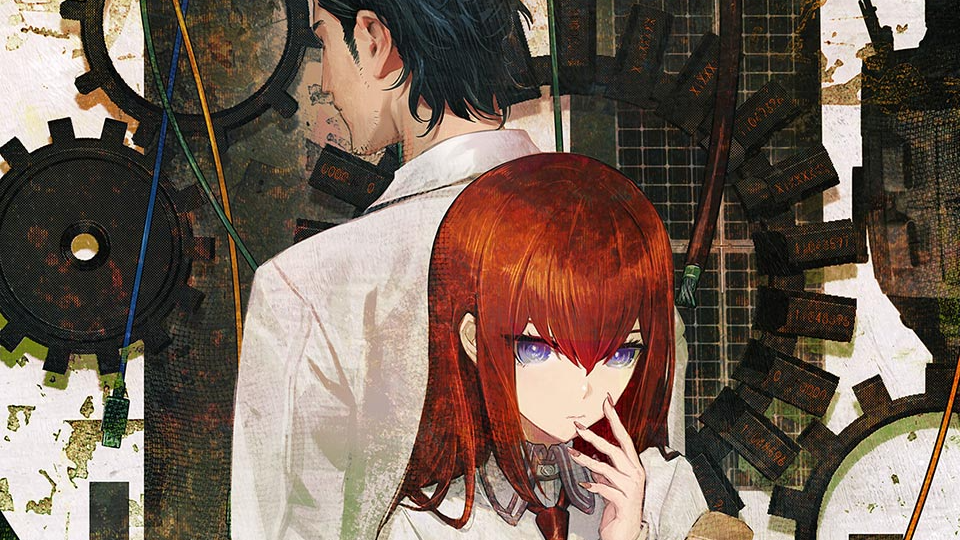
- In the original game, characters aside from the lab members were not designed by huke, but for RE:BOOT, all characters were designed by him. This means RE:BOOT is the first time we’ve seen his interpretation of some characters, like Doctor Nakabachi.
- Hayashi feels that though the original art has its charm, RE:BOOT’s new art also has many plus points. Okabe looks more handsome, for instance, while Doctor Nakabachi seems like the fetching older gentleman type.
- Matsubara feels the updated character designs retain the key details that make each character instantly recognizable.
Developing RE:BOOT
- In regard to RE:BOOT, Matsubara wanted existing fans to experience a version of Steins;Gate they had never seen before. Accordingly, the remake was developed as though the staff were recreating the game from scratch while reading through the game scenario.
- The effort the development team put into RE:BOOT was equivalent to that needed to develop a completely new game. This time, the game was also developed with support for multiple language localizations in mind, so the process was more difficult than they had expected.
- Right from the start, Matsubara planned for the game to be fully revoiced by the original voice actors and actresses, as he felt this would have the most impact on the potential audience. Above all, however, he personally wanted to hear the voice cast perform once again, this time with their seventeen years of experience to draw on.
- The Observer menu, a flowchart of events and worldline shifts, was incredibly difficult to build. Matsubara’s view is that the original game is difficult to beat without a guide, and he wanted to give players the hints they needed to beat the game using only information that came from the game itself. Hence, the flowchart was born.
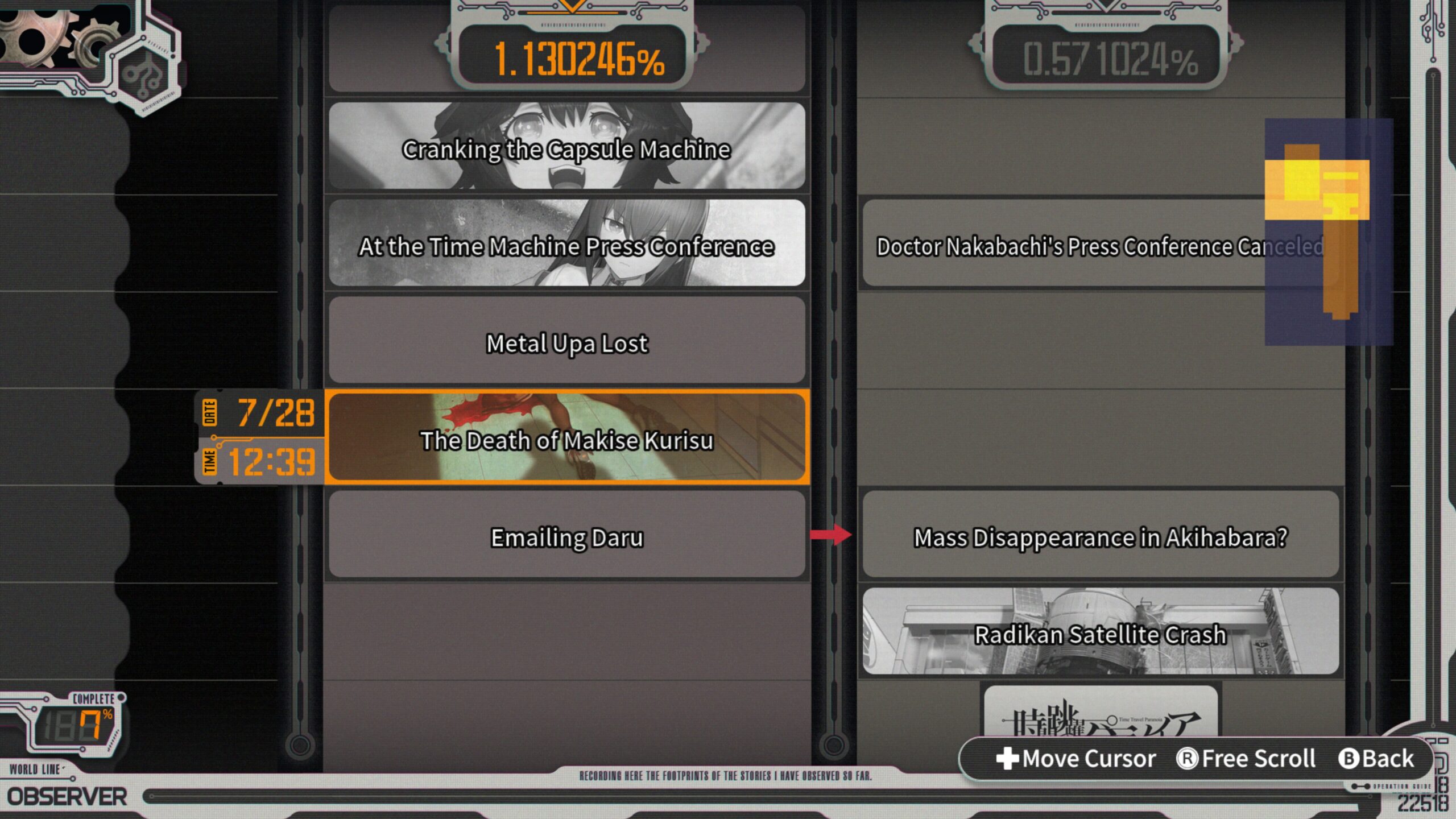
- RE:BOOT uses Elite’s abridged story script as its base. When asked why, Matsubara explains that Elite was updated per the anime adaptation and is considered the latest version of the script. Using this script also allowed the team to implement scenes from the anime adaptation, like those on the lab’s roof or at the coin laundromat—scenes Matsubara enjoys but aren’t present in the original game.
- Hayashi considers the original game’s script, including Okabe’s digressions, rather lengthy. He feels this made the game difficult to push through, especially toward the beginning. Meanwhile, Elite has much more refined pacing, he says, although they ensured they added back explanatory text where needed for RE:BOOT.
- Modern-day impressions of the cast were also considered while RE:BOOT was in development. The staff for instance felt that Kurisu was a little too harsh toward Okabe in certain parts of the original game, and accordingly, they softened her in these cases to match the image of Kurisu that is well loved today. Mayuri’s speaking rhythm was also adjusted to better match the anime adaptation.
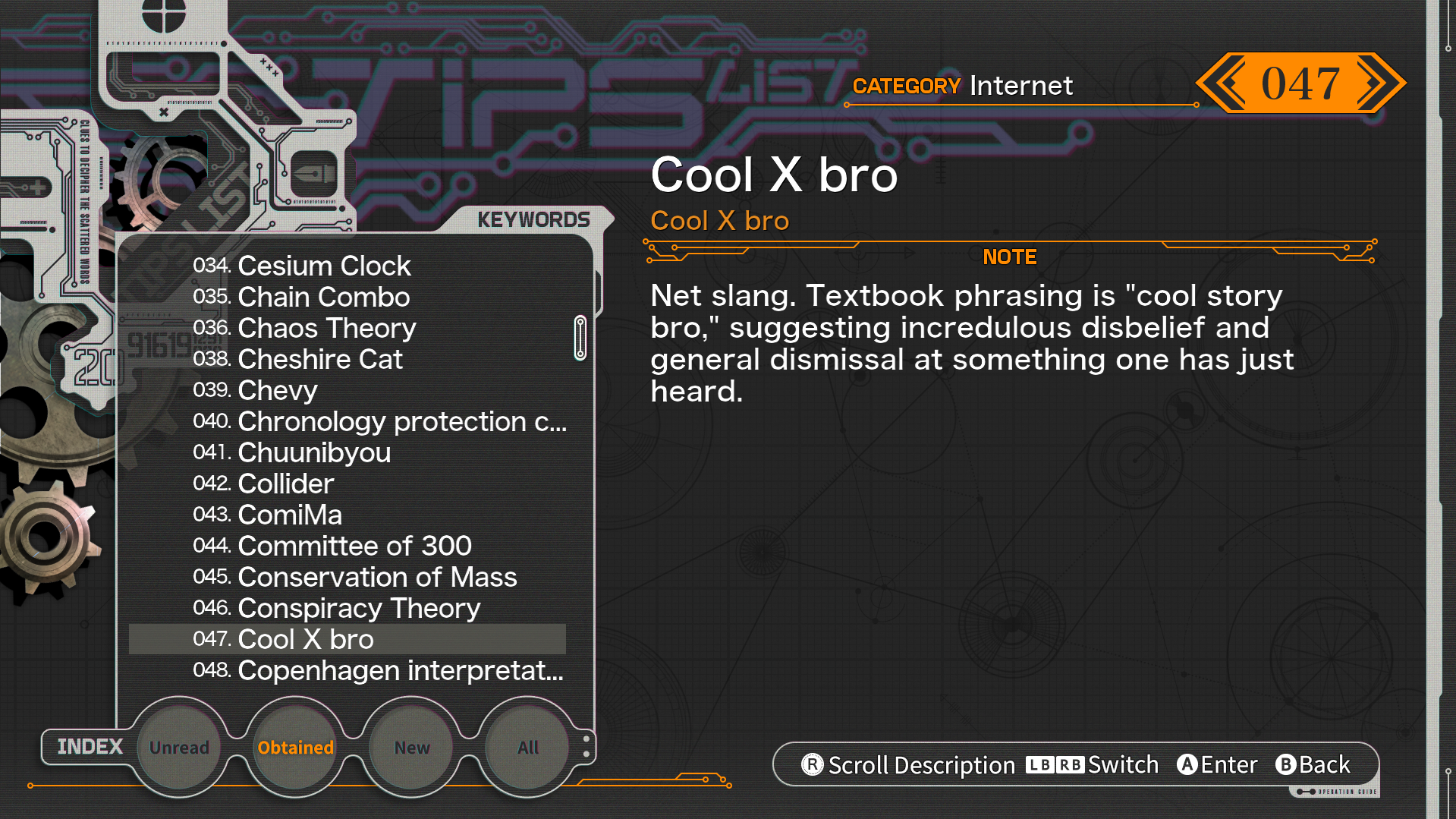
- Steins;Gate’s era-specific net slang was left untouched in RE:BOOT to respect the 2010 Akihabara setting, despite a development suggestion that it be removed because it wouldn’t be understood by modern-day youth players. To accommodate those unfamiliar with the now-obsolete slang, in-game TIPs were added explaining them. Additionally, the team did not add any new slang that would have arisen after 2010.
Moeka and miscellanea
- While new content was being considered for RE:BOOT, the development team initially joked about adding a harem route—though this idea was quickly discarded since it would hurt the tone of the game.
- Hayashi recalled that fans had often expressed a desire for a Moeka-specific route. The team had released the Moeka-centric drama CD Hyde of the Dark Dimension a year after the original game’s release, but it hadn’t yet been adapted anywhere else, nor was it easy to acquire in the present day. This was why the team decided they ought to adapt the story for RE:BOOT.
- Hayashi considers Moeka’s route a darker, more substantial story than the drama CD’s. While the drama CD was a what-if scenario, Moeka’s route is a proper branching point in the main story; it needed to work in such a way that would allow Okabe and Moeka’s story to continue past it, which was why they majorly restructured the narrative for the game.
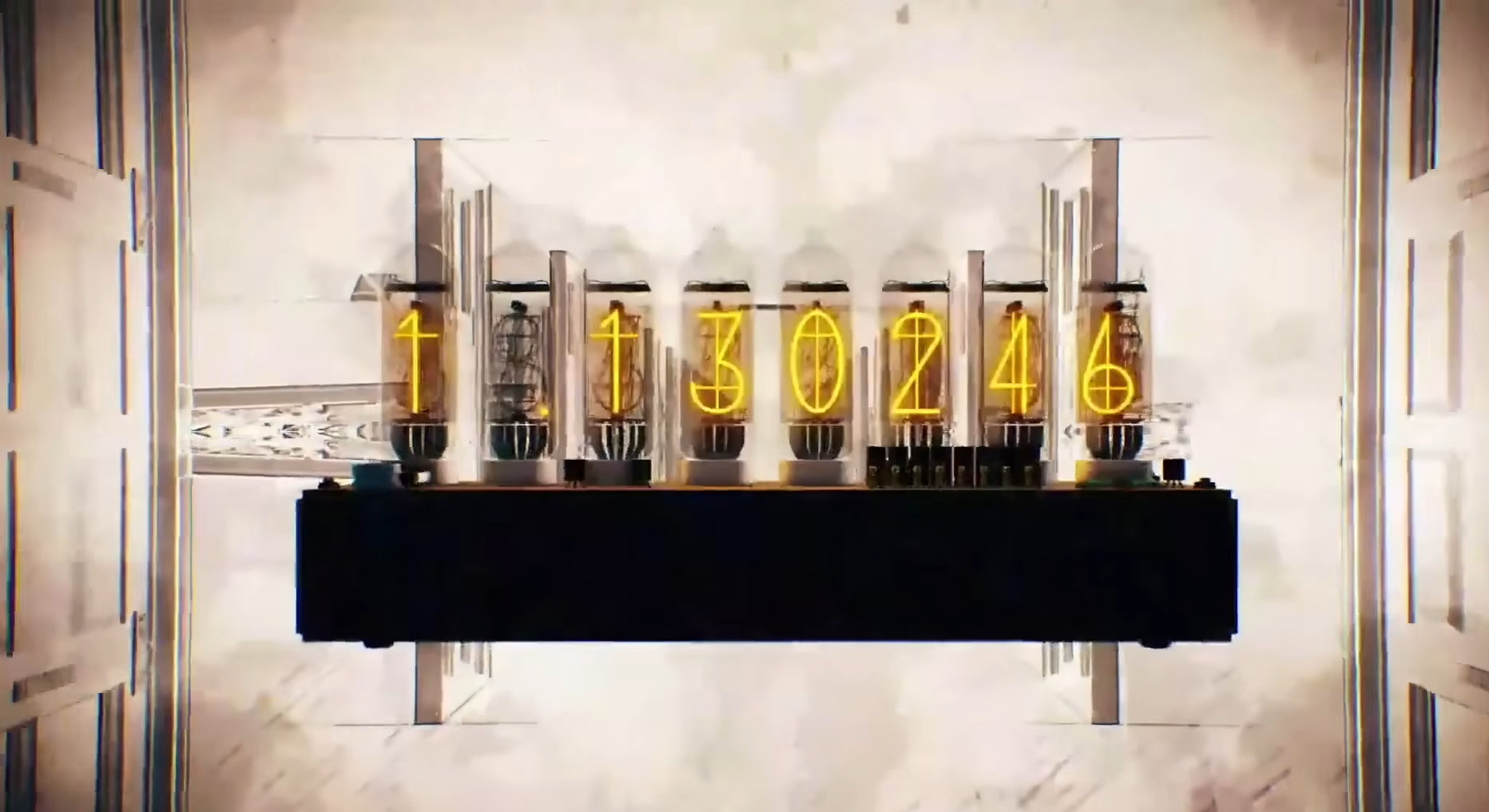
- The worldline divergence seen in the RE:BOOT prologue footage posted ahead of the game’s launch is slightly different from that seen in the original game and in RE:BOOT’s retail release, which has sparked some online discussion. According to Matsubara, the divergence 1.130246% was utilized in the anime adaptation and, subsequently, Elite, but it never actually visually appeared in either. Since RE:BOOT is based on Elite, this divergence value was carried over, but in the last stage of RE:BOOT’s development, the team decided to match the original game and the worldline divergence it used, 1.130426%. Any footage or imagery featuring the 1.130246% divergence originates from builds of the game predating this decision.
- Matsubara’s favorite Steins;Gate character is Mister Braun, while Hayashi’s favorite is Nae.
The future of Steins;Gate and SciADV
- Work on Steins;Gate’s thematic sequel and other potential SciADV titles is underway, according to both Matsubara and Hayashi. Readers are encouraged to view our previous coverage of their remarks here.
We will strive to keep you updated as more news arises on Steins;Gate and the Science Adventure series. For more Steins;Gate content, visit our dedicated category.

KKB Community
0 comments