
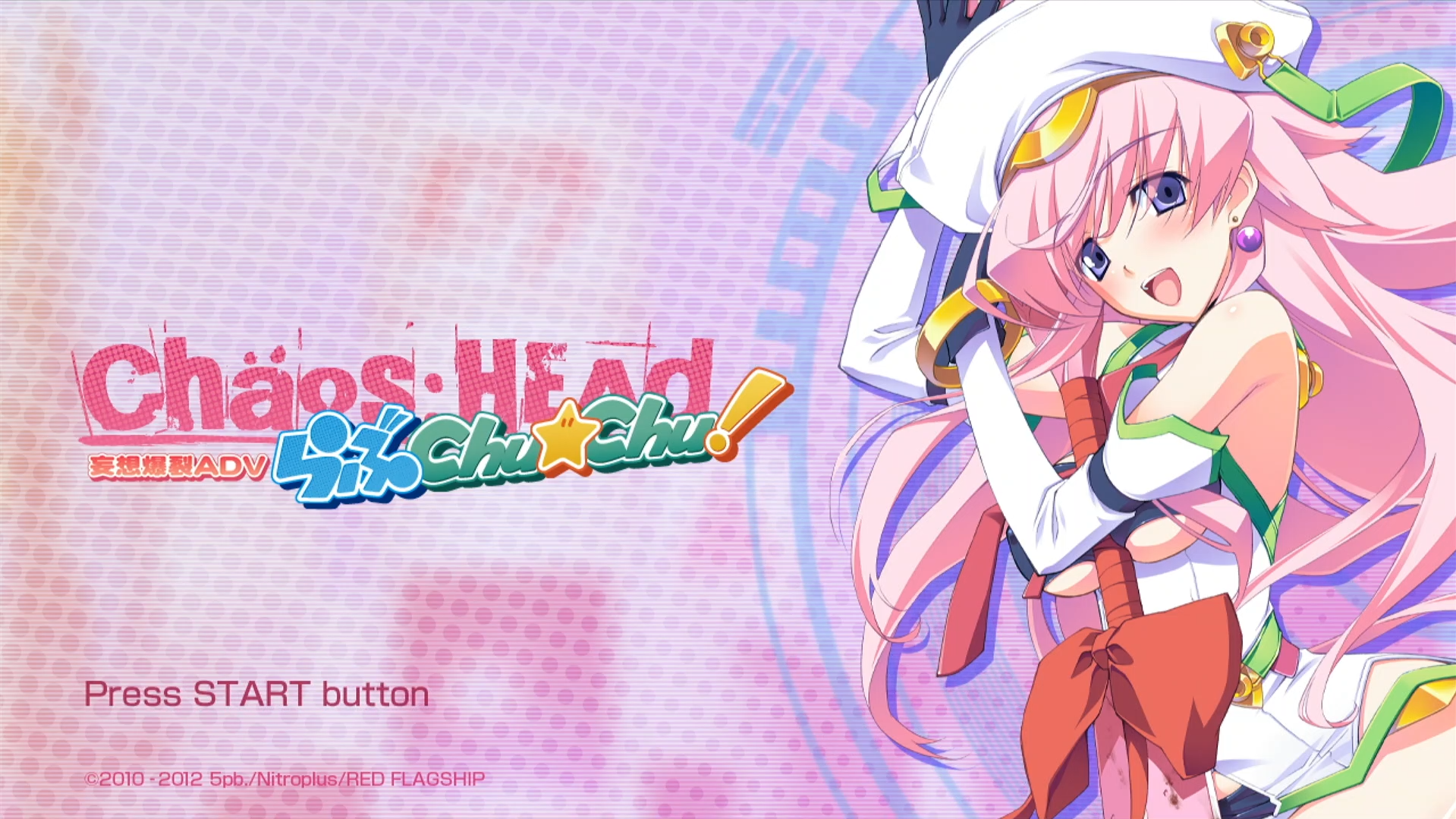
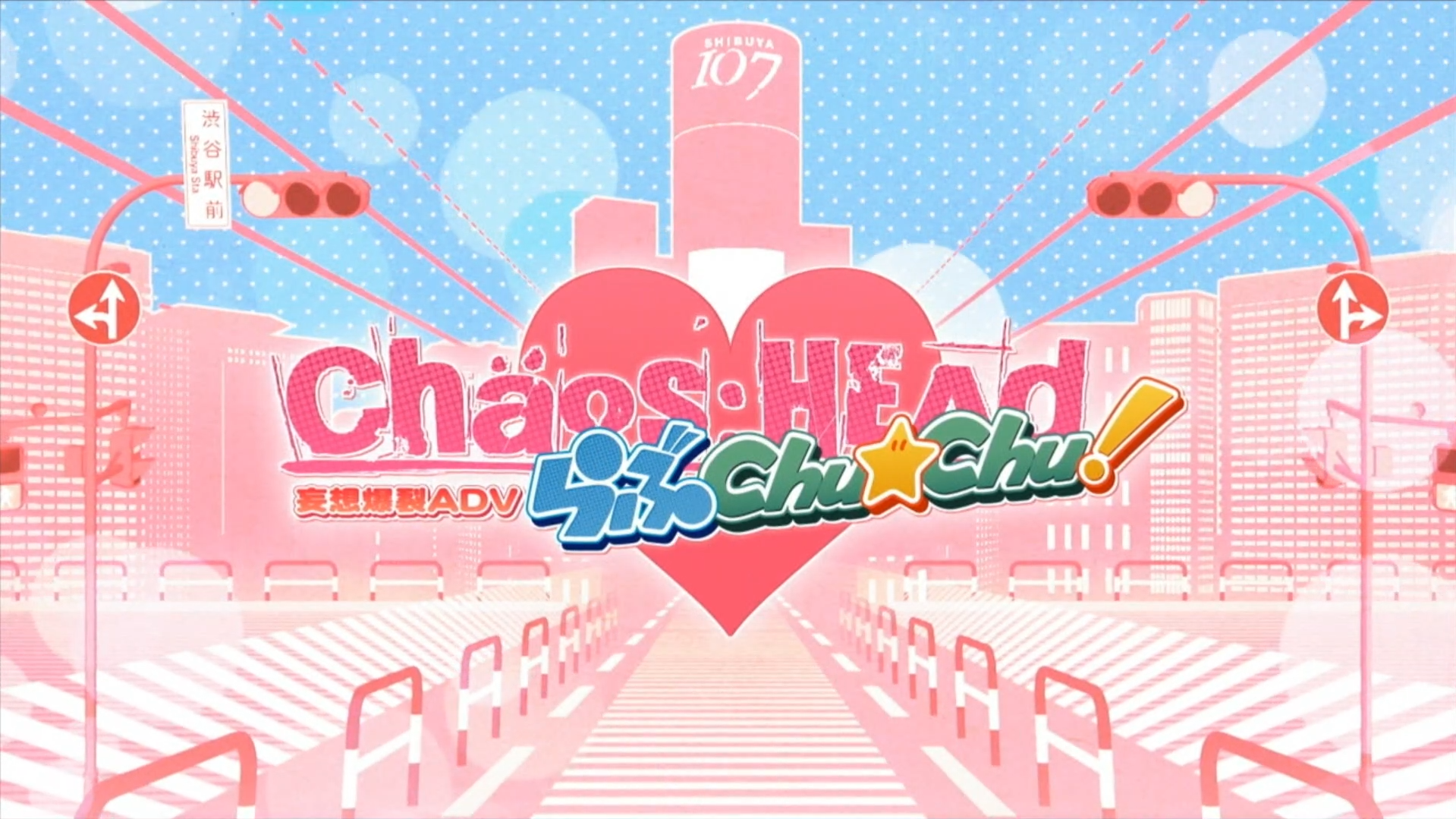
If you’ve ever looked at the Science Adventure series’s release history, you may have noticed a rather unusual title sitting right after Steins;Gate: Chaos;Head Love Chu☆Chu!.
The title alone doesn’t exactly inspire confidence in its importance to the Chaos;Head narrative. Its promotional material is brimming with romantic comedy imagery and fan service. At first glance, Love Chu☆Chu! looks like the sort of fandisc that exists solely to give fans more time with their favorite characters. And, well… there’s certainly plenty of that. But underneath all the romance and comedy, LCC is still dealing with one of Chaos;Head’s most important concepts: what happens when you can no longer distinguish between reality and your own imagination?
We decided to take a closer look at this stranger and largely overlooked entry in the Science Adventure series—after all, there’s no corner of the Science Adventure universe that KKB’s reach won’t eventually extend to. As always, you can watch the video or read the article version below it.
Chaos;Head Love Chu☆Chu! was originally released for Xbox 360 in Japan on March 25, 2010, just over a year after Chaos;Head NoAH. It later received ports to PSP, PlayStation 3, and PlayStation Vita, the latter as part of the Chaos;Head Dual double pack. A Nintendo Switch port was eventually released as part of the Chaos; Love Chu☆Chu Double Pack in 2025. The game was developed by many of the same staff responsible for Chaos;Head. Tatsuya Matsubara directed the game, Naotaka Hayashi wrote the story, Mutsumi Sasaki handled character designs, and Yukihiro Matsuo worked on the original artwork.
LCC isn’t an unrelated spin-off using the Chaos;Head characters. It’s a proper sequel-slash-epilogue to Chaos;Head NoAH, an official entry in the Science Adventure series, and it was developed by the same people as Chaos;Head NoAH. But the tone could hardly be more different. Chaos;Head centers around the New Generation Madness serial murders, paranoia, grotesque crime scenes, and Takumi’s increasingly unstable perception of reality. Love Chu☆Chu! takes that last idea and turns the plot into a romantic comedy. And somehow, that’s the point.
LCC takes place after the events of Chaos;Head NoAH. Takumi Nishijou has survived the roller coaster of events in Shibuya, and somewhat surprisingly, he’s started trying to become a more socially functional person.
His otaku tendencies haven’t disappeared, and his habit of escaping an unpleasant reality through fantasy remains firmly intact. His official character description even jokes about his attempts to “de-otaku” himself while acknowledging that his deeply ingrained otaku thought process keeps getting in the way. But one summer morning, something goes very wrong. Takumi wakes up with no memory of when summer actually began, and somehow, Shibuya has not been destroyed.
The six girls he knows—Rimi, Sena, Yua, Kozue, Ayase, and Nanami—have suddenly become extremely affectionate toward him. They tell Takumi there’s a simple explanation: he’s trapped inside his own ideal mental world. And there’s supposedly only one way to escape—he has to find Seira Orgel and kill her.
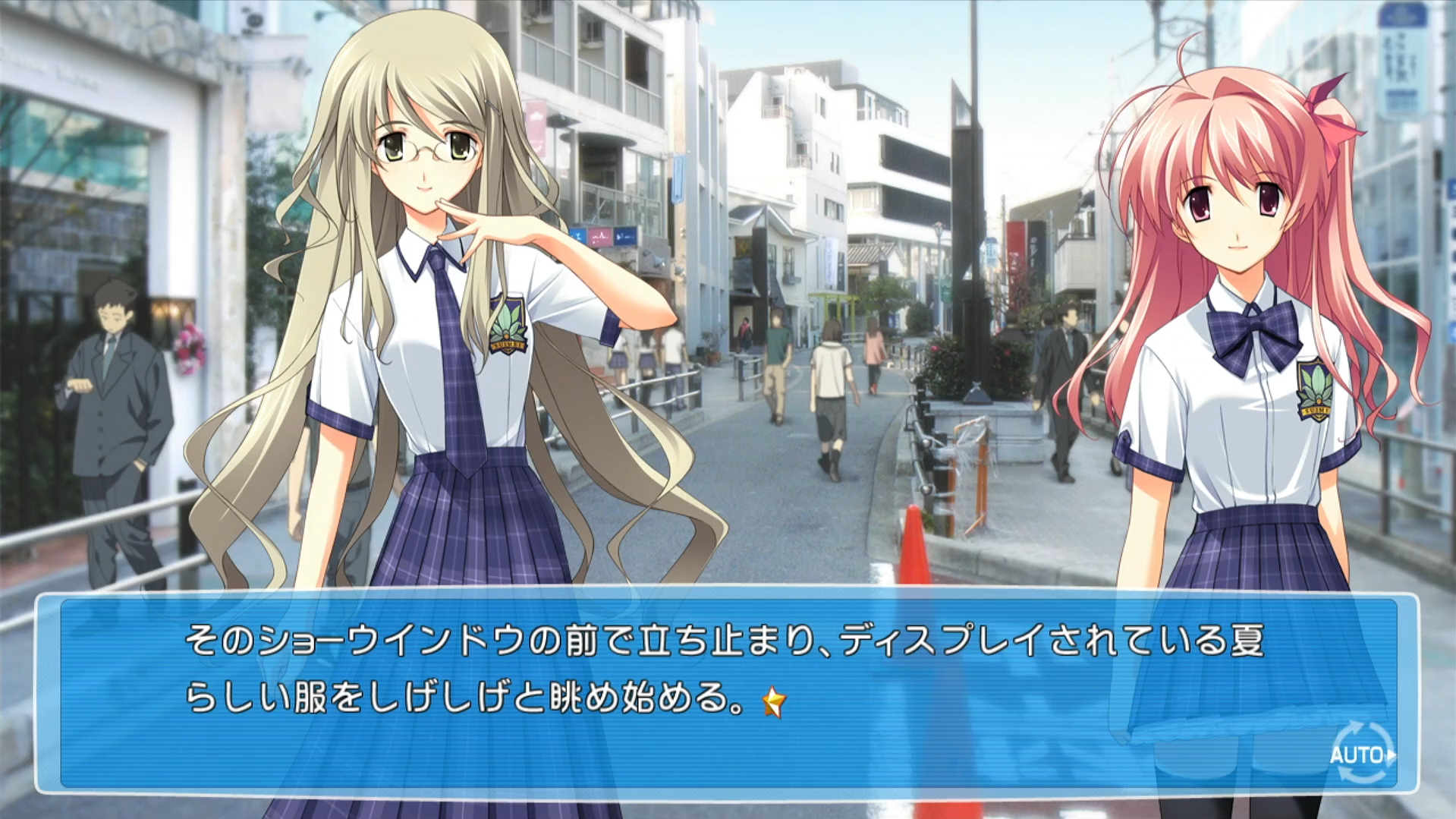
One of the most important narrative aspects Love Chu☆Chu! inherits from Chaos;Head is the Delusion Trigger system. During certain scenes, the game presents Takumi with a choice between a positive delusion, a negative delusion, or no delusion at all. In Chaos;Head, these choices were primarily a way of influencing Takumi’s perception of events, and in NoAH, it also determined which character routes and scenes became available to the player.
Love Chu☆Chu! takes the same system and turns it into the game’s primary route-selection mechanic. The first part of the game uses the Delusion Triggers to establish which heroine Takumi becomes the most attached to. Different combinations of positive and negative delusions build toward the various character routes, and eventually, the later triggers provide the final branch into an individual heroine’s story.
Interestingly, the route structure is much more compact than Chaos;Head NoAH’s. The game can be completed relatively quickly, and once you understand the Delusion Trigger system, subsequent routes are primarily about revisiting the common story and viewing the different heroine-specific branches.
Eventually, the game makes it clear that what Takumi is experiencing isn’t simply a dream where he gets everything he wants. The girls aren’t mere cardboard projections Takumi created to enjoy a romantic fantasy. The central problem is that Takumi has trapped himself inside his own delusion, unable to return to reality.
The official premise describes the setting specifically as Takumi’s “mental image world,” a world created by his own mind. And the solution isn’t simply to defeat Seira—Takumi has to confront the truth that his fantasy is built around.
The individual heroine routes approach this problem through their respective relationships with Takumi, but the overall structure of the story remains remarkably similar between routes. The differences are primarily in how the individual heroines help Takumi confront his feelings and understand what he actually wants.
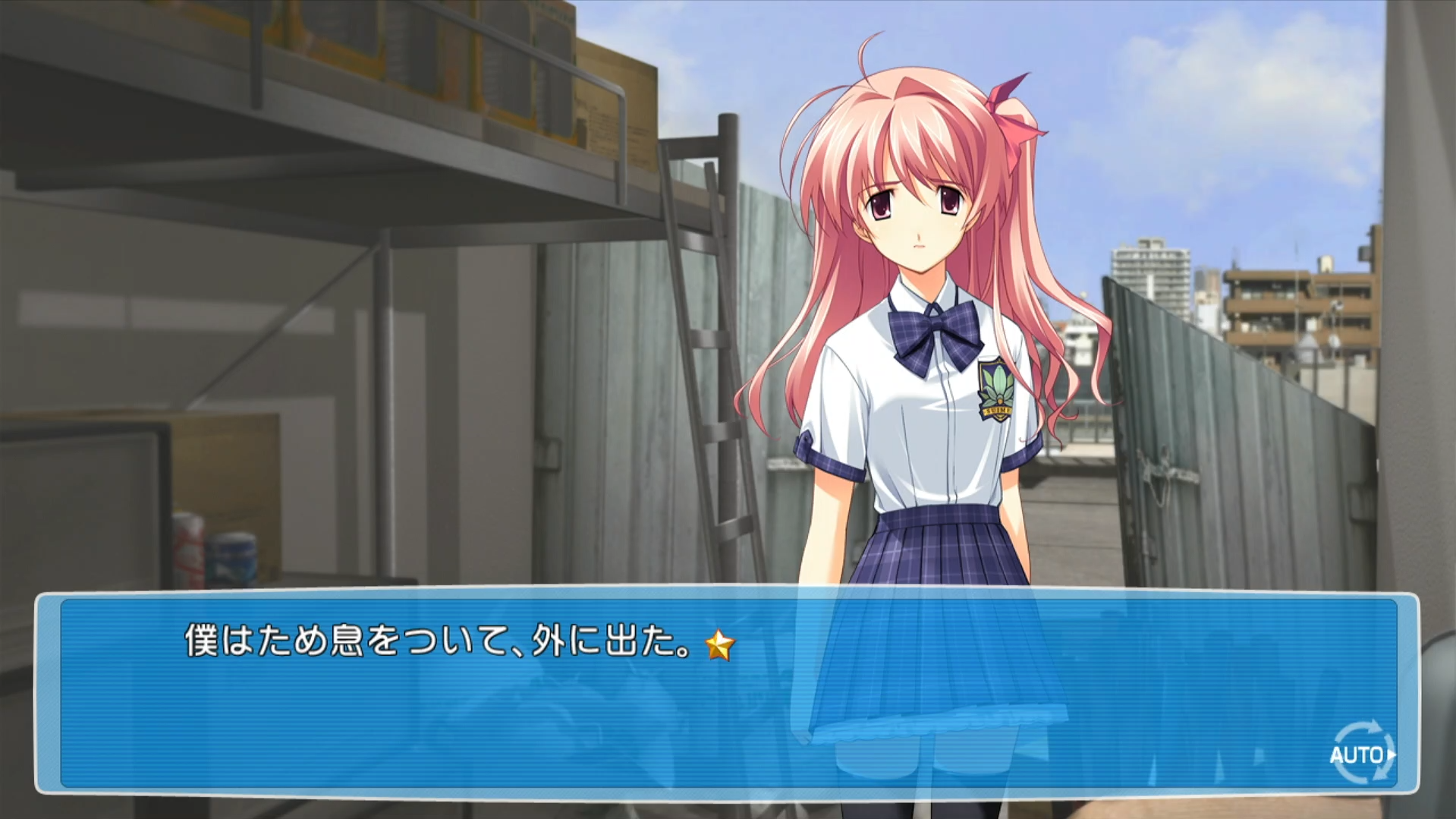
So, after all this, a question remains: is Chaos;Head Love Chu☆Chu! actually worth experiencing? For players looking for more serious, ambitious Science Adventure storytelling, maybe not—LCC is more a character-focused, thematic story. But for Chaos;Head fans especially, there are several good reasons to give it a try.
Love Chu☆Chu! is an official continuation of Takumi’s story. It gives fans an opportunity to explore his character and mindset after the events that fundamentally changed him. LCC is deeply intertwined with Takumi’s character; more than anything, it’s a game about the person Takumi is (and becomes) when nobody is forcing him to be a hero. LCC additionally explores delusions from a new direction. While, the original game allowed players to experience the horror of losing control over reality, Love Chu☆Chu! shows players the temptations of an artificial reality you don’t want to leave.
Love Chu☆Chu! also gives Chaos;Head’s heroines a completely different kind of story. Rimi, Sena, Yua, Kozue, Ayase, and Nanami all found themselves wrapped up in a grim, conspiracy-driven reality in NoAH, but in LCC, the stakes—while still high—are lighter. What you get is a character narrative that’s humorous and heartening compared to its darker predecessor. That makes Love Chu☆Chu! and its character routes a fun foil to what NoAH had to offer.
It’s also a fascinating piece of Science Adventure history. Released in March 2010, Love Chu☆Chu! arrived just months after Steins;Gate and two years ahead of Robotics;Notes. It belongs to a particularly interesting period of Science Adventure history, when the series was still establishing the different directions its stories could take. Accordingly, LCC established a tradition that would continue with Steins;Gate: My Darling’s Embrace and Chaos;Child’s own romantic comedy sequel, Chaos;Child Love Chu☆Chu!!. Like Chaos;Head’s fandisc, these titles pulled their respective characters out of their darker main narratives and dropped them into deliberately exaggerated romcom stories. It’s no surprise, then, that one of My Darling’s Embrace’s achievements is cheekily titled “Lab ChuChu!.”
Last but certainly not least, Love Chu☆Chu!’s events are, in a curious twist, lightly referenced in Robotics;Notes, and they play a strong thematic role in Chaos;Child as well, suggesting there is some level of interseries continuity underpinning it. For this reason, fans seeking as complete an experience with the series as possible would be best served reading Love Chu☆Chu!, too.
So, is Chaos;Head Love Chu☆Chu! essential Science Adventure reading? We would say yes if you’re a hardcore fan, given its series implications. At the very least, it is certainly more interesting than its reputation as a fan service–heavy romantic comedy might suggest.
Beneath all the ridiculous situations, romantic fantasies, and moments of Takumi being Takumi, LCC continues to play with the same ideas that made Chaos;Head so memorable: delusions, escapism, perception, and the fragile line between what we want to be real and what actually is.
Chaos;Head asks what happens when you can no longer trust reality. Love Chu☆Chu! takes that idea and asks a different question: what if reality became exactly what you wanted?
Note: While Chaos;Head Love Chu☆Chu! has not been officially localized into English, fan group Committee of Zero has confirmed plans to release a fan English localization and ports to various platforms this fall.



KKB Community
0 comments